
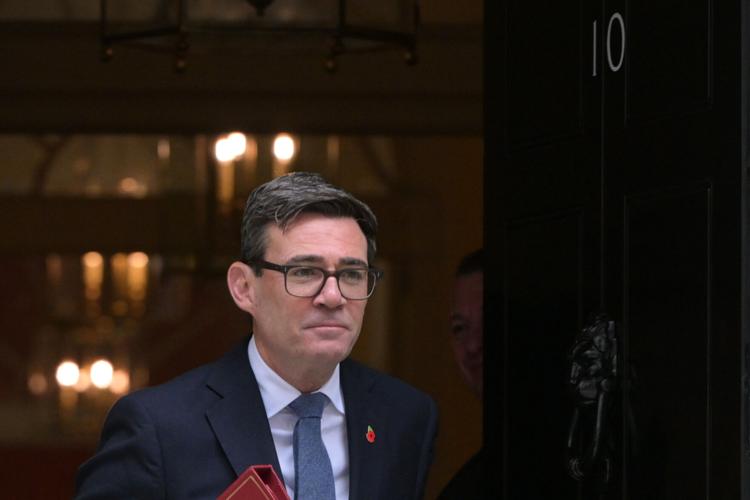
LONDON, United Kingdom — British Prime Minister Andy Burnham has expressed willingness to consider a formal apology for Britain’s historical role in the transatlantic slave trade while firmly rejecting calls for financial reparations to affected countries and communities.
Burnham outlined his position ahead of the Commonwealth Heads of Government Meeting scheduled to take place in Antigua and Barbuda next week. He said his government was prepared to engage in structured discussions with countries and communities affected by slavery, including listening to calls for an official apology on behalf of the British state.
In an article published in The Guardian, the prime minister expressed personal sorrow and regret for the suffering endured by millions of enslaved Africans and acknowledged that the consequences of the slave trade continue to shape the world today.

However, he maintained that financial compensation was not the appropriate response, arguing that people living in Britain today should not be held responsible for historical actions in which they had no personal involvement.
Burnham Signals Openness to a Formal Apology
The prime minister described the transatlantic slave trade as a brutal violation of human rights, during which Africans were forcibly separated from their families, treated as property and subjected to forced labour.
He said Britain needed to confront its historical involvement in the trade rather than focus exclusively on its later role in abolishing slavery.
Burnham said his government was offering structured dialogue with those affected, including individual countries and campaign groups in Britain and overseas. He added that listening to calls for a formal state apology would form an important part of the discussions.
His comments represent an opening for conversations about an official apology, but they do not amount to a formal apology from the British government.
Britain Rejects Calls for Financial Reparations
Despite expressing regret over the suffering caused by slavery, Burnham rejected demands that Britain provide financial reparations.
He argued that British citizens today should not be held liable for historical wrongs committed under different laws and circumstances by previous generations.
The position maintains the longstanding approach of successive British governments, which have resisted demands for financial compensation connected to the country’s involvement in the transatlantic slave trade.
However, Caribbean governments and reparations campaigners have continued to argue that acknowledging historical suffering should include practical measures to address its lasting economic and social consequences.
Their proposals extend beyond direct financial payments to include debt cancellation, development assistance, investment in healthcare and education, and support for climate resilience.
Debt Relief Proposed as Alternative Support
Instead of financial reparations, Burnham has proposed a new initiative aimed at reducing the debt burden facing poorer Commonwealth countries.
The plan would seek to help vulnerable nations repay their debts over longer periods and at more favourable interest rates.
Former British Prime Minister Gordon Brown is expected to support the initiative at the Commonwealth meeting. Burnham also indicated that the effort could involve wealthy countries, international investors and institutions such as the International Monetary Fund.
The proposal comes amid concerns about the amount developing countries spend servicing their debts. Burnham said more than 40 per cent of the world’s poorest and most vulnerable countries spend more on debt interest payments than on healthcare.
His government has also expressed willingness to support renewable energy development, education for women and girls, and efforts to address poverty and inequality.
Caribbean Leaders Maintain Reparations Demands
Burnham’s position has received a cautious response from Caribbean leaders, who have welcomed his willingness to acknowledge Britain’s historical role while maintaining their demands for reparatory justice.
Barbados Prime Minister Mia Mottley welcomed the recognition of the brutality of the slave trade and the willingness to discuss a formal apology.
However, she stressed that differences over financial reparations should not prevent cooperation on healthcare, education, poverty reduction, inequality and fairer debt arrangements.
Antigua and Barbuda Prime Minister Gaston Browne also welcomed the proposed debt initiative, describing Burnham’s comments as a significant development. Nevertheless, he maintained that the Caribbean’s position on reparatory justice had not changed.
Caribbean campaigners have argued that an apology, although important, would not by itself address the lasting consequences of slavery.
Commonwealth Summit Expected to Address Slavery’s Legacy
The debate is expected to feature prominently at the upcoming Commonwealth Heads of Government Meeting in Antigua and Barbuda.
The Commonwealth brings together 56 independent countries, many of which have historical connections to the British Empire. Several Caribbean and African members have called for greater recognition of the transatlantic slave trade and measures to address its continuing effects.
King Charles III is also expected to attend the summit following his Caribbean tour, during which he acknowledged the suffering and injustices experienced by people under slavery.
The monarch’s constitutional role means he acts in accordance with the advice of the British government on matters of public policy. No formal royal apology has been announced.
Debate Over Reparatory Justice Continues
Britain’s willingness to discuss a formal apology marks a development in its engagement with countries affected by the slave trade. However, the rejection of financial reparations leaves a major disagreement unresolved.
As Commonwealth leaders prepare to meet, discussions are expected to focus on historical accountability, economic cooperation and practical measures to support developing countries.
Whether the proposed dialogue will produce a formal apology or broader agreements on reparatory justice remains uncertain.
Swifteradio.com