
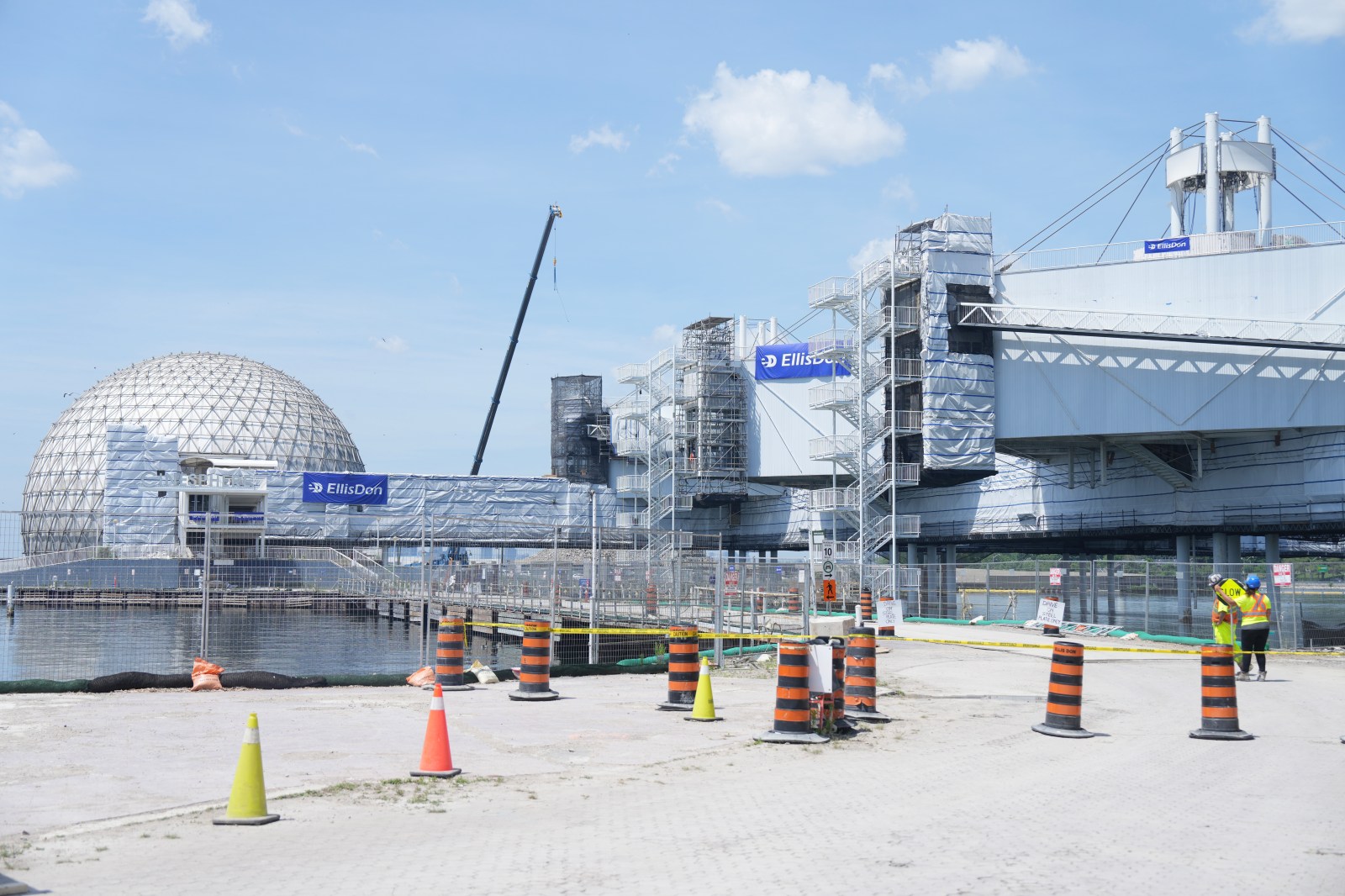
OTTAWA — The Supreme Court of Canada is hearing a major constitutional challenge to legislation that cleared the way for Ontario Place’s redevelopment, a case that could have significant implications for government accountability, environmental protection and the powers of Canadian courts.
The hearing, scheduled for Thursday, October 15, 2026, involves the Ontario Place Protectors, a coalition opposing the provincial government’s Rebuilding Ontario Place Act, passed in 2023 to facilitate changes to the Toronto waterfront site.
The coalition argues that the legislation improperly restricts the ability of courts to hold the provincial government accountable for decisions involving the redevelopment. It also contends that exemptions from environmental and heritage protections undermine the public interest.

Dispute Over Ontario Place Redevelopment
Ontario Place, which opened in 1971 along Toronto’s waterfront, was once known for its entertainment attractions, public spaces and distinctive Cinesphere theatre.
The provincial government, led by Premier Doug Ford, plans to transform the site into a major recreational destination. The proposed redevelopment includes a private spa and water park, a relocated Ontario Science Centre, new public spaces, shoreline improvements and parking facilities.
The project has attracted criticism from residents, environmental advocates and groups concerned about public access to the waterfront and the preservation of the site’s heritage.
The Rebuilding Ontario Place Act exempts the redevelopment from certain provincial environmental assessment and heritage requirements. It also limits some legal claims against the Crown and its representatives arising from the project.
Coalition Raises Constitutional Concerns
Ontario Place Protectors argues that the legislation violates Section 96 of the Constitution Act, 1867, by undermining the core jurisdiction of superior courts to review government actions and provide legal remedies.
The coalition also wants the court to recognise the principle of public trust, arguing that governments have a responsibility to protect important natural and cultural assets for public benefit.
The Ontario government disputes the challenge, maintaining that the legislation does not eliminate judicial review or turn Ontario Place into an area beyond the reach of the law. It also rejects the argument that the proposed public-trust doctrine invalidates the legislation.
Ruling Could Have National Implications
The legal challenge was previously dismissed by Ontario’s Superior Court and the provincial Court of Appeal. The Supreme Court agreed in January 2026 to hear the appeal.
The case has attracted submissions from several provinces, Indigenous groups, environmental organisations and civil liberties advocates, reflecting concerns that extend beyond the Toronto waterfront.
The Supreme Court may reserve its decision and deliver a ruling at a later date. Its judgment could clarify the limits of governments’ ability to shield major development projects from legal challenges.
Swifteradio.com

