
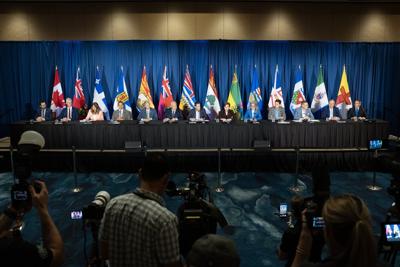
Canadian premiers are largely keeping their positions private on a series of constitutional changes proposed by Alberta Premier Danielle Smith, as the province prepares to put the measures before voters in an October referendum.
Albertans will vote on October 19, 2026, with four constitutional questions among the referendum’s 10 questions. The proposals would seek changes to the appointment of provincial judges, abolition of the federal Senate, provincial opt-outs from certain federal programs while retaining related funding, and greater priority for provincial laws in areas of shared jurisdiction.
Three of the four proposals would likely require the support of at least seven provincial legislatures representing at least 50 percent of Canada’s population, under the Constitution’s commonly known 7/50 formula, as well as federal parliamentary approval. Abolishing the Senate would face an even higher constitutional threshold, requiring unanimous provincial consent and Senate approval.
Several premiers have declined to publicly endorse or reject Smith’s proposals. Saskatchewan Premier Scott Moe’s office said it would not comment, while a spokesperson for Northwest Territories Premier R.J. Simpson said the issues were for Albertans to consider through the referendum process.

Nunavut Premier John Main said his territory would closely monitor the outcome, while Yukon Premier Currie Dixon said he looked forward to hearing from Albertans and expressed hope that the province would remain part of Canada.
Constitutional law professor Gerard Kennedy of the University of Alberta said there could be potential support among some provinces for proposals that would give provinces greater influence over judicial appointments and allow them to opt out of certain federal programs without losing associated funding. However, he noted that securing federal approval could be a major obstacle.
The proposal to give provincial laws priority over federal laws in cases of conflict faces additional constitutional questions. Kennedy said such a change could lead to broader negotiations, as other provinces could seek their own amendments in exchange for supporting Alberta’s proposals.
The Alberta government has presented the constitutional questions as part of a broader effort to strengthen the province’s position within Confederation. The referendum also includes questions dealing with immigration, provincially funded programs, voting identification and whether Alberta should begin the legal process toward a future binding separation referendum.
The results of the constitutional questions are non-binding, meaning a favourable vote would not by itself amend Canada’s Constitution. Any changes would require the appropriate constitutional process and approval from the governments and institutions specified by law.
As the October vote approaches, the limited public response from premiers leaves the future of Alberta’s proposed constitutional reforms uncertain, while the referendum is set to become a significant test of the province’s relationship with Ottawa and the wider Canadian federation.
Swifteradio.com