France’s political landscape is shifting into election mode as the country’s summer vacation season ends, with an increasingly crowded field of candidates positioning themselves to succeed President Emmanuel Macron in the 2027 presidential election.
Macron is constitutionally barred from seeking a third consecutive term, making the upcoming election a pivotal moment for France and the future direction of Europe’s second-largest economy. The first round of voting is scheduled for April 18, 2027, with a second round set for May 2 if no candidate wins an outright majority.
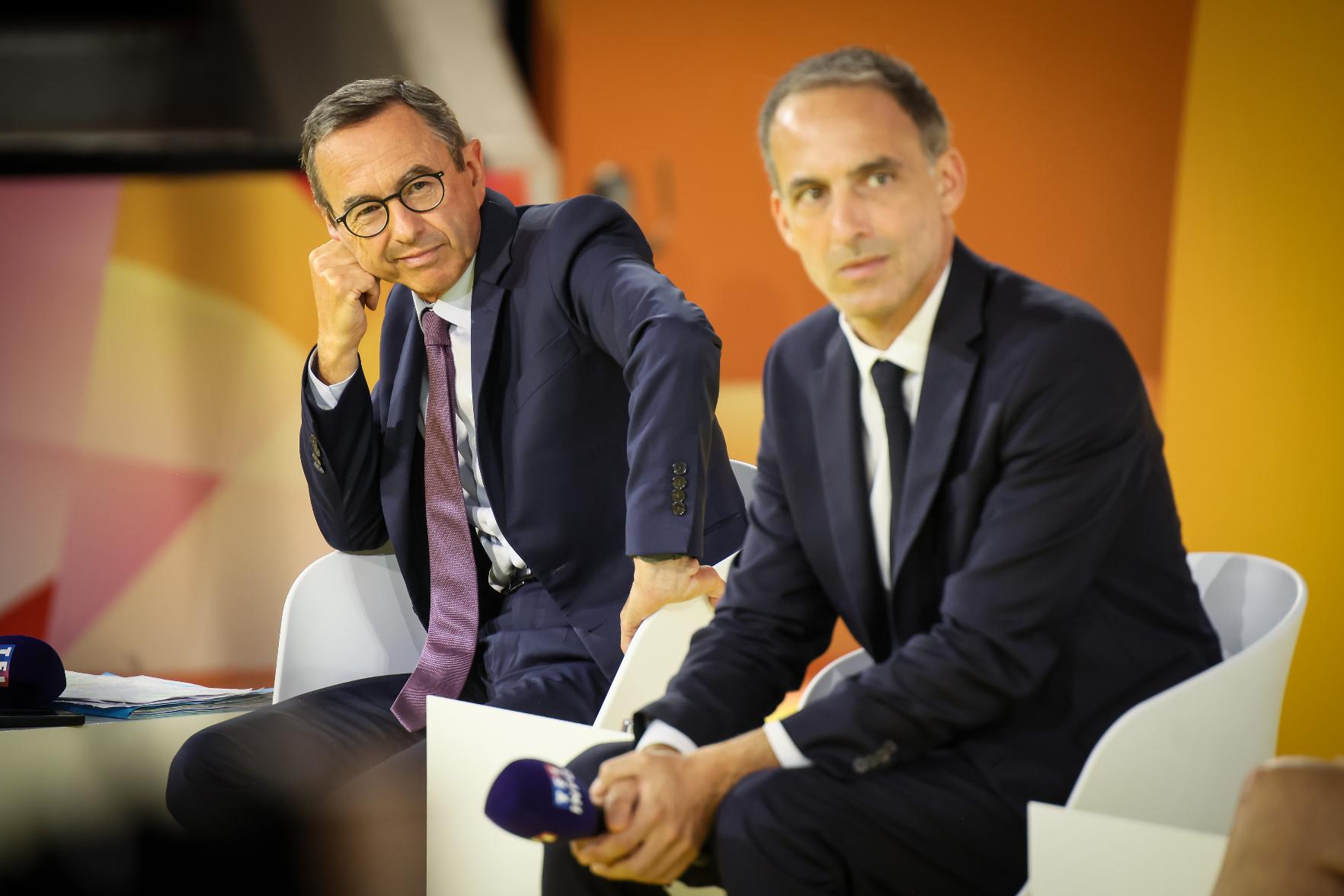
The emerging field includes figures from across France’s political spectrum. Far-right leader Marine Le Pen remains a major contender, while far-left leader Jean-Luc Mélenchon is also gaining attention as a potential runoff candidate. Centrist and mainstream figures including Édouard Philippe, Gabriel Attal, Bruno Retailleau and Raphaël Glucksmann are competing for support.
Recent polling has highlighted growing polarization, with Le Pen and Mélenchon emerging as strong contenders while moderate parties struggle to unite behind a single candidate. The possibility of a runoff between the far right and far left has become a central concern for France’s mainstream political forces.

The race is unfolding against a difficult economic and political backdrop. France faces high public debt, a large budget deficit and weak economic growth, issues that are expected to feature prominently in the campaign. Investors are also watching the election closely because a major shift in government could bring significant changes to fiscal and economic policy.
Immigration is another increasingly important issue. Several centrist candidates have adopted tougher positions on migration as they attempt to compete with the far right, particularly the National Rally led by Le Pen.
Macron’s political legacy will also shape the campaign. After nearly a decade of centrist leadership, voters are facing a choice between maintaining elements of his political approach and pursuing a more dramatic change in France’s domestic and foreign policy.
The election will have implications well beyond France. As a major European Union power, a nuclear-armed state and one of the bloc’s leading economies, France’s next president could significantly influence EU policy, European defense, immigration, economic strategy and relations with the United States and other global powers.
With political parties returning from the summer break and candidates stepping up their campaigns, France’s contest to replace Macron is now moving into a more intense phase.
swifteradio.com/update/
