
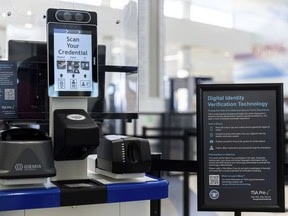
Air Canada has officially rolled out facial recognition technology at Vancouver International Airport (YVR), aiming to streamline the boarding process for domestic flights. This innovative system, the first of its kind in Canada, offers travelers an optional, faster, and hassle-free way to board their flights, sparking both excitement and skepticism.
The system operates through the Air Canada app, allowing travelers to create a “digital profile” by scanning their passport and capturing a facial image via their smartphone. Once registered, passengers can bypass the need for physical boarding passes or ID at the gate, instead relying on facial biometrics for seamless boarding.
While some travelers welcome the convenience, others are cautious. Angelika Damert, traveling to Finland, described the system as “quick and painless,” while Tanya Leeder, heading to Ontario, expressed unease, stating, “I don’t know if I’d be comfortable with it.”
Privacy Concerns and Data Security
The adoption of facial recognition technology raises concerns about data privacy. Tech analyst Carmi Levy highlighted the trade-off, saying, “We give something up for that convenience, and that something is our privacy.”
Air Canada assures passengers that their digital profiles are encrypted and stored only on their devices, with facial data automatically deleted within 36 hours. However, Levy warns that even within such a limited timeframe, data can still be vulnerable, and the app itself may collect additional information beyond facial biometrics.
Air Canada’s Vice President and Chief Information Officer, Mel Crocker, emphasized that the technology was designed with security as a top priority. He reassured users that their biometric data is not used for any purpose beyond boarding verification.
A Growing Trend in Air Travel
Facial recognition technology has already been adopted by several airlines in the U.S. and internationally. Air Canada plans to expand its use of this technology to other airports across Canada, positioning itself as a leader in modernizing the travel experience.
The move reflects a broader trend in the aviation industry, balancing innovation with ongoing debates about privacy and data security. As the technology expands, travelers will likely weigh the convenience of faster boarding against the potential risks to their personal information.
Source: Swiferadio.com
- Spotify Introduces “Verified by Spotify” Badge to Combat Rise of AI-Generated Music
- OpenAI Files for IPO as AI Giants Race Toward Wall Street Amid Trillion-Dollar Tech Boom
- Calgary Public Library Shut Down: Cyberattack Forces Citywide Closure and Data Breach Concerns
- Wall St Week Ahead: Expected US Rate Cuts Have Investors Looking Beyond Big Tech
