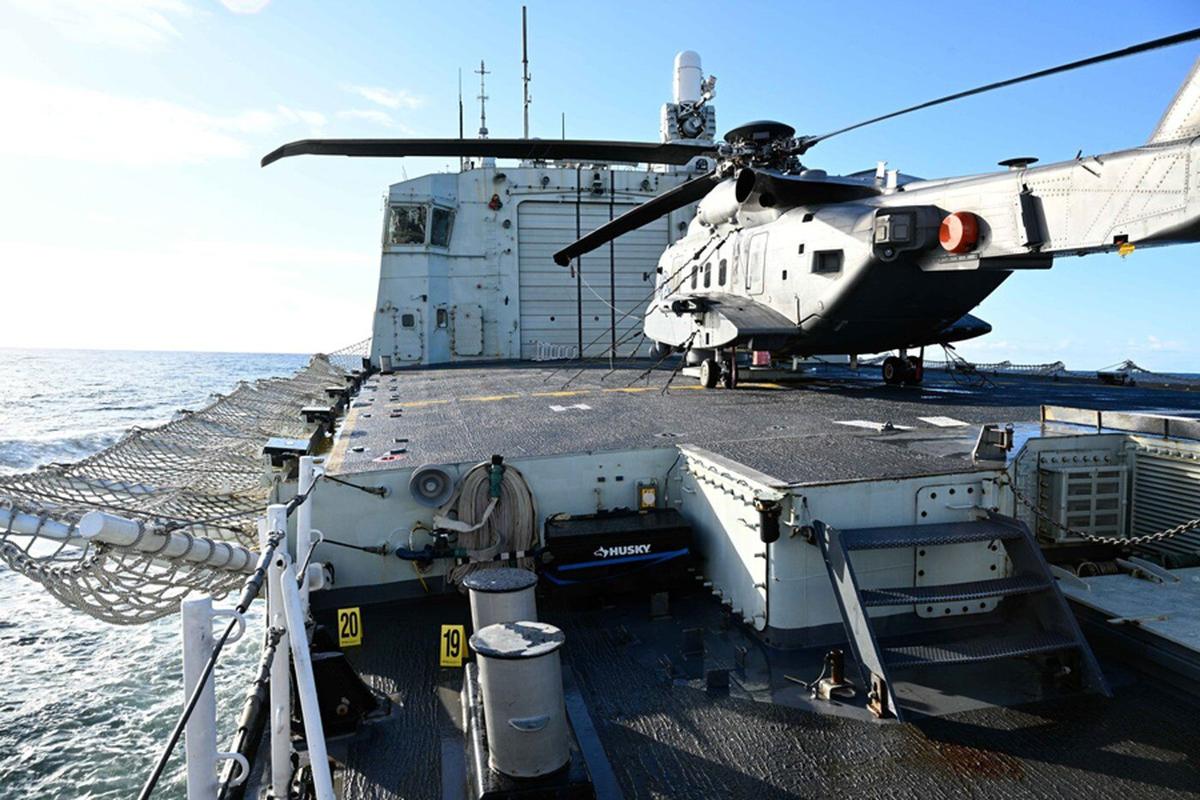
NORWEGIAN SEA — A Royal Canadian Air Force helicopter sustained serious damage during a nighttime landing aboard a Canadian Navy frigate in the Norwegian Sea, but all four crew members escaped without injuries, according to the Department of National Defence.
The incident involved a CH-148 Cyclone helicopter operating from HMCS Ville de Québec on October 6, 2026, as part of Canada’s contribution to a NATO mission in Europe.
A flight safety report released by the Department of National Defence explained that the accident occurred during the helicopter’s final landing sequence. As the aircraft touched down on the ship’s flight deck, two of its main rotor blades struck the tail boom, severing several components, including part of the tail rotor drive shaft.

The crew immediately carried out an emergency engine shutdown and evacuated the helicopter. Although no one was injured, the aircraft sustained very serious damage.
Rotor Blades Struck Helicopter’s Tail During Landing
According to the preliminary investigation summary, the helicopter was secured to the ship’s flight deck using a system known as the Helicopter Hauldown and Rapid Securing Device, commonly called the Beartrap.
The system helps secure helicopters during operations aboard naval vessels, particularly when landing conditions are challenging.
However, during touchdown, the helicopter’s main rotor blades struck its tail boom. The impact severed multiple components, including a section of the shaft that drives the tail rotor.
The tail rotor is an important part of helicopter flight control because it helps counteract the torque produced by the main rotor and allows pilots to maintain directional control.
Following the impact, the crew shut down the engines and exited the aircraft.
The Department of National Defence confirmed that all four crew members survived without injuries.
Investigation Continues Into Cause of Accident
The Department of National Defence said the ship’s flight deck movement was within established limits for nighttime helicopter landings when the incident occurred.
Investigators have not identified any technical problems so far, but the investigation remains ongoing.
The review is examining several possible contributing factors, including equipment and systems, environmental conditions and human factors.
Authorities have not yet established why the rotor blades struck the helicopter’s tail during touchdown. The preliminary findings therefore do not identify a definitive cause of the accident.
The investigation is expected to provide further information as specialists examine the aircraft and the circumstances surrounding the landing.
Canadian Frigate Participating in NATO Operation
HMCS Ville de Québec has been deployed at sea since July as part of Operation REASSURANCE, Canada’s contribution to NATO’s efforts to deter Russian aggression and strengthen security in Eastern Europe.
The operation involves Canadian Armed Forces personnel and military assets supporting NATO activities in the region.
The frigate is equipped to conduct maritime operations and support helicopter activities, making its onboard aviation capabilities an important part of its operational responsibilities.
The CH-148 Cyclone is the Royal Canadian Air Force’s maritime helicopter. It is designed to operate from naval vessels and perform missions including anti-submarine warfare, surveillance, search and rescue, and support for naval operations.
The October 6 incident highlights the operational risks associated with helicopter landings aboard ships, particularly during nighttime missions in open waters.
No Crew Injuries Despite Extensive Aircraft Damage
Although the helicopter was seriously damaged, the successful evacuation of all four crew members meant the incident resulted in no reported injuries.
The Department of National Defence has not announced a final determination regarding the cause of the accident.
For now, investigators are continuing to assess the material, environmental and human factors that may have contributed to the incident.
The findings could provide additional information about the circumstances surrounding the landing and help inform aviation safety measures for future Canadian military helicopter operations.
Swifteradio.com