
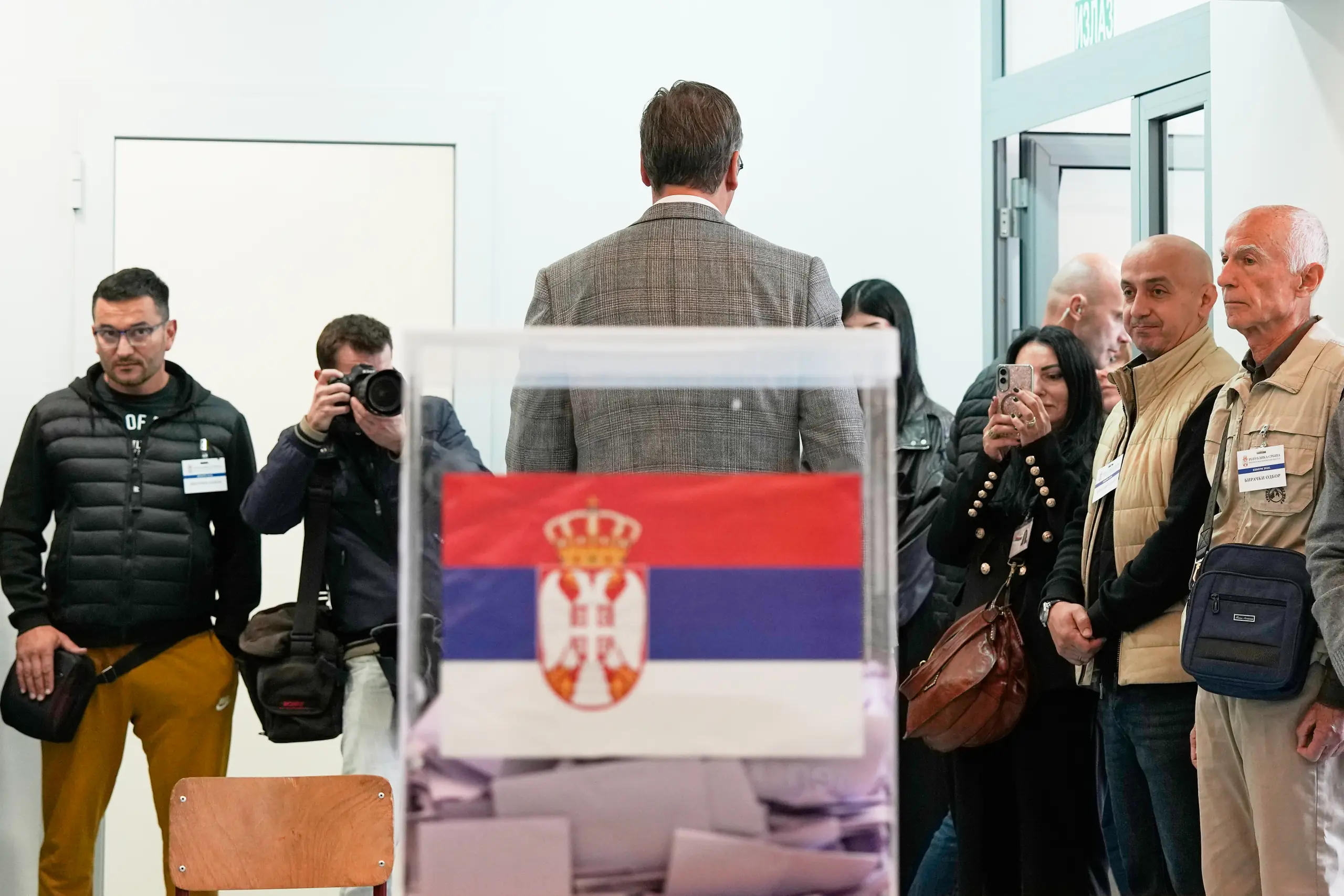
BELGRADE, Serbia — Serbia is experiencing a major political shake-up following the historic victory of a student-backed movement in the October 25 parliamentary election, with arrests of senior officials, high-profile resignations and renewed investigations into alleged corruption during Aleksandar Vučić’s years in power.
The student-backed Student List defeated the ruling Serbian Progressive Party (SNS), ending more than a decade of its dominance in national politics. Although the transfer of power has not yet been completed, the election result has already triggered changes across government institutions, state-owned companies and public broadcasting.
The developments have intensified demands for accountability over allegations of corruption, abuse of public office and the suppression of political opposition. Vučić and members of his party have denied wrongdoing.

Student Movement Demands Resignations and Institutional Reforms
Following its election victory, the Student List called for the resignation of senior officials in the police, intelligence services and judiciary.
At a news conference on October 29, representatives demanded investigations into alleged abuses of power and called for the reopening or acceleration of corruption cases involving public institutions.
They also urged public-sector employees to preserve official documents, contracts and financial records to prevent the destruction of potential evidence during the transition.
One of the major issues highlighted by the movement is the November 2024 collapse of a railway station canopy in Novi Sad, which killed 16 people. The tragedy sparked widespread student-led protests over alleged corruption and failures in public infrastructure oversight.
The movement wants authorities to establish accountability for the disaster and investigate how public funds were managed under the previous administration.
Senior Police Officials Detained
The post-election period has also seen the detention of prominent police officials.
Marko Kričak, former head of Serbia’s Criminal Police Directorate, and police commander Boško Sekulović were arrested on November 1. They are accused of abusing their official positions in connection with an investigation into a complex murder case.
Prosecutors have stressed that the arrests are unrelated to the Student List’s election victory. Kričak had previously faced allegations of police brutality during anti-government demonstrations, which he and the authorities have disputed.
Their detention has nevertheless attracted attention because of the wider demands for accountability within Serbia’s law enforcement institutions.
Alta Bank Owner Arrested as Financial Investigations Expand
Another major development involved the arrest of Davor Macura, owner of Alta Bank, on November 2.
Serbian prosecutors suspect Macura of illegally transferring approximately 45 billion dinars, equivalent to about $428 million, from the lender. Two other individuals were also detained over allegations that they assisted in the transactions.
The arrests followed the National Bank of Serbia’s decision to revoke Alta Bank’s operating licence on October 30, citing a significant deterioration in its financial condition and the risk of further decline.
Macura’s lawyers said he had cooperated with investigators. The bank’s collapse has also raised questions about regulatory oversight and its relationships with prominent business and political figures.
State Broadcasters Experience Leadership Changes
Serbia’s public broadcasting institutions have also undergone significant leadership changes since the election.
Manja Grčić resigned as director of Radio Television of Serbia (RTS) after pressure from employees and representatives of the student movement. Several senior editorial officials were also dismissed or replaced.
RTS subsequently issued an apology to viewers for omissions in its previous coverage.
At Radio Television of Vojvodina (RTV), general manager Goran Karadžić resigned on October 26, followed by editor-in-chief Nenad Čačić on October 30.
The changes have renewed debate about media independence and allegations that public broadcasters previously favoured Vučić’s government. The student movement has called for reforms intended to strengthen editorial independence and public accountability.
Election Victory Followed Years of Student Protests
The student movement emerged from demonstrations following the Novi Sad railway station disaster in November 2024.
What began as protests demanding accountability gradually developed into a nationwide movement challenging corruption, government transparency and the treatment of political opponents.
The movement eventually entered electoral politics through the Student List, which secured a major victory in the October 25 parliamentary election.
Preliminary results reported by Serbia’s electoral authorities showed the Student List winning 140 seats in the 250-member parliament, compared with 104 for the SNS. The final outcome remains subject to the completion of electoral procedures, including a rerun at some polling stations.
Vučić Vows to Rebuild His Political Party
Despite the defeat, Vučić has indicated that he intends to remain active in Serbian politics.
He has announced plans to reorganize the SNS leadership and introduce new figures into its governing structure. He has also rejected allegations of wrongdoing and criticized moves against officials associated with his administration.
The outgoing political establishment has warned against what it describes as politically motivated investigations and attempts to remove officials without due process.
Meanwhile, the student-backed movement faces the challenge of translating its electoral victory into effective government while ensuring that investigations are conducted independently and in accordance with the law.
Serbia Enters a Critical Political Transition
The arrests, resignations and investigations mark an important period of political transition for Serbia.
The incoming parliamentary majority has promised to strengthen public institutions, address corruption allegations and improve accountability. However, the transition is still unfolding, and the eventual composition of the new government remains a key question.
For many Serbians who participated in the student-led protests, the election victory represents an opportunity to pursue long-standing demands for transparency and institutional reform.
The coming months will show how the new political leadership handles those demands while maintaining stability and protecting the independence of the country’s legal and democratic institutions.
Swifteradio.com