MOGADISHU, Somalia — The United Nations is preparing to close its political mission in Somalia on October 31, ending more than three decades of successive UN political missions in the country without an agreed replacement to mediate a growing dispute between the federal government and opposition leaders over elections and presidential tenure.
The closure of the United Nations Transitional Assistance Mission in Somalia (UNTMIS) marks a significant change in international engagement with the Horn of Africa nation. While the Somali government describes the transition as a step toward greater national responsibility, opposition figures and analysts warn that the departure could leave an important gap in political mediation at a time of heightened uncertainty.
Somalia requested the mission’s closure in 2024, and the UN Security Council approved a two-year transition designed to transfer its responsibilities to Somali institutions and other United Nations bodies. However, efforts to resolve the country’s latest political dispute have yet to produce an agreement between the government and opposition groups.

UN Mission Concludes After Decades of Political Support
UNTMIS succeeded the United Nations Assistance Mission in Somalia (UNSOM) in 2024 as part of a transition toward greater Somali ownership of governance, peacebuilding and state-building responsibilities.
The mission and its predecessors supported political reconciliation, electoral processes, constitutional development, human rights initiatives and the strengthening of government institutions following the collapse of Somalia’s central government in 1991.
Over the years, UN political missions worked with federal authorities, regional administrations, civil society groups and international partners to encourage dialogue and support the development of Somalia’s federal system.
The United Nations says the transition has transferred the mission’s mandated functions to Somali institutions and relevant UN agencies, funds and programmes. The organization has also reaffirmed that its wider presence in Somalia will continue after UNTMIS closes.
Dispute Over Presidential Term Raises Political Tensions
The mission’s departure comes amid disagreement over constitutional changes that extend the terms of Somalia’s president and parliament from four years to five.
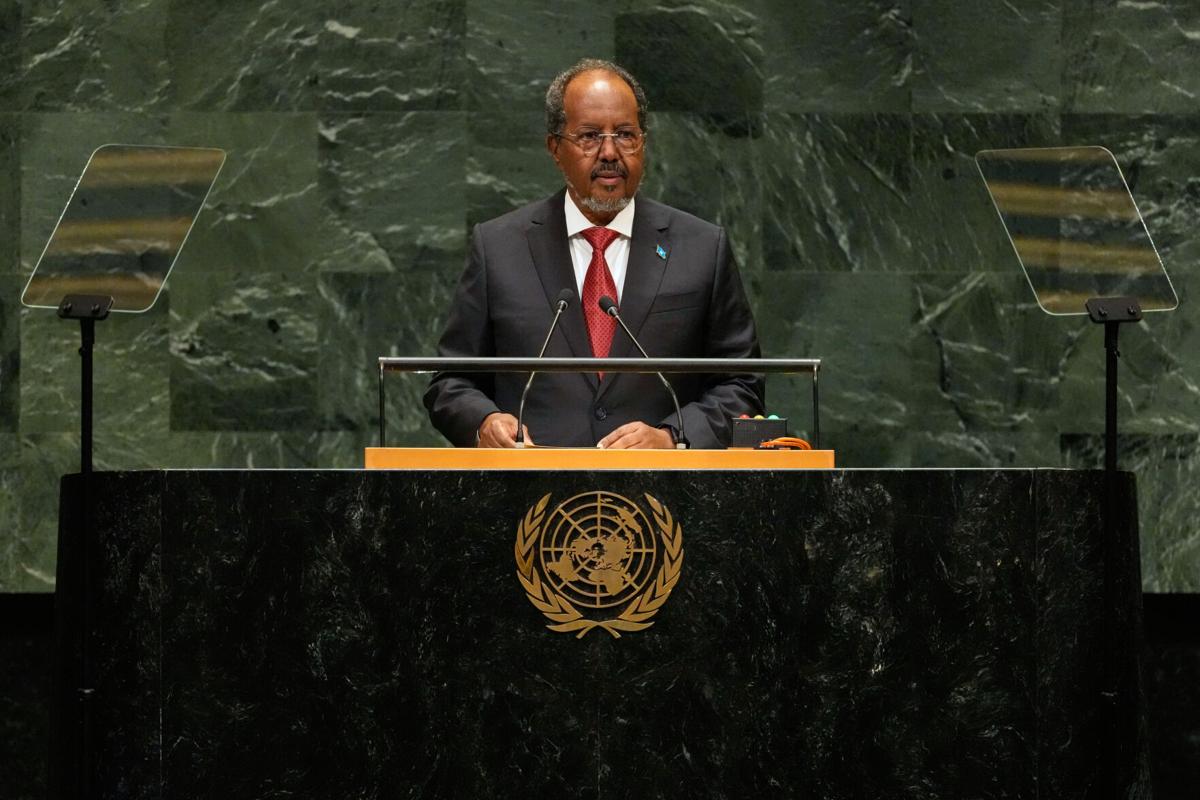
President Hassan Sheikh Mohamud’s government argues that the changes allow current officeholders to remain in power until 2027. Opposition leaders reject that interpretation, arguing that the changes should not extend the mandates of officials already in office and that the existing terms have expired.
The disagreement has raised concerns about the legitimacy of the country’s political leadership and the arrangements needed to organize future elections.
Previous attempts to broker an agreement between the federal government, opposition leaders and regional administrations have failed to settle the dispute. The absence of a mutually accepted electoral framework has increased uncertainty over how the next political transition will take place.
Opposition Calls for International Mediation
Opposition groups have expressed concern that the end of UNTMIS will remove an established channel for facilitating negotiations between rival political factions.
The opposition Somali Future Council has sought an international mediation mechanism to help address the dispute after the mission’s closure. Some analysts have also warned that the absence of an agreed mediator could make it harder to contain disagreements over constitutional authority and election arrangements.
The government, however, has presented the transition as an important step toward national ownership of political processes and the country’s long-term development.
Deputy Prime Minister Salah Ahmed Jama described the closure as a sign that Somalia had moved beyond its earlier transitional period. The UN has meanwhile urged Somali leaders to maintain inclusive political dialogue and continue working toward reconciliation.
President Mohamud has invited political leaders to participate in election talks scheduled for November 14–18. However, major opposition groups had not confirmed their participation as of the latest reports, leaving uncertainty over whether the discussions will produce a breakthrough.
Security Challenges Continue as Al-Shabaab Remains Active
Somalia’s political uncertainty coincides with persistent security threats from al-Shabaab, an al-Qaida-linked militant group that continues to carry out attacks against government forces, officials and civilians.
African Union personnel will continue supporting Somali security forces through the African Union Support and Stabilization Mission in Somalia (AUSSOM). A separate UN support office will also remain involved in providing logistical assistance to the African Union mission and eligible Somali security units.
These arrangements mean that the closure of UNTMIS does not represent the end of all UN or international security support in Somalia. However, the political mission’s departure removes a dedicated structure that has played a role in political dialogue and reconciliation.
Humanitarian Crisis Adds to Somalia’s Challenges
Beyond the political and security situation, Somalia continues to face serious humanitarian needs driven by recurring drought, flooding, displacement and food insecurity.
Many families have lost livestock, experienced failed harvests or been forced to leave their homes because of insecurity. Humanitarian organizations have also warned that declining aid funding is making it harder to meet the needs of vulnerable communities.
The UN has called for sustained international support to help Somalia consolidate its progress, strengthen institutions, protect human rights and address continuing security and humanitarian challenges. Its agencies and programmes will continue working with Somali authorities and other partners after UNTMIS closes.
Somalia Faces a Critical Political Transition
The end of UNTMIS represents a major change in the international framework that has supported Somalia’s political development since 2013. Although responsibility for the mission’s functions has been transferred, the unresolved election dispute highlights the difficulties facing the country’s institutions.
The immediate challenge is whether Somali leaders can agree on a credible electoral process and a peaceful way to manage competing claims over political authority.
With the UN political mission set to close and opposition participation in upcoming talks uncertain, the coming weeks could be important for determining whether negotiations can produce an agreement acceptable to the country’s main political stakeholders.
Swifteradio.com