
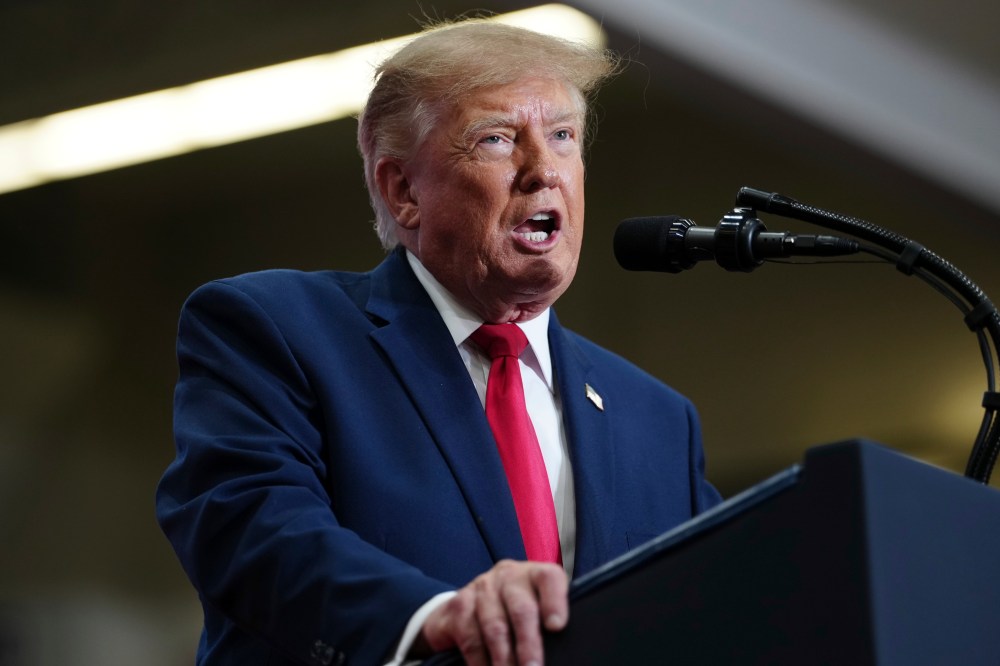
U.S. President Donald Trump says he expects the ongoing trade dispute between the United States and Canada to be resolved “pretty soon,” although he has not provided details about a possible agreement or when negotiations might conclude.
Trump made the remarks on Sunday, October 25, during a political rally in Port Huron, Michigan, near the Canadian border. His comments came as tariffs and trade tensions between the two countries continued to affect businesses, manufacturers and communities on both sides of the border.
Trump Predicts Progress in Trade Dispute With Canada

Speaking to supporters, Trump defended his administration’s decision to impose tariffs on Canadian goods, arguing that the United States had been disadvantaged by its trading relationship with Canada.
“We’ll have that settled pretty soon. They’re willing to give us anything at this moment,” Trump said, suggesting that Canadian officials were prepared to make significant concessions.
However, the president did not identify the concessions he was referring to or outline the terms of a potential deal. The office of Canadian Prime Minister Mark Carney had not immediately responded to a request for comment following the rally.
Tariffs Strain U.S.-Canada Economic Relations
Trade relations between Washington and Ottawa have faced renewed pressure since formal negotiations broke down in August 2026.
The United States subsequently imposed additional tariffs on billions of dollars’ worth of Canadian goods, prompting Canada to introduce retaliatory tariffs on American products. The measures have increased uncertainty for businesses that depend on cross-border supply chains and trade.
The dispute has been particularly significant for industries closely integrated across the border, including automotive manufacturing. Companies operating in both countries rely on the movement of components and finished products between factories, making changes to tariffs and trade rules important to their costs and operations.
In Michigan, where the automotive industry plays a major economic role, the dispute has also drawn attention from political leaders and business interests.
Republican Congressman Mike Rogers, who appeared on NBC’s Meet the Press on Sunday, expressed concern about the effects of tariffs on the automotive sector, while also pointing to manufacturing investments that he said had followed the administration’s trade policies.
Tariff Changes Add Uncertainty
Trump’s latest comments followed an announcement that some tariffs would be lifted at the end of October, while additional duties would be imposed on dozens of other products, according to reports.
These changes suggest that the administration is continuing to adjust its trade approach even as the president signals that a broader resolution may be near.
For Canadian exporters and American businesses that depend on Canadian materials and products, the key questions remain which tariffs could be removed, which trade conditions might change and whether any agreement would provide lasting certainty.
What Happens Next?
Trump’s prediction has raised the possibility of progress in the U.S.-Canada trade dispute, but no finalized agreement has been announced.
Until both governments confirm the details of a deal, businesses and consumers will continue to face uncertainty over tariffs, costs and cross-border trade.
The coming weeks could prove important for the two countries as officials consider whether negotiations can resume and whether a mutually acceptable arrangement can be reached.
For now, Trump’s statement that the dispute could end “pretty soon” remains an expectation rather than confirmation that the trade war is over.
Swifteradio.com