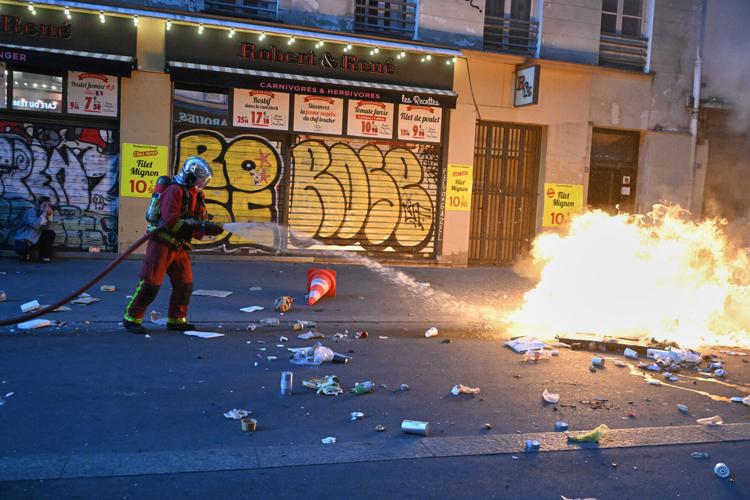
French Prime Minister Sébastien Lecornu has directed regional authorities to introduce limited, localized curfews in parts of the country following a weekend of violent protests, rioting and looting that caused extensive damage to public buildings and businesses.
The measures, announced on Monday, October 19, 2026, are intended to restore public order and prevent further violence. Lecornu said the curfews should be restricted to specific areas rather than imposed across entire cities.
Speaking after an emergency meeting with senior government officials, the prime minister emphasized that the government was determined to restore security while responding to the unrest that spread across several French cities.

Curfews to Target Specific Areas
Lecornu instructed regional prefects to identify areas where localized curfews would be necessary. Authorities were expected to provide further details later on Monday, although the government had not immediately announced which cities or neighbourhoods would be affected.
The prime minister ruled out placing all of Paris under curfew, stressing that the restrictions would be partial and geographically limited. He also indicated that the government could consider stronger emergency measures if the situation required them.
The decision follows widespread violence during demonstrations over rising living costs and concerns about school conditions. While many people participated in peaceful marches, groups of rioters and looters attacked businesses, damaged public property and clashed with law enforcement officers.
Thousands Arrested as Businesses and Public Buildings Are Targeted
The weekend unrest resulted in significant damage across France, including attacks on government buildings and the looting of shops. In Limoges, a fire severely damaged the historic city hall, while businesses in several major cities were targeted.
French authorities reported that approximately 2,400 people had been arrested in connection with the violence. Nearly 1,000 police officers and gendarmes were also reported injured during confrontations.
The scale of the destruction has raised questions about security preparations and whether authorities adequately anticipated the demonstrations’ size and the potential for violence.
Interior Minister Laurent Nuñez acknowledged shortcomings in the preparations, saying police had faced difficulties managing the unrest in some urban centres. He had offered to resign over the security failures, but President Emmanuel Macron rejected the resignation and asked him to remain in office to oversee the response.
Macron Government Faces Pressure to Restore Order
The unrest has placed additional pressure on Macron’s government as officials face demands to explain how the violence escalated and what steps will prevent further incidents.
Authorities are reviewing security arrangements and considering changes to policing strategies. The government has also emphasized the need to distinguish peaceful demonstrators from those responsible for arson, looting and attacks on public institutions.
Although the government has focused on restoring order, the protests also reflect broader public concerns about the cost of living and the quality of public services.
The effectiveness of the localized curfews will depend on how they are implemented and whether they can prevent further violence without unnecessarily restricting residents’ daily activities.
For now, French authorities are working to secure affected communities, support businesses facing losses and prevent another wave of rioting as the country continues to deal with the aftermath of the unrest.
Swifteradio.com