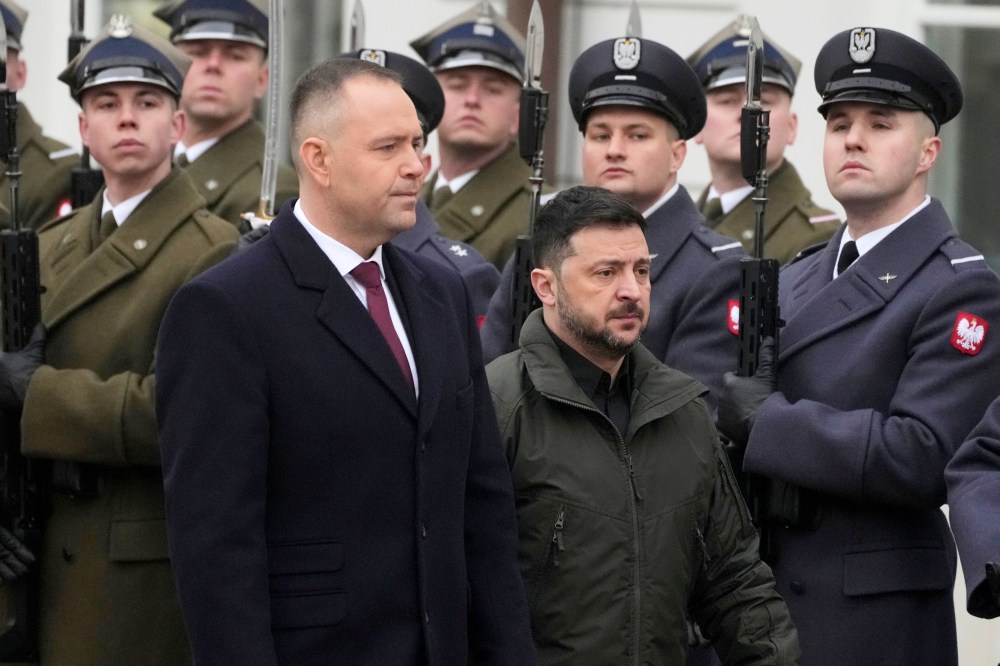
Ukrainian officials have strongly criticized a decision by Poland’s president to revoke an honor previously bestowed upon Ukrainian President Volodymyr Zelenskyy, warning that the move risks undermining relations between two neighboring allies at a critical moment in the war with Russia.
The decision has sparked diplomatic tension between Kyiv and Warsaw, with Ukrainian leaders expressing disappointment over what they described as an unnecessary and politically motivated action against a leader whose country continues to defend itself against Russian aggression.
According to Ukrainian officials, Zelenskyy has played a pivotal role in strengthening ties between Ukraine and its international partners, including Poland, since Russia launched its full-scale invasion in 2022.
“Such decisions are difficult to understand, especially given the sacrifices Ukrainians continue to make in defending not only their sovereignty but also the security of Europe,” one Ukrainian official said.

The controversy comes amid a period of increasingly complex relations between Ukraine and Poland. While Poland has been one of Ukraine’s strongest supporters—providing military assistance, humanitarian aid, and refuge to millions of displaced Ukrainians—disagreements over historical issues, agricultural imports, and domestic political considerations have occasionally strained bilateral ties.
The honor previously awarded to Zelenskyy had been viewed as a symbol of solidarity between the two nations during one of Europe’s most challenging security crises in decades.
Polish officials defending the decision reportedly argued that it reflected broader national considerations rather than a rejection of support for Ukraine itself. However, the move has generated criticism from observers who fear it could send mixed signals regarding Poland’s commitment to its eastern neighbor.
Political analysts note that symbolic gestures often carry significant diplomatic weight, particularly during wartime.
The removal of such recognition has the potential to influence public perceptions and complicate relationships between governments that have otherwise maintained close cooperation.
Since the outbreak of the Russia-Ukraine war, Poland has emerged as one of Kyiv’s most important allies within NATO and the European Union, advocating for increased sanctions against Russia and expanded military support for Ukraine.
At the same time, domestic political dynamics in Poland have increasingly shaped debates surrounding foreign policy and national identity, particularly as elections and public opinion continue to influence government decisions.
Despite the latest disagreement, experts believe that both countries share strategic interests that make a complete breakdown in relations unlikely.
Security cooperation, regional stability, and continued support for Ukraine’s defense remain priorities for both governments as the conflict with Russia persists.
Ukrainian officials have expressed hope that the dispute can be resolved through dialogue and mutual understanding, emphasizing the importance of maintaining unity among allies facing common threats.
For many observers, the controversy highlights the delicate balance between domestic politics and international diplomacy during times of crisis.
As Ukraine continues its fight against Russian forces, preserving strong partnerships with neighboring countries remains vital to its broader military and political objectives.
Whether this latest disagreement proves to be a temporary setback or signals deeper tensions remains to be seen. However, both Kyiv and Warsaw now face the challenge of ensuring that symbolic disputes do not overshadow the strategic partnership that has defined their relationship throughout the war.
Swifteradio.com
