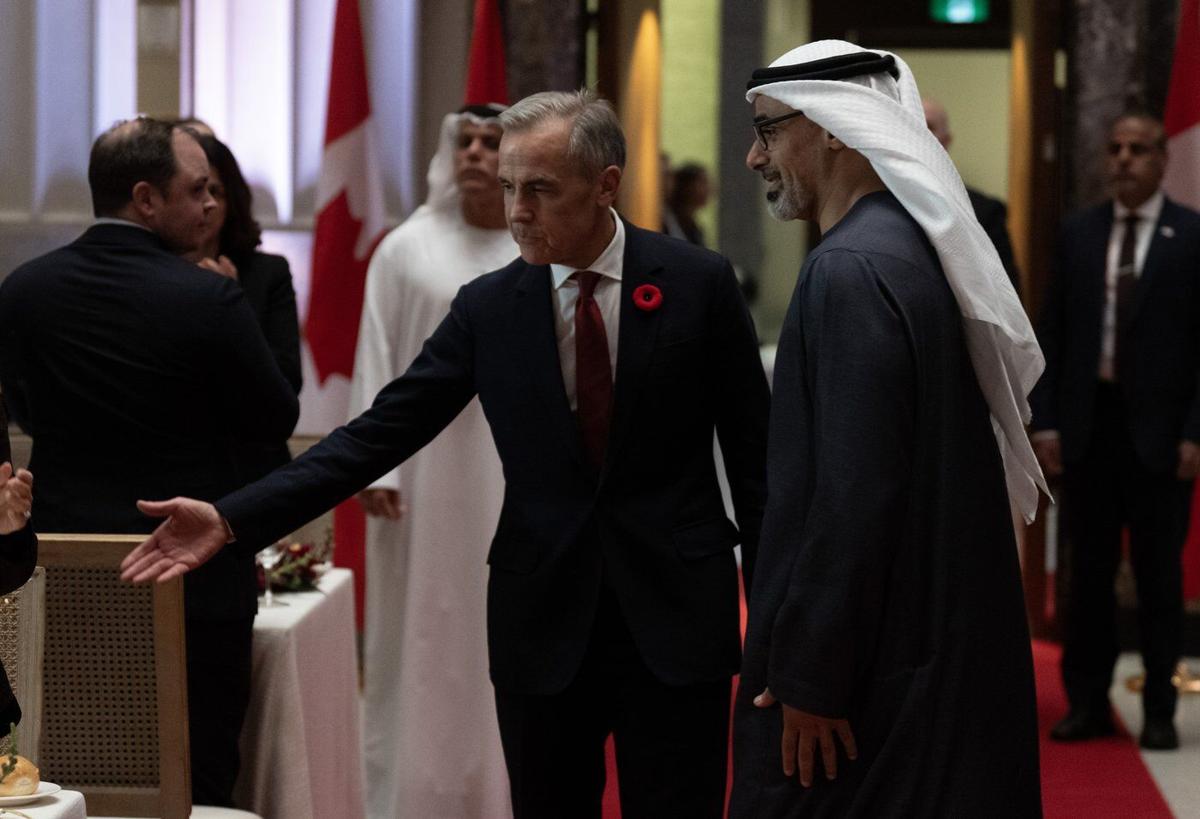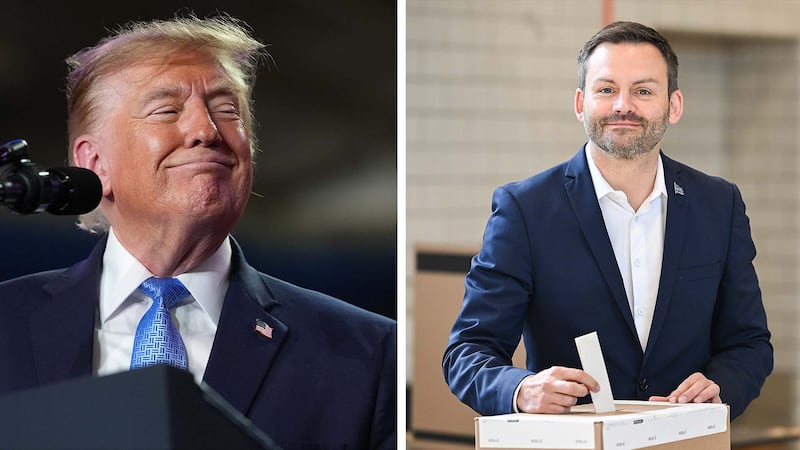
U.S. President Donald Trump has drawn attention to Canada’s political divisions after congratulating Quebec’s incoming premier, Paul St-Pierre Plamondon, on his Parti Québécois (PQ) election victory while sharing an article describing the result as a blow to Prime Minister Mark Carney.
Trump published the message on his Truth Social platform on Tuesday, October 27, 2026, more than three weeks after Quebec’s October 5 provincial election. His post offered congratulations to St-Pierre Plamondon but also highlighted commentary suggesting that the separatist party’s victory could complicate Carney’s efforts to maintain national unity amid ongoing trade tensions with the United States.
The message has attracted attention because of its timing and political implications, particularly as Ottawa continues to navigate a difficult trade relationship with Washington.

Trump Congratulates Quebec’s Incoming Premier
In his social media post, Trump wrote, “Congratulations to Paul St-Pierre Plamondon on his WIN!”
The U.S. president also shared a link to an article framing the PQ’s victory as a setback for Carney. Although Trump did not directly criticize the Canadian prime minister in the short message, the article he highlighted connected Quebec’s election result to the challenges facing the federal government.
The post came as Trump continued to signal that a potential resolution to the U.S.-Canada trade dispute could be approaching.
On October 25, Trump said he expected the trade war between the two countries to end “pretty soon,” although he did not provide details of a possible agreement or specify which concessions Washington was seeking.
Parti Québécois Wins Quebec Election
St-Pierre Plamondon led the Parti Québécois to victory in Quebec’s October 5 provincial election, ending the governing Coalition Avenir Québec’s time in office.
The PQ won 59 of the 127 seats in the National Assembly, falling five seats short of a majority. The result means the party must work with other legislators to pass legislation and advance its political agenda.
The party’s central political objective is Quebec sovereignty, or independence from Canada. St-Pierre Plamondon has said he intends to pursue a future referendum on independence, but has indicated that he would wait until Trump is no longer president before calling another vote.
The PQ’s victory has therefore raised questions about the future relationship between Quebec and Ottawa, particularly as Canada faces economic pressure from U.S. tariffs.
How the Election Could Affect Mark Carney
Carney congratulated St-Pierre Plamondon following the election and expressed a willingness to work with Quebec’s incoming government.
The prime minister has emphasized cooperation between Ottawa and Quebec, including efforts to support businesses and workers affected by tariffs, advance infrastructure projects and strengthen the economy.
However, the incoming Quebec government’s commitment to sovereignty could create additional political challenges for the federal government.
Carney has argued that governments should focus on immediate economic priorities rather than allowing a possible future referendum to overshadow current concerns. These include housing affordability, economic growth, infrastructure investment and support for industries affected by the trade dispute.
The PQ’s minority position in the legislature also means that its ability to advance major initiatives, including any steps toward a referendum, will depend on negotiations with opposition parties.
Canada-U.S. Trade Tensions Add to Political Pressure
Trump’s message comes amid continuing disagreements over tariffs and cross-border trade.
The U.S. administration has imposed tariffs on various Canadian goods, prompting concerns among manufacturers, exporters and workers whose livelihoods depend on integrated North American supply chains.
Carney’s government has sought to negotiate with Washington while protecting Canadian economic interests. Trump, meanwhile, has defended his tariff policies and argued that Canada should make concessions to secure a trade agreement.
Against this backdrop, Quebec’s election has added another dimension to Canada’s political landscape. While the PQ’s sovereignty agenda is primarily a domestic issue, it could complicate efforts by federal and provincial leaders to present a coordinated response to U.S. trade policy.
What Trump’s Message Means for Canadian Politics
Trump’s congratulatory post does not, by itself, establish a change in U.S. policy toward Quebec or Canada. However, his decision to share commentary portraying the PQ victory as a setback for Carney has drawn attention to the intersection of Canadian political divisions and bilateral trade relations.
For St-Pierre Plamondon, the immediate challenge will be forming a workable legislative strategy and pursuing his party’s commitments while governing without a majority.
For Carney, the priority remains managing the trade dispute with Washington while maintaining cooperation with Quebec and other provinces.
As the new Quebec government prepares to take office, the relationship between sovereignty politics, Canadian national unity and U.S. trade policy is likely to remain a significant issue in the months ahead.
Swifteradio.com