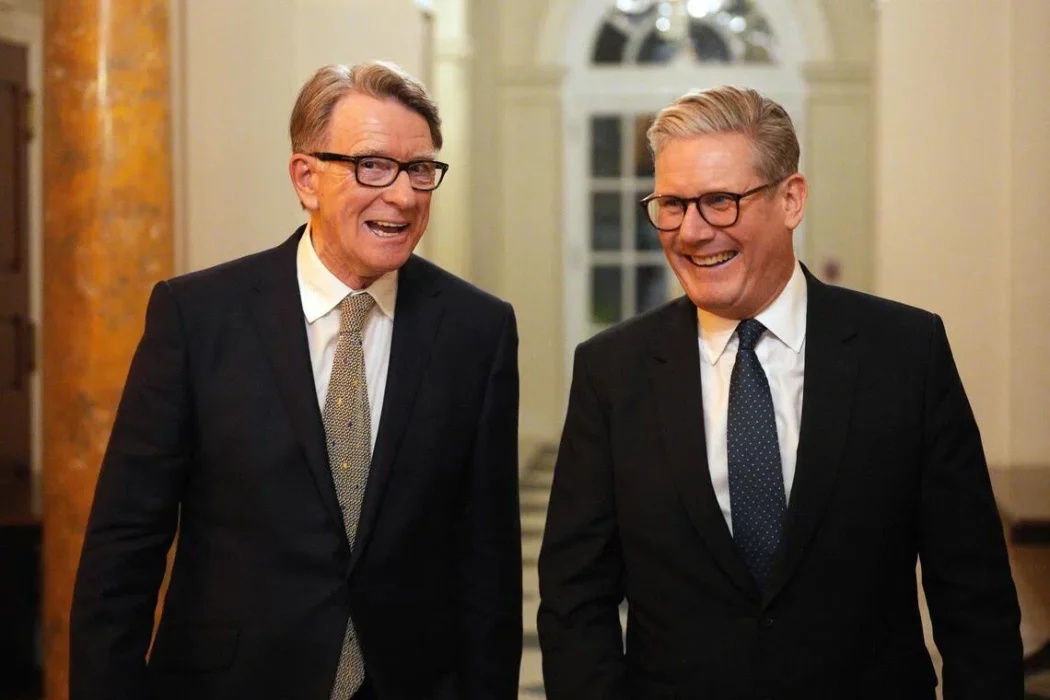
British Prime Minister Keir Starmer is under mounting pressure to resign following revelations that his government appointed Peter Mandelson as U.K. ambassador to the United States despite security officials advising against the move.
The controversy centers on claims that the Foreign Office overruled a recommendation from U.K. security vetting authorities in early 2025, who reportedly flagged concerns about Mandelson’s suitability for the high-profile diplomatic role. The concerns were partly linked to his past association with convicted sex offender Jeffrey Epstein.
Starmer has insisted he was unaware of the security objections at the time of the appointment, saying he was “absolutely furious” upon learning that the recommendation had been ignored. He described the situation as “staggering” and “unforgivable,” pledging to present full details to Parliament.
The fallout has already claimed a senior figure, with top Foreign Office civil servant Olly Robbins resigning over the decision. However, the political pressure continues to intensify, with opposition leaders questioning how the prime minister could have been kept in the dark on such a critical matter.

Conservative Party leader Kemi Badenoch dismissed Starmer’s claims as implausible, arguing that the explanation “does not stack up” and suggesting the prime minister is misleading the public. Liberal Democrat leader Ed Davey also warned that Starmer should step down if it is proven he misled Parliament.
Government officials have confirmed that the internal vetting process recommended against Mandelson’s appointment, but that the final decision remained within the rules. According to Chief Secretary Darren Jones, the sensitive nature of security checks means such findings are tightly restricted and not routinely shared with ministers.
Mandelson, a senior figure within the Labour Party and a seasoned trade expert, was appointed in December 2024 and assumed his post in Washington in February 2025. The decision is now being viewed as a significant political miscalculation that could have lasting consequences for Starmer’s leadership.
As scrutiny intensifies, the scandal threatens to destabilize the government, with calls for accountability growing louder ahead of Starmer’s planned address to Parliament.
