
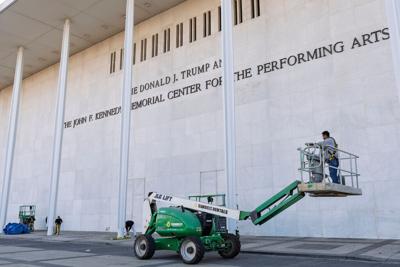
A judge has ruled that the board of the John F. Kennedy Center for the Performing Arts violated legal procedures when it approved the placement of President Donald Trump’s name on part of the institution, while also blocking efforts related to the facility’s proposed closure.
The court decision marks a significant development in a dispute that has drawn attention from legal experts, cultural organizations, and political observers across the United States.
According to the ruling, the board failed to comply with established legal requirements and governance procedures before approving the naming decision, prompting judicial intervention.
The judge concluded that the action did not meet the standards required for such a significant change involving a nationally recognized cultural institution.

In addition to addressing the naming controversy, the court also blocked plans that could have resulted in the closure or suspension of operations at parts of the Kennedy Center.
Supporters of the lawsuit argued that the board exceeded its authority and failed to follow proper legal processes when making decisions affecting the institution.
The John F. Kennedy Center for the Performing Arts is one of the most prominent performing arts venues in the United States and serves as a major center for music, theater, dance, and cultural events.
The dispute has sparked broader debates about governance, political influence, and the management of public cultural institutions.
Legal analysts say the ruling reinforces the principle that boards overseeing public and nonprofit institutions must adhere to established procedures when making significant organizational decisions.
Meanwhile, supporters of the naming proposal argue that the decision was intended to recognize contributions to the institution, while critics contend that the move unnecessarily politicized a national cultural landmark.
The case has generated strong reactions from both political allies and opponents of President Trump, reflecting the broader polarization surrounding many public policy and cultural issues in the United States.
Observers expect the ruling to influence future decisions involving naming rights, institutional governance, and public accountability within major cultural organizations.
It remains unclear whether the board will appeal the decision or pursue alternative legal options in response to the court’s findings.
For now, the ruling preserves the institution’s operations while preventing implementation of the contested measures.
Further developments are expected as legal proceedings continue and stakeholders assess the implications of the court’s decision.
Swifteradio.com
