
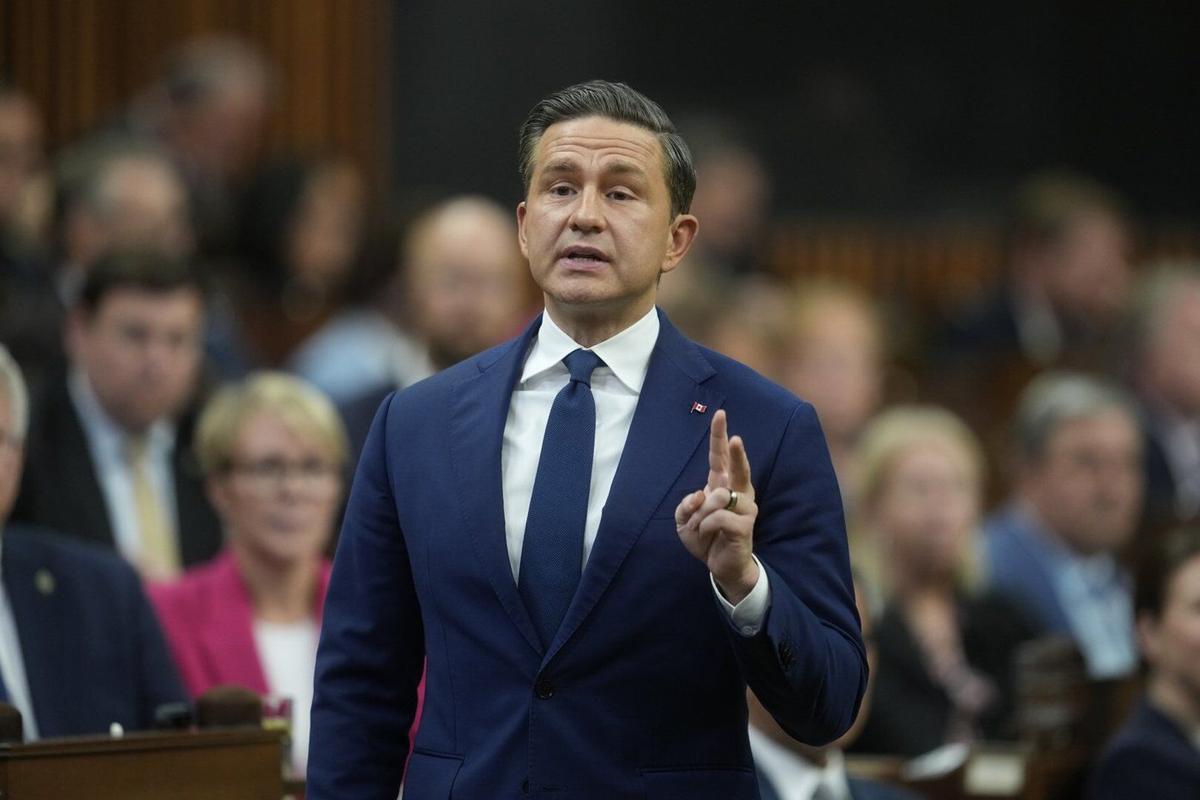
Conservative Leader Pierre Poilievre is calling for federal tax cuts on diesel fuel, arguing that the measures could help lower costs for Canadians while strengthening the country’s long-term fuel supply.
Poilievre outlined the proposal Sunday at a suburban Ottawa gas station, saying Canada produces enough diesel to meet domestic demand but faces transportation and infrastructure bottlenecks that leave some regions dependent on imports from the United States.
Under the proposal, the Conservatives would eliminate federal taxes on diesel sales until at least Canada Day next year. Poilievre is proposing an extension of the federal fuel excise-tax suspension until July 1, 2027, as well as removing the GST on fuel purchases.
He is also proposing changes to diesel production costs, including permanently scrapping the federal industrial carbon tax and the Clean Fuel Standard, which he argues increase production costs and discourage investment in Canadian refining capacity. These are proposals from the Conservative leader, rather than current federal policy.

Poilievre says his plan would also encourage the expansion of domestic refining capacity, allow more Canadian crude to be processed at Canadian refineries and support investments in transportation and fuel-storage infrastructure.
The proposal comes as diesel prices and global fuel markets face significant pressure. International supply disruptions linked to conflicts in the Middle East and Ukraine have contributed to tighter diesel supplies and higher prices globally.
Canada had previously suspended the federal excise tax on gasoline and diesel, setting the diesel rate at zero cents per litre from April 20 through September 7, 2026. The federal government subsequently extended the suspension until January 31, 2027.
The Conservative proposal would therefore extend and broaden existing fuel-tax relief while also targeting production-related costs.
Diesel is particularly important to Canada’s transportation, agriculture, construction and resource sectors, meaning changes in fuel prices can affect the cost of moving goods and operating heavy equipment.
The debate over diesel taxes comes as Canadian policymakers face pressure to address affordability while also ensuring that the country has reliable domestic energy supplies.
Swifteradio.com