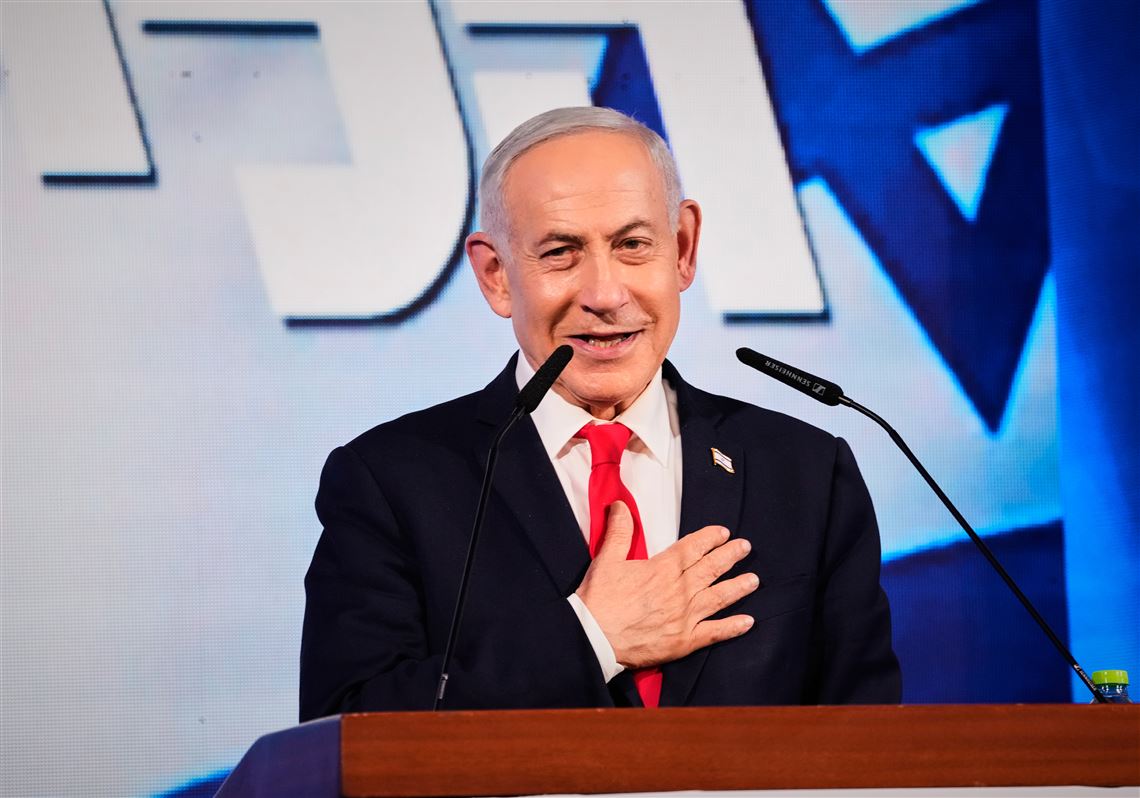
JERUSALEM, Israel — Israelis are awaiting the final results of a closely contested national election after voter turnout reached its highest level since 1999, leaving Prime Minister Benjamin Netanyahu facing a difficult path to forming the next government.
Voting took place on Tuesday, October 27, 2026, with preliminary results and exit polls pointing to a divided political landscape. Although Netanyahu’s Likud party remained a major force in the contest, early figures suggested that neither his governing bloc nor the opposition led by former military chief Gadi Eisenkot had secured a clear parliamentary majority.
With hundreds of thousands of absentee ballots still to be counted, the final distribution of seats in Israel’s 120-member parliament, the Knesset, remains uncertain. The outcome could trigger weeks of coalition negotiations or, if no government can be formed, lead to another election.

Israel Records Highest Voter Turnout Since 1999
According to Israel’s Central Elections Committee, voter turnout reached approximately 77.7% of eligible voters, marking the highest participation rate since 1999.
The strong turnout reflected intense public interest in an election widely viewed as a test of Netanyahu’s leadership following the Hamas-led October 7, 2023, attacks and the wars that followed.
Voters also considered domestic concerns, including the government’s relationship with far-right parties, exemptions from military service for some ultra-Orthodox Jewish communities, judicial independence and Israel’s international standing.
The election attracted significant participation across different sections of Israeli society, including Arab citizens, who make up approximately one-fifth of the country’s population. Their votes could prove important in determining which political bloc can secure sufficient parliamentary support.
Netanyahu Faces a Difficult Path to Forming Government
Preliminary counting indicated that Netanyahu’s Likud party remained a leading political force, but the results did not establish whether his coalition could retain control of the Knesset.
With about half of the votes counted, Likud had received approximately 20.6% of the vote, compared with 16.8% for Eisenkot’s Yashar party. These figures reflected vote shares at that stage of counting, not final parliamentary seat totals.
Exit polls initially suggested that Netanyahu’s bloc and the opposition grouping could each secure around 51 seats, while Arab-led parties might win approximately 18 seats. These projections remain subject to change as counting progresses.
Netanyahu has called for a right-wing nationalist government and rejected forming a coalition that depends on Arab-led parties. Eisenkot, meanwhile, has indicated that cooperation with some Arab parties could be possible under certain conditions, although disagreements among potential partners could complicate negotiations.
In Israel’s parliamentary system, a government generally needs the support of at least 61 of the Knesset’s 120 members to command a majority. Consequently, smaller parties and independent coalition negotiations could play a decisive role in determining the next government.
Arab-Led Parties Could Influence Coalition Negotiations
Arab-led political parties appear to have made significant gains, potentially increasing their influence over the formation of the next government.
However, their willingness to support an opposition-led administration remains uncertain. Some political factions have ruled out cooperation, while others have indicated that discussions could take place under specific conditions.
The question of whether Arab-led parties will participate in or support a governing arrangement is particularly sensitive in Israeli politics. Their parliamentary strength could nevertheless become important if neither major bloc secures enough seats to govern independently.
The final results will determine how much leverage these parties have during the coalition-building process.
What Happens After the Final Results?
Once the results are finalized, Israeli President Isaac Herzog will consult political parties and ask the candidate considered most capable of forming a government to undertake coalition negotiations.
The process could take several weeks, particularly if competing parties struggle to agree on military policy, religious exemptions, judicial reform and the role of Arab-led factions.
If no candidate succeeds in assembling a workable government, Israel could face another election, extending a period of political uncertainty.
For now, the high turnout demonstrates the significance of the election to Israeli voters. However, the final outcome will depend on the remaining ballots and the ability of political leaders to negotiate an agreement that commands sufficient parliamentary support.
Swifteradio.com