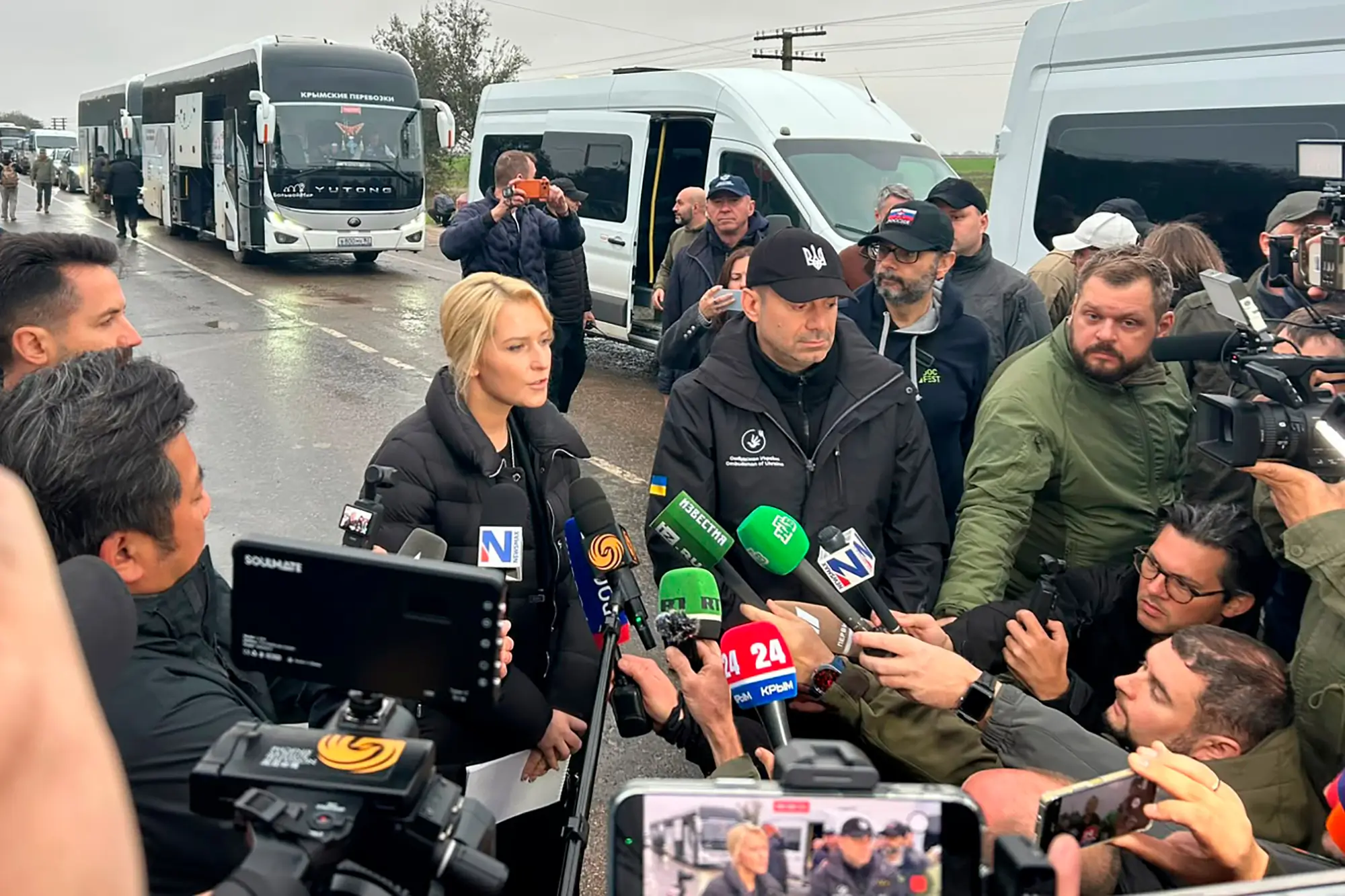
GOMEL, Belarus — Ukrainian civilians evacuated from the Russian-occupied city of Oleshky have arrived in Belarus as part of a rare humanitarian operation that has allowed residents to escape the war-ravaged community under a temporary ceasefire.
Four aircraft carrying evacuees landed at Gomel Airport on Saturday, October 31, according to Ukrainian lawmaker Davyd Arakhamia. The passengers are expected to continue their journey into Ukrainian-controlled territory, accompanied by a Ukrainian delegation.
The evacuation follows an agreement between Russia and Ukraine to temporarily suspend military operations around Oleshky in the southern Kherson region, allowing humanitarian assistance to reach residents and civilians wishing to leave the city to do so safely.

The operation represents an unusual instance of cooperation between the two countries, which have remained at war since Russia launched its full-scale invasion of Ukraine in February 2022.
Four Aircraft Carry Evacuees to Belarus
Arakhamia announced that the fourth and final aircraft carrying residents who chose to return to Ukrainian-controlled territory had landed in Gomel.
He said the evacuees would be transported into Ukraine within hours, together with members of the Ukrainian delegation.
The journey involved several stages. Residents were first evacuated from Oleshky by bus before travelling through Russian-controlled territory to the southern Russian city of Anapa. From there, they boarded aircraft to Belarus, where they were received by rescue workers, medical personnel and Red Cross volunteers.
The Belarusian city of Gomel serves as a transit point before the evacuees cross into Ukraine.
The Associated Press reported that the exact number of people who chose to leave for Ukraine had not been officially confirmed by both countries. However, Ukrainian Prime Minister Serhiy Koretsky had previously said that 527 people were expected to return to Ukraine through the humanitarian arrangement.
Temporary Ceasefire Makes Evacuation Possible
The evacuation became possible after Russia and Ukraine agreed to a localized ceasefire around Oleshky, a city that has faced severe humanitarian difficulties during the war.
The truce took effect at 3 a.m. on October 27 and is scheduled to remain in place until Sunday evening, November 1.
The temporary suspension of fighting allowed both sides to complete demining operations along designated routes and prepare a humanitarian corridor for residents.
The operation officially began on October 27, with Ukrainian human rights commissioner Dmytro Lubinets involved in coordinating the evacuation and humanitarian assistance.
Officials from both countries also worked together to organize transportation and establish arrangements for civilians who wanted to leave.
Residents Were Given a Choice of Where to Go
Before the evacuation, Oleshky was estimated to have approximately 2,000 residents remaining, many of whom had endured shortages of food, medicine, electricity and clean water.
Residents were offered three options: travel to Ukrainian-controlled territory, relocate to Russian-controlled territory or remain in the city and receive humanitarian assistance.
The Associated Press reported that Russia and Ukraine had not publicly provided a complete breakdown of how many people selected each option.
U.S. First Lady Melania Trump said the humanitarian convoy could safely evacuate more than 750 people. The operation included approximately 25 buses and ambulances to assist residents, including those with limited mobility.
Those who decided to remain in Oleshky were also promised additional food and medical supplies.
International Figures Involved in Humanitarian Effort
The White House credited Melania Trump with helping broker the localized ceasefire, which enabled the humanitarian mission to proceed.
Pope Leo XIV also urged Russian and Ukrainian leaders to support the delivery of aid and the safe evacuation of civilians.
The involvement of international figures helped draw attention to the difficult conditions facing residents of Oleshky and the need for humanitarian access.
Although the agreement does not represent a wider ceasefire or an end to the war, it has created a temporary opportunity for civilians to receive assistance and leave an area affected by prolonged fighting.
Humanitarian Needs Remain in Oleshky
The arrival of evacuees in Belarus marks an important stage in the operation, but serious humanitarian needs remain for people who have chosen to stay behind.
Oleshky has experienced extensive disruption since Russian forces occupied the city in 2022. The remaining population has faced difficult living conditions, limited access to essential services and the dangers associated with its proximity to the frontline.
The temporary ceasefire has provided an opportunity to deliver supplies and organize civilian movement, but it does not resolve the broader challenges facing the community.
As the evacuees prepare to enter Ukrainian-controlled territory, attention is turning to their reception, medical assessments and arrangements for temporary accommodation.
The operation demonstrates how limited cooperation between opposing sides can create opportunities to protect civilians, even while the wider conflict continues.
Swifteradio.com