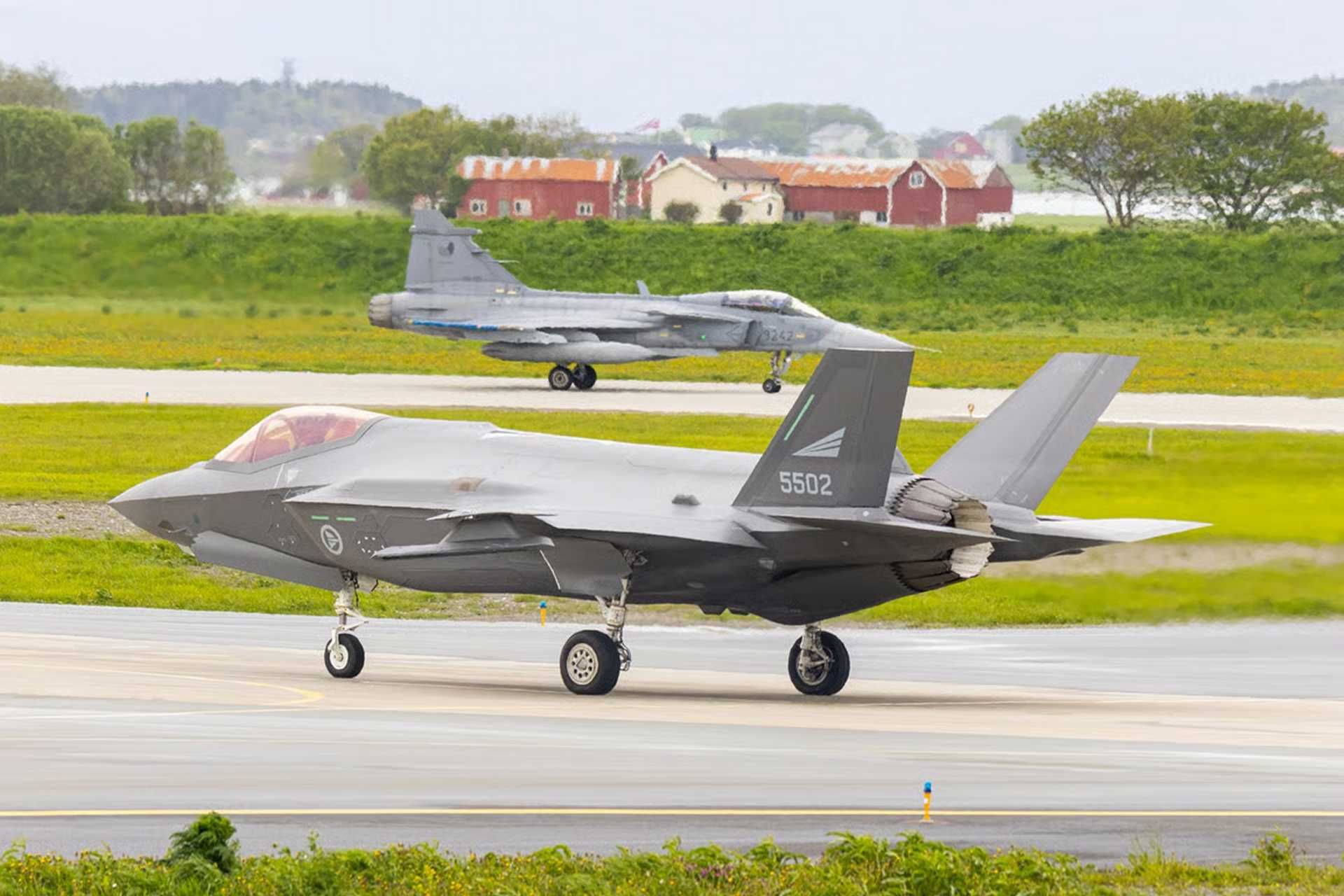
Canada’s review of its planned purchase of American-made F-35 fighter jets remains ongoing, with Defence Minister David McGuinty refusing to rule out the possibility of a mixed fighter jet fleet that could include Swedish-made Gripen aircraft.
Speaking in an interview on Monday, McGuinty said all options remain under consideration as the federal government continues its assessment of Canada’s future air defence needs.
The review centers on Canada’s 2023 agreement to purchase 88 F-35 fighter jets from Lockheed Martin. The deal has been under examination for more than a year amid evolving geopolitical tensions and broader discussions about defence procurement. Despite the review, 16 of the aircraft are already in production.
At the same time, Saab continues to promote its Gripen fighter jet as an alternative. The Swedish aerospace company has proposed manufacturing the aircraft in Canada, a move it says could create up to 10,000 jobs in manufacturing, research and development.

Industry sources have indicated that Ottawa is considering a mixed fleet approach that could combine F-35s and Gripens while potentially expanding the total number of aircraft beyond the original target of 88. Reports suggest the fleet could eventually exceed 100 fighter jets.
McGuinty emphasized that the government’s defence review extends beyond fighter aircraft and includes broader assessments across the Canadian Armed Forces. He pointed to Canada’s recent move toward negotiations for the purchase of the GlobalEye airborne surveillance platform, which would involve Swedish technology integrated with Canadian-built Bombardier aircraft.
The minister’s comments are consistent with statements he made earlier this year, when he first indicated that a mixed fleet remained a possibility.
Meanwhile, attention is also turning to Canada’s long-awaited submarine replacement program. Prime Minister Mark Carney has promised an announcement before the end of June regarding the procurement of a new submarine fleet.
The competition has reportedly narrowed to two major contenders: South Korean shipbuilder Hanwha Ocean and German naval manufacturer thyssenkrupp Marine Systems (TKMS). Both companies are competing for a contract to provide the Royal Canadian Navy with up to 12 submarines, a project expected to be worth tens of billions of dollars.
McGuinty described the submarine procurement process as one of the most significant defence investments in recent Canadian history, stressing that job creation, industrial development and domestic economic benefits remain key considerations alongside military capability.
