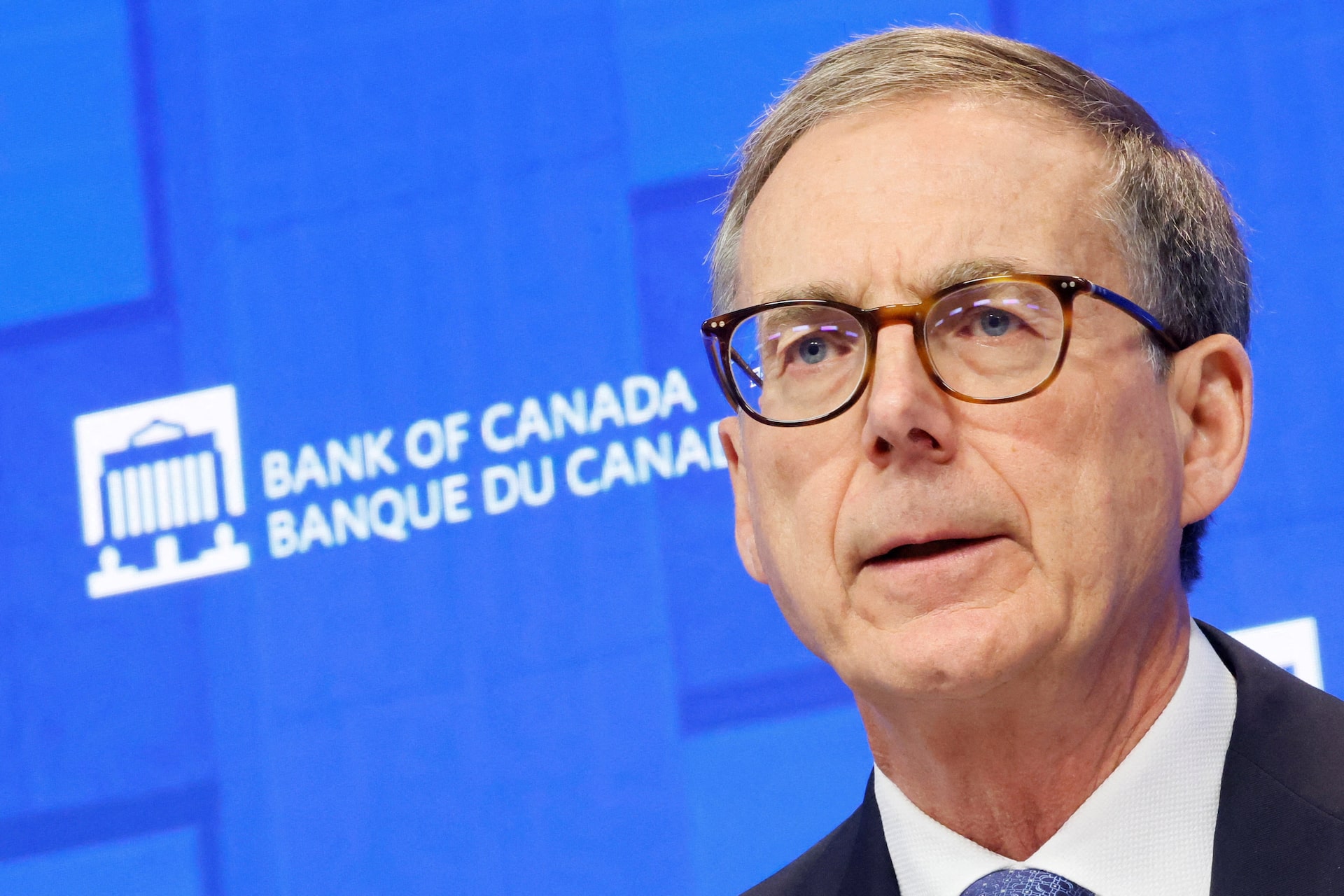
The Bank of Canada is preparing to make its second interest rate decision of 2026 while navigating a surge of new economic data and growing uncertainty tied to global trade tensions and the war in the Middle East.
Economists say policymakers face a difficult balancing act as signs of economic weakness collide with rising inflation risks driven by a sharp jump in global oil prices.
The central bank’s policy rate currently stands at 2.25 percent after officials chose to hold rates steady in January. However, the economic landscape has shifted significantly in the weeks since that decision.
New data released by Statistics Canada showed the country’s unemployment rate rose to 6.7 percent in February after the economy unexpectedly lost 84,000 jobs, marking the biggest monthly employment decline in four years.

Economic growth has also weakened. Statistics Canada reported that Canada’s economy contracted by 0.5 percent on an annualized basis in the fourth quarter of 2025, falling short of the central bank’s earlier forecast of flat growth.
Monetary policymakers will also examine fresh inflation data before making their decision. Doug Porter, chief economist at BMO, said inflation could drop to about 1.8 percent in February, partly because last year’s temporary federal tax holiday on consumer goods is no longer distorting year-over-year comparisons.
Financial markets currently expect the central bank to keep rates unchanged, with data from LSEG Data & Analytics showing about a 92 percent probability of a hold. However, the odds of a rate cut increased slightly following the weak February jobs report.
Some economists believe the bank will remain on the sidelines for the rest of 2026 as the economy adjusts to tariffs imposed by the administration of Donald Trump in the United States.
Randall Bartlett, deputy chief economist at Desjardins, said recent data suggests the economy has been weak but not weak enough to justify immediate interest rate changes.
The situation has been further complicated by geopolitical tensions after U.S. and Israeli strikes on Iran triggered a wider regional conflict. Iran’s attacks on commercial shipping and its blockade of the Strait of Hormuz—a critical route that carries roughly a fifth of the world’s oil supply—have sent global oil prices soaring.
Higher crude prices are already pushing up fuel costs in Canada and are expected to feed into broader inflation in the coming months through transportation, packaging and fertilizer costs tied to food production.
Food inflation was already elevated at 7.3 percent annually in January, driven by supply shortages affecting products such as coffee and beef.
Porter warned that the energy price surge could further increase grocery prices and strain Canada’s food supply chain.
The economic impact of the oil shock could vary across Canada. Energy-producing provinces such as Alberta, Saskatchewan and Newfoundland and Labrador may benefit from higher oil prices, potentially boosting regional economic output. Other provinces, however, could face slower growth as higher energy costs ripple through the broader economy.
While some markets are beginning to price in a possible rate hike later this year, Bartlett believes such expectations may be premature if the oil shock proves temporary.
Analysts say the outlook for interest rates will likely depend on how Tiff Macklem, governor of the Bank of Canada, frames the impact of the Middle East conflict and global trade tensions during this week’s policy announcement.
