
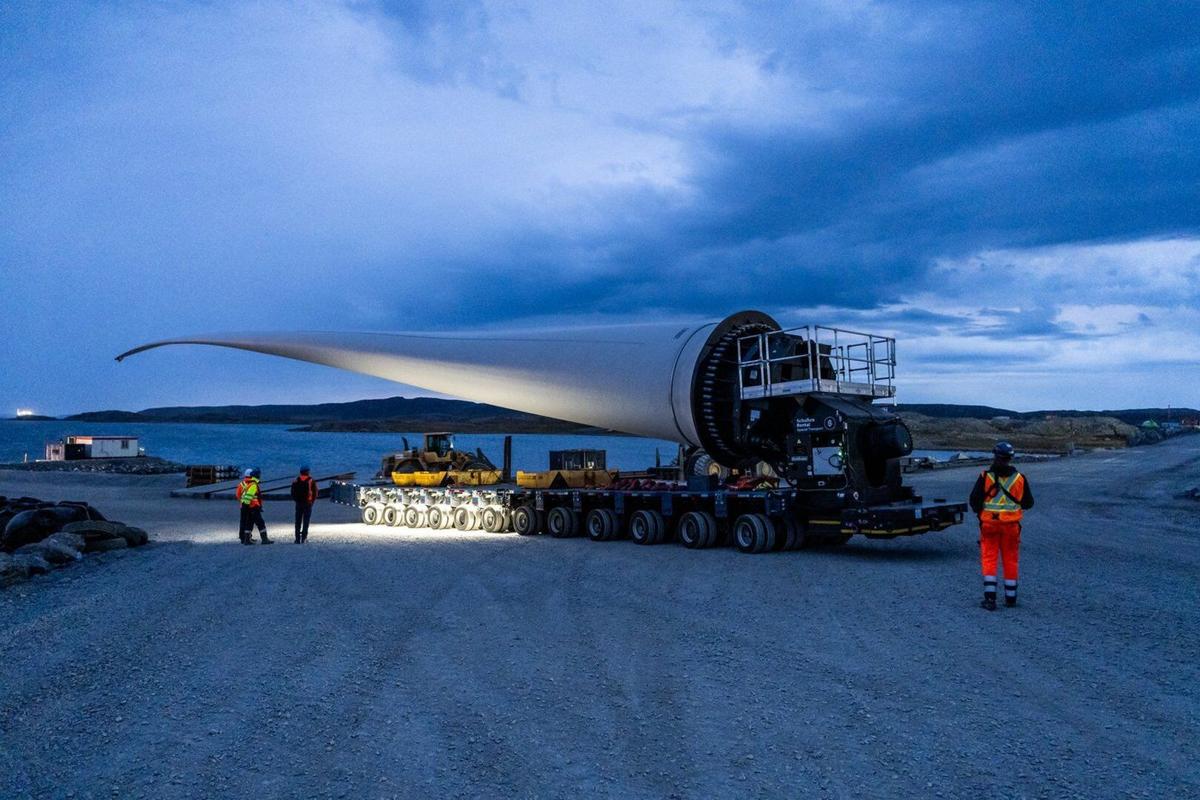
The Canada Infrastructure Bank (CIB) has reached financial close on a $20 million loan for an Inuit-led wind energy project that will provide renewable power to Agnico Eagle Mines Ltd.’s Hope Bay gold mine in Nunavut.
The Hope Bay Wind Project, located in the Kitikmeot region, is being developed by Kitikmeot Tugliq Limited Partnership, a partnership between the Kitikmeot Inuit Association and Tugliq Energy. The project will include a 4.2-megawatt wind turbine and a 4-megawatt battery energy storage system.
The renewable energy system is expected to significantly reduce the mine’s reliance on diesel-generated electricity. Officials estimate the project could cut diesel consumption by up to three million litres annually and reduce emissions by approximately 13,000 tonnes each year.
The project is also expected to create economic opportunities for Inuit communities. The CIB says approximately 15 jobs could be created during peak construction, while a profit-sharing arrangement is expected to provide longer-term economic benefits for communities in the Kitikmeot region.

The federal government has also committed $25 million to the project through Natural Resources Canada’s Smart Renewables and Electrification Pathways program, bringing significant public investment toward the northern clean-energy initiative.
Agnico Eagle received the go-ahead in May to proceed with the Hope Bay project, which is expected to become one of Canada’s northernmost mines. The new wind infrastructure is intended to support mining operations while reducing the environmental and logistical costs associated with transporting diesel fuel to the Arctic.
The investment marks the Canada Infrastructure Bank’s second project in Nunavut, following a $6.7 million loan for a wind project in Sanikiluaq. It also represents the CIB’s third energy investment in Canada’s North.
The Hope Bay project comes as Ottawa continues to promote clean-energy development, Indigenous participation and economic growth in Canada’s Arctic. Federal officials have increasingly linked northern infrastructure investment to energy security, responsible resource development and economic opportunities for Indigenous communities.
The project could also serve as a model for reducing diesel dependence at other remote northern mines and communities, where traditional fuel supplies can be expensive and difficult to transport.
Swifteradio.com