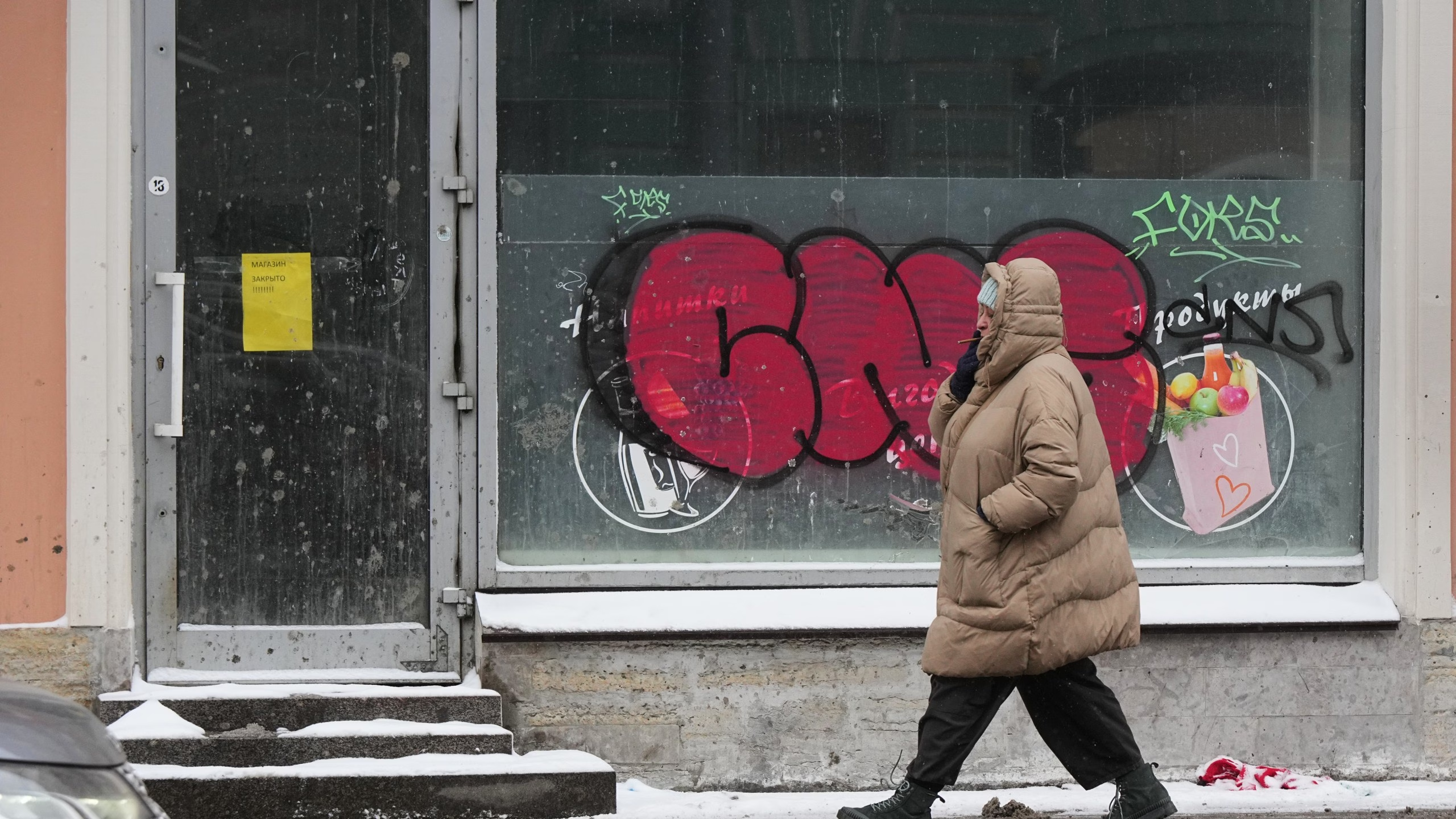
Small and medium-sized enterprises across Russia are grappling with mounting financial pressure following the implementation of a new wartime tax policy introduced by the federal government. From neighborhood bakeries to independent beauty salons, business owners say the revised fiscal measures are squeezing already thin profit margins.
The policy, designed to bolster state revenues amid ongoing military expenditures, introduces higher tax rates and additional levies targeting various sectors of the economy. Officials argue that the measures are necessary to sustain government spending and stabilize public finances during a period of heightened geopolitical tension.
However, entrepreneurs across multiple regions report that the increased tax burden is compounding challenges such as inflation, supply chain disruptions, and reduced consumer spending. Owners of small retail outlets and service-based businesses say they are facing difficult decisions, including raising prices, cutting staff, or scaling back operations to remain viable.
Economic analysts note that while large state-linked corporations may be better positioned to absorb the impact of new taxes, smaller enterprises are particularly vulnerable. Many operate with limited cash reserves and rely heavily on local demand, which has fluctuated amid economic uncertainty.

The wartime tax adjustments reportedly affect a broad range of sectors, including food production, personal services, and local manufacturing. For example, bakery operators have cited rising costs for flour and utilities, now compounded by additional fiscal obligations. Similarly, beauty shop owners point to declining foot traffic as consumers tighten discretionary spending.
Government representatives maintain that the policy is structured to distribute the fiscal load across the economy and ensure continued funding for essential state functions. Officials have emphasized that the measures are temporary and tied to the broader national security context.
Nevertheless, business associations have called for targeted relief programs or phased implementation to mitigate the shock to smaller firms. Some economists warn that prolonged financial strain on local businesses could slow economic growth, increase unemployment, and reduce overall market competitiveness.
The broader Russian economy has already faced significant headwinds, including international sanctions, currency volatility, and shifts in global trade dynamics. The introduction of additional wartime taxation has intensified debate over how best to balance fiscal responsibility with economic resilience.
As policymakers defend the necessity of the tax reforms, entrepreneurs continue to adapt in real time—streamlining operations, renegotiating supplier contracts, and exploring alternative revenue streams. The coming months will likely determine whether the new measures strengthen state finances without causing lasting damage to Russia’s small business landscape.
Swifteradio.com

 Chinese
  English
  French
  Italian
  Greek
Greek  Arabic
  Yoruba
  Dutch
Dutch  Afrikaans
  German
  Czech
Czech  Hindi
Hindi  Polish
  Russian