
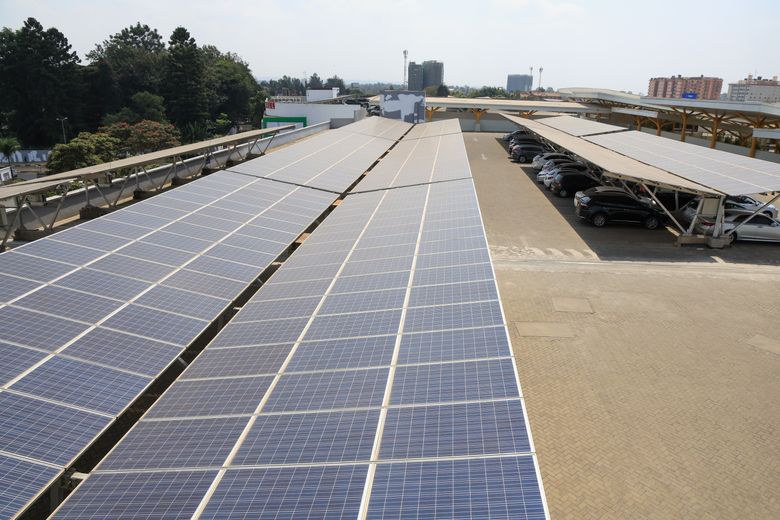
African countries are stepping up efforts to expand homegrown solar energy production as governments seek greater energy independence and a reduced reliance on imported technology, equipment, and financing.
The push comes as nations across the continent accelerate renewable-energy projects to address persistent electricity shortages, rising energy demand, and the need to reduce dependence on fossil fuels. Solar power is seen as one of Africa’s most promising options because of the continent’s abundant sunlight and large areas suitable for solar development.
However, China remains a dominant force in Africa’s rapidly expanding solar industry. Chinese companies play a major role in supplying solar panels, batteries, inverters, and other equipment, while Chinese financing and investment have supported numerous renewable-energy projects across the continent.
African policymakers increasingly want to develop domestic manufacturing capacity and strengthen local supply chains so that more of the economic benefits from the renewable-energy transition remain within Africa.

Industry experts say building a competitive local solar manufacturing sector will require substantial investment, reliable electricity supplies, skilled workers, supportive government policies, and access to affordable financing. Competing with established global manufacturers on cost could also prove challenging.
Despite these obstacles, African governments and businesses are exploring ways to expand local production and create jobs while improving access to clean and affordable electricity.
The shift toward homegrown renewable energy is also being viewed as part of a broader effort to strengthen Africa’s economic resilience. Supporters argue that greater control over energy technology could reduce vulnerabilities caused by global supply-chain disruptions and external economic pressures.
China’s continued influence, however, means African countries are likely to remain dependent on international suppliers in the short term. Analysts say the challenge will be finding a balance between using existing foreign investment and technology while gradually building stronger domestic capabilities.
As Africa’s demand for electricity continues to grow, the development of a self-reliant solar industry could become an increasingly important part of the continent’s energy and economic strategy.
Swifteradio.com

 Chinese
  English
  French
  Italian
  Greek
Greek  Arabic
  Yoruba
  Dutch
Dutch  Afrikaans
  German
  Czech
Czech  Hindi
Hindi  Polish
  Russian