Tag: SR

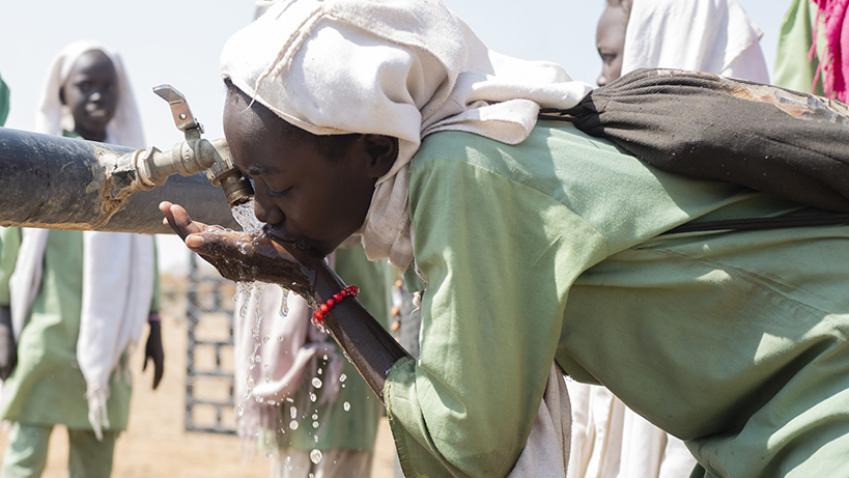
  • Water: At the Core of Sustainable Development and Human Rights

    Water is central to sustainable development, playing a critical role in socio-economic progress, energy and food production, healthy ecosystems, and human survival. It is also vital for adapting to climate change, acting as a crucial link between society and the environment.

    Water and Human Rights

    As the global population increases, the need to balance commercial demands on water resources becomes more pressing to ensure communities have enough for their needs. Access to clean, private sanitation facilities is particularly crucial for women and girls, enabling them to manage menstruation and maternity with dignity and safety.

    The Interconnection of Water and Sanitation

    Water cannot be considered in isolation from sanitation. Together, they are essential for reducing the global burden of disease and improving the health, education, and economic productivity of populations. A significant milestone in this regard was the recognition by the United Nations General Assembly in July 2010 of the human right to water and sanitation. This recognition entitles every human being to access sufficient water for personal and domestic uses—between 50 and 100 liters per person per day. The water must be safe, acceptable, and affordable, with costs not exceeding 3% of household income. Moreover, water sources should be within 1,000 meters of the home, with collection time not exceeding 30 minutes.

    Sustainable Development Goal 6

    Sustainable Development Goal (SDG) 6 aims to “Ensure availability and sustainable management of water and sanitation for all.” The targets cover all aspects of the water cycle and sanitation systems, contributing to progress across various other SDGs, notably those related to health, education, economics, and the environment. The United Nations has long been addressing the global crisis of insufficient water supply to satisfy basic human needs and meet the growing demands on the world’s water resources for human, commercial, and agricultural purposes.

    Historical Milestones and Global Efforts

    Several significant efforts have been made over the years to address water-related challenges. These include the United Nations Water Conference (1977), the International Drinking Water Supply and Sanitation Decade (1981-1990), the International Conference on Water and the Environment (1992), and the Earth Summit (1992). The ‘Water for Life’ International Decade for Action (2005-2015) helped around 1.3 billion people in developing countries gain access to safe drinking water and drove progress on sanitation as part of the effort to meet the Millennium Development Goals.

    Recent Initiatives and Future Plans

    The UN 2023 Water Conference adopted the Water Action Agenda, representing voluntary commitments by nations and stakeholders to achieve the SDGs and their water-related targets. The outcomes of this conference will be followed up at three major upcoming summits: the SDG Summit, the Summit of the Future in 2024, and the World Social Summit in 2025. Recent milestone agreements include the 2030 Agenda for Sustainable Development, the 2015-2030 Sendai Framework for Disaster Risk Reduction, the 2015 Addis Ababa Action Agenda on Financing for Development, and the 2015 Paris Agreement within the UN Convention Framework on Climate Change.

    The Ongoing Crisis

    Contaminated water and a lack of basic sanitation are undermining efforts to end extreme poverty and disease in the world’s poorest countries. In 2022, 2 billion people worldwide did not have access to basic sanitation facilities such as toilets or latrines, and 653 million people had no sanitation facilities at all. According to the WHO/UNICEF Joint Monitoring Programme for Water Supply and Sanitation, at least 1.2 billion people worldwide are estimated to drink water that is not protected against contamination from feces. Unclean water and poor sanitation are leading causes of child mortality, with childhood diarrhea estimated to cause 1.5 million child deaths per year, mostly among children under five in developing countries.

    Economic and Social Benefits

    The links between lack of water and sanitation access and development goals are clear, and the solutions to the problem are known and cost-effective. A 2012 WHO study showed that every US $1 invested in improved sanitation translates into an average global economic return of US $5.5. These benefits are particularly experienced by poor children and disadvantaged communities that need them most.

    International Observances and Decades of Action

    Every year, there are two UN international observances on water and sanitation: World Water Day on March 22 and World Toilet Day on November 19. Each day is marked by a public campaign to raise awareness, focus attention on a particular theme, and inspire action. The International Decade for Action, ‘Water for Sustainable Development,’ started on World Water Day on March 22, 2018, and will end on World Water Day on March 22, 2028. This decade aims to accelerate efforts toward meeting water-related challenges, including limited access to safe water and sanitation, increasing pressure on water resources and ecosystems, and exacerbated risks of droughts and floods.

    source: un.org

  • Hamas Attack in Israel – State Department Issues Level 3 Travel Advisory

    FAA Urges Caution for Flights Amid Escalating Conflict in Israel

    The FAA has urged U.S. airlines and pilots to “use caution” when flying in Israeli airspace following an unprecedented attack by Hamas militants from Gaza into Israel. This conflict has resulted in over a thousand fatalities and thousands more injured.

    Current Situation:

    • Casualties: At least 1,200 people have died, and 2,900 are injured in Israel. In Gaza, 1,417 people, including 447 children and 248 women, have been killed, with about 6,268 others injured due to Israeli retaliatory airstrikes.
    • Travel Advisory: The U.S. State Department elevated its advisory for Israel and the West Bank to Level 3 (“reconsider travel”) due to “terrorism and civil unrest” and maintains a “do not travel” advisory for Gaza.
    • FAA Notices: The FAA issued a Notice to Air Missions (NOTAM) urging caution and describing the situation as “potentially hazardous.” The updated NOTAM on Tuesday clarified that there are currently no restrictions on U.S. certificated airmen or operators flying into or out of Israel.
    • European Response: The European Union Aviation Safety Agency (EASA) issued a Conflict Zone Information Bulletin (CZIB) recommending air operators ensure robust risk assessments and contingency planning for operations in Israeli airspace.

    Airline Operations:

    • Suspended Flights: All major U.S. airlines and several foreign carriers have suspended services to and from Israel. Specific suspensions include:
      • American Airlines: Flights canceled through Dec. 4.
      • Delta Air Lines: Flights suspended until the end of October.
      • United Airlines: Flights suspended until conditions improve.
      • Air Canada: Flights canceled through Friday.
      • Air France, British Airways, KLM: Flights suspended until further notice.
      • Wizz Air, EasyJet, ITA, Ryanair, Norwegian Air, Finnair: Canceled flights through various dates.
      • Gulf Air, Emirates, Cathay Pacific, Turkish Airlines: Suspended flights for specified periods.
    • Continuing Operations: El Al continues flights, operating per Israeli security forces’ instructions. flydubai’s flights are on schedule, and Hainan Airlines plans limited round-trip flights.

    Assistance for U.S. Citizens:

    • The U.S. State Department will arrange chartered flights for American citizens in Israel, starting Friday, to transport them to European sites.
    • U.S. citizens in Israel are advised to follow local government advice and check the status of border crossings or flights before heading to Ben Gurion Airport. Assistance can be requested via the crisis intake form to contact the nearest U.S. embassy or consulate.

    Source: ABC News

  • China Expands Visa-Free Entry to Poland & 11 European Countries

    people at Forbidden City in China during daytime

    China Extends Visa-Free Travel to More Countries to Boost Tourism

    China has extended its visa-free travel scheme to include Poland, Australia, and New Zealand, with the initiative aiming to boost tourism and international exchanges. The new visa-free policy will be in effect until the end of 2025.

    Key Points:

    • New Additions: Polish citizens are now eligible for visa-free entry into China starting from July 1, 2024. This follows earlier extensions to citizens of 11 other European countries and Malaysia.
    • Visa-Free Access: Citizens from Austria, Belgium, France, Germany, Hungary, Ireland, Italy, Luxembourg, the Netherlands, Spain, and Switzerland can also enter China without a visa until the end of next year.
    • Duration: The visa-free entry allows for a stay of up to 15 days as part of a trial program aimed at promoting high-quality exchanges between Chinese and foreign nationals.

    Objective:

    The initiative is part of China’s broader strategy to attract more international visitors for both business and tourism, fostering cultural and economic exchanges. According to Foreign Ministry spokesperson Mao Ning, the goal is to facilitate the “high-quality development of Chinese and foreign personnel exchanges and high-level opening up to the outside world.”

    Impact of Pandemic:

    • Previous Restrictions: China’s strict pandemic measures, which included mandatory quarantines for all arrivals, severely restricted international travel for nearly three years. These restrictions were lifted early last year, but international travel has not yet returned to pre-pandemic levels.
    • Historical Context: Before the pandemic, China allowed visa-free entry for citizens of Brunei, Japan, and Singapore, but this was suspended during the COVID-19 outbreak. Visa-free entry for Brunei and Singapore resumed in July, but Japan remains excluded.

    Tourism Data:

    • Pre-Pandemic vs. Now: In 2023, China recorded 35.5 million entries and exits by foreigners, compared to 97.7 million in 2019. The drop in international visitors highlights the lingering impact of the pandemic on global travel.
    • Interest in China: Data from Trip.com showed a significant increase in interest in China as a tourist destination among Europeans, with a 663% rise in overall bookings from Europe to China in 2023 compared to 2022. There was also a nearly 29% increase in bookings compared to 2019.

    Popular Destinations:

    • Top Cities: Shanghai remains the most popular destination for European visitors, followed by Beijing, Guangzhou, and Shenzhen. Emerging destinations include Sanya, a beachside city on Hainan Island, and Chengdu, the capital of Sichuan province.

    Additional Measures:

    China is further encouraging inbound tourism by promoting cultural and historical attractions in partnership with Trip.com. The country is also investing in tourism infrastructure, including technology enhancements, travel guides, and e-payment systems, to improve the travel experience for international visitors.

    Sources: Euronews

  • Health Consequences of Air Pollution on Populations (WHO)

    photograph of three plain releasing colorful smokes
    What Are the Public Health Impacts of Air Pollution?

    Exposure to high levels of air pollution can lead to a variety of health issues. The short- and long-term health consequences of air pollution exposure, particularly from fine particles that penetrate deep into lung passageways, must be carefully assessed. These fine particles pose a significant threat to public health, increasing the risk of respiratory infections, heart disease, stroke, and lung cancer. Vulnerable groups such as children, the elderly, and those with preexisting health conditions are particularly at risk. Poor air quality also heightens the likelihood of stillbirth, miscarriage, and neurological conditions like cognitive impairment and dementia.

    In 2019, air pollution was responsible for around 6.7 million deaths worldwide. Nearly 85% of these deaths were due to noncommunicable diseases (NCDs), including ischemic heart disease, stroke, lung cancer, asthma, chronic obstructive pulmonary disease (COPD), and diabetes. This makes air pollution the second leading cause of NCDs globally, following tobacco.

    What Can We Do to Protect Ourselves?

    Addressing air pollution requires collective action and responsibility. We must all take swift and proactive measures to reduce air pollution, involving coordinated efforts across all sectors, including national, state, and local governments, cities, communities, and individuals.

    • National Governments: Reduce emissions and establish national standards that meet WHO air quality guidelines. Invest in research and education about clean air and pollution. Utilize tools to evaluate policies and monitor progress on air quality initiatives.
    • Cities and Local Communities: Incorporate health considerations into all policies and ensure there is sufficient data and tools to assess health outcomes.
    • Individuals: Advocate for your right to a healthy and sustainable environment. Hold your government accountable.
    • Everyone: Reevaluate lifestyle choices and make sustainable decisions for ourselves, our children, and future generations.

    What Is Particulate Matter?

    Particulate matter (PM) refers to tiny particles in the air, including dust, dirt, soot, smoke, and liquid droplets. Diesel vehicles and coal-fired power plants typically emit high concentrations of particulate matter. Particles smaller than 10 micrometers in diameter (PM10) pose serious health risks because they can be inhaled and accumulate in the respiratory system. Particles smaller than 2.5 micrometers in diameter (PM2.5), also known as “fine” particles, pose the greatest health risks due to their ability to lodge deep in the lungs and enter the bloodstream.

    What Are the Sources of Air Pollution?

    Major sources of air pollution include inefficient modes of transport (using polluting fuels and vehicles), the combustion of household fuels for cooking, lighting, and heating, coal-fired power plants, agriculture, and waste burning. Some air pollutants are also greenhouse gases, which further exacerbate the health impacts of air pollution.

    What Can Countries Do to Reduce Air Pollution?

    To mitigate the health consequences of air pollution, countries can:

    • Develop sustainable transport systems in cities
    • Implement effective solid waste management practices
    • Provide access to clean household fuels and cookstoves
    • Develop markets for renewable energy and energy efficiency
    • Reduce industrial emissions

    How Does WHO Work with Countries to Reduce Air Pollution?

    WHO identifies and monitors air pollutants with the greatest health impacts, helping countries focus on the most effective ways to reduce health risks. By reviewing and analyzing scientific evidence and expert advice, WHO identifies effective measures to combat air pollution.

    In 2015, WHO Member States adopted a resolution to address the adverse health effects of air pollution. They agreed on a roadmap for an enhanced global response to these effects. WHO’s work is based on four pillars:

    1. Expanding the knowledge base
    2. Monitoring and reporting
    3. Global leadership and coordination
    4. Institutional capacity strengthening

    WHO’s Strategy on Air Quality and Health

    WHO’s strategy outlines concrete actions where the health sector can lead or support efforts to promote health in all policies and ensure access to quality health services. The three cross-cutting areas are:

    1. Knowledge, evidence, and measuring progress
    2. Institutional capacity building and technical support
    3. Leadership and coordination

    The “WHO Strategic Approach for Air Quality, Energy Access, and Health” framework (2023-2030) aims to enhance WHO’s efforts in protecting populations from the health consequences of air pollution and lack of energy access.

    Note to Editors:
    This press release was updated on 25 June 2024 to reflect revised data and links.

    SOURCE: who.int

  • Impact of Healthier Environments on Reducing the Global Burden of Disease

    red and white bokeh lightsThe Critical Role of Healthier Environments in Reducing Global Disease Burden

    Healthier environments have the potential to significantly reduce the global burden of disease, with estimates suggesting that almost one-quarter of it could be prevented. The COVID-19 pandemic has starkly highlighted the fragile relationship between human health and the health of our planet. Ensuring clean air, a stable climate, adequate water, sanitation, and hygiene, safe use of chemicals, protection from radiation, healthy workplaces, sustainable agricultural practices, health-supportive cities and built environments, and preserved nature are all essential prerequisites for good health.

    In 2016, around 13.7 million deaths per year, or 24% of global deaths, were attributable to modifiable environmental risks. This translates to nearly one in four deaths globally being linked to environmental conditions. The pathways through which disease agents and exposures occur are numerous, and unhealthy environmental conditions are widespread, affecting most disease and injury categories. Noncommunicable diseases such as ischaemic heart disease, chronic respiratory diseases, and cancers are the most common outcomes, followed closely by injuries, respiratory infections, and strokes.

    To address these challenges and promote healthier environments for healthier populations, various initiatives are underway. These include addressing the health consequences of air pollution, hosting global conferences on air pollution and health, and convening health professionals to advance the climate change and health agenda. For example, progress on basic energy access has reversed for the first time in a decade, underscoring the need for continued efforts.

    Recent publications highlight the importance of providing safe and sustainable water, sanitation, and hygiene (WASH) services, managing healthcare waste, and ensuring reliable electricity. These efforts are crucial for maintaining public health, especially in fragile, conflict-affected, and vulnerable settings. Adolescents, who make up about 1.3 billion of the world’s population, are particularly at risk due to prolonged exposure to unhealthy environments.

    Small drinking-water supplies often face operational, managerial, technical, and resourcing challenges, impacting their ability to deliver safe water. Energy access is also linked to many sustainable development priorities, including public health, gender equality, food security, clean water, education, and economic development.

    Efforts to accelerate access to electricity in healthcare facilities, the impact of health innovations, R&D processes, and access to essential health services are all part of the broader agenda to build healthier environments. Stories of success and ongoing challenges are being shared through various platforms, including features on air pollution, health and environment scorecards, worker health and safety, and ethical radiological imaging.

    Upcoming events and webinars continue to address these critical issues, such as the Second Global Conference on Air Pollution and Health, webinars on accessing GCF Readiness funds, conducting gender analyses for climate change and health vulnerability assessments, and developing Health National Adaptation Plans (HNAPs).

    Country profiles on air pollution, chemical safety, children’s environmental health, climate change, health impact assessments, occupational health, radiation, sustainable development, ultraviolet radiation, urban health, and WASH provide valuable insights into the state of environmental health worldwide. By focusing on these areas, we can move towards a future where healthier environments lead to healthier populations.

    source: who.int

  • Enhance Your Environmental Stewardship with Florida DEP’s PASS System

    assorted garbage bottles on sandy surface

    Enhance Your Environmental Stewardship with Florida DEP’s PASS System

    Stay informed and proactive with the Florida Department of Environmental Protection’s (DEP) Permit Application Subscription Service (PASS). This innovative and free service allows you to tailor your notification preferences to suit your specific needs and interests. By subscribing, you can select multiple application types and define a geographic area of interest, either by county or within a chosen radius from a specific point. This personalized approach ensures you receive timely updates relevant to your area and concerns.

    How Does PASS Work?

    Once subscribed, the PASS system will automatically send you email notifications whenever the DEP receives a permit application that matches your subscription criteria. Each email will include detailed information about the type of authorization being applied for, along with the application tracking number. This system empowers you to stay on top of developments in your area, enabling you to respond or participate in the review process if needed.

    For real-time updates on any application currently under review, you can easily contact the appropriate DEP district office. This ensures you have the latest information at your fingertips, fostering transparency and engagement.

    Stay Connected with DEP Newsletters and Updates

    Are you interested in the latest news and updates from the DEP? Subscribing to DEP newsletters is a fantastic way to stay connected. Receive important information and updates directly to your email, keeping you informed about environmental initiatives, policy changes, and more.

    About the Florida Department of Environmental Protection

    The Florida Department of Environmental Protection (DEP) is the state’s lead agency for environmental management and stewardship. Our mission is to protect Florida’s air, water, and land, ensuring a safe and healthy environment for current and future generations. The vision of the DEP is to foster strong community partnerships, safeguard Florida’s precious natural resources, and enhance its diverse ecosystems.

    source: floridadep.gov

  • US Supreme Court to Review Dispute Over Agency Environmental Assessments

    The US Supreme Court has granted certiorari in a case that could define whether the National Environmental Policy Act (NEPA) allows federal agencies to consider broader environmental impacts, including climate change, beyond the immediate scope of proposed projects.

    The case, Seven County Infrastructure Coalition v. Eagle County, Colo., centers on the proposed 88-mile Uinta Basin Railway designed to transport oil and minerals from northeast Utah to market. The US Court of Appeals for the DC Circuit invalidated the Surface Transportation Board’s approval of the railway last year.

    Supporters of the project, a coalition of Utah counties, seek Supreme Court intervention to overturn the DC Circuit’s decision and uphold the Surface Transportation Board’s original approval. They argue that the Supreme Court should resolve conflicting interpretations arising from its 2004 ruling in Department of Transportation v. Public Citizen. This case established that NEPA does not obligate federal agencies to assess environmental impacts beyond their regulatory authority.

    Environmental groups opposing the railway project dispute the existence of a circuit split, contending that all courts agree on the limitations outlined in Public Citizen. They argue that the specific issue raised by the coalition is irrelevant to the railway case.

    In its ruling last year, the DC Circuit criticized the Surface Transportation Board’s environmental review of the railway for being too narrow, failing to adequately address potential impacts such as future oil development, rail accidents, wildfires, and water pollution.

    The coalition contends that most circuits interpret Public Citizen as restricting an agency’s NEPA review to impacts within its regulatory jurisdiction, absolving it from broader environmental considerations.

    In contrast, Eagle County and several environmental organizations, including the Sierra Club and the Center for Biological Diversity, argue that the Surface Transportation Board must assess the foreseeable impacts of approving a new rail line, including those beyond its immediate regulatory scope.

    The Sierra Club, which receives funding from Bloomberg Philanthropies, emphasizes the importance of comprehensive environmental review in regulatory decisions.

    The case is titled Seven Cty. Infrastructure Coal. v. Eagle Cty., Colo., U.S., No. 23-975, 6/24/24.

    source: news.bloomberglaw.com

  • Bachelor of Science in Environmental Science and Policy – Clarkson University News

    woman holding laboratory appratus

    The most pressing environmental issues today—from greenhouse gas emissions to the overuse of disposable plastics—stem from human decisions. Addressing these issues requires a deep understanding of both the scientific and policy aspects that impact our planet.

    Clarkson University’s Bachelor of Science in Environmental Science and Sustainability provides a comprehensive background in relevant laws, history, ethics, chemistry, biology, groundbreaking technologies, and sustainable practices. Customize your studies with a concentration based on potential career paths: environmental health and safety, environmental science, environmental policy, or sustainable solutions.

    This interdisciplinary degree reflects today’s multipronged approach to sustainability—one that preserves the natural world, supports biodiversity, and balances human impact with protection of the planet we all share.

    Our program is tight-knit, rigorous, and designed to tailor the curriculum to your interests. The coursework emphasizes sustainability and hands-on experience through projects, starting from your first year of studies. In your final year, complete a capstone project exploring your research interests. A variety of minors helps round out your education.

    All students must participate in a co-op, internship, directed research, or a community project to graduate. Apply your knowledge in immersion experiences like the Adirondack Semester or a Global Business Program trip focused on socioeconomics and sustainable development in East Africa. Our world-class faculty frequently invite students to collaborate on research teams and mentor their projects.

    We pride ourselves on putting sustainability education into action. The major is offered through our Institute for a Sustainable Environment, a renowned cross-campus hub for education, research, and campus sustainability initiatives. We have been named one of the most environmentally responsible colleges in the country by The Princeton Review and one of the top 75 most eco-literate colleges by the Sierra Club. We have also received a gold rating from the Association for the Advancement of Sustainability in Higher Education.

    Our Environmental Science & Sustainability majors had a 100 percent placement rate in 2023.

    The bachelor’s in environmental science and sustainability requires 48 credit hours of core classes. The program begins with a common core exploring STEM applications to sustainability challenges, requires each student to hone a specialty through one of four concentrations, and adds flexibility through electives. Electives allow you to add a minor or double major in a related area like biology, project management, environmental engineering, political science, or psychology.

    Basic Science Courses Math Courses Environmental Science and Sustainability Courses Classes for your concentration (38-43 credits) and free electives (29-34 credits).

    The Environmental Health and Safety (EHS) concentration gives you the scientific and technical knowledge to identify environmental hazards, minimize their risks, and discover innovative solutions to improve our surroundings.

    The Environmental Science concentration delves into environmental research and impacts ecosystems. Prepare for a career as a conservation biologist, preserving biodiversity and conserving natural habitats.

    The Environmental Policy concentration shapes the future by influencing policies, laws, and regulations that drive sustainable change. Be a guiding force for corporations adopting eco-friendly practices and sustainable strategies.

    The Sustainable Solutions concentration integrates business, policy, social science, and technology for a better and more sustainable world.

    Apply your knowledge to faculty-led research projects, exploring topics like green energy policy, wetland restoration ecology, and the interactions between freshwater plankton and trace metal elements. Opportunities are open to undergraduates during the school year and summer sessions.

    Professional experience is a key component of the program. Choose between a co-op, internship, directed research, or community project. Learn more about co-ops and internships.

    In your final year, deliver a capstone project encompassing what you have learned. Projects have focused on topics like the effects of different agricultural practices on soil carbon and nitrogen stocks, community composting potential in Potsdam, and campus carbon sequestration analysis.

    Hands-on learning opportunities include the Adirondack Semester program, sustainability global travel courses, and other study-abroad options.

    Join a community of creators and innovators through Clarkson’s 200-plus student groups, including the Clarkson Sustainability Club, Engineers for International Sustainability, Garden Club, New York Water Environment Association, Clarkson University Outing Club, and more.

    Use elective credits to explore a subdiscipline or related area with a minor:

    • Environmental Health Science: Focus on the relationship between chemicals, waste, and human exposure.
    • Sustainable Energy Systems Engineering: Learn about the technical, environmental, and policy aspects of sustainable energy systems.
    • Sustainable Solutions for the Developing World: Bridge social equity, economic development, and environmental preservation.
    • Environmental Policy: Blend policy with environmental science.
    • Environmental Science: Explore ecology, sustainability, bioinformatics, microbiology, and hydrology.

    HAZWOPER training prepares workers for safe operations during scenarios involving hazardous substances. The 40-hour course covers policies, practices, and procedures to reduce injury and illness risks related to harmful exposures. The 8-hour refresher course is for those who have completed the 40-hour training.

    “I heard about Clarkson’s sustainability. I love the environment, and I thought Clarkson would ignite that passion and help me find my path in life.”

    • Elise DeVeau ’25

    The demand for environmental scientists and specialists is expected to grow over the next decade. Our students begin careers in public agencies, environmental organizations, state or federal government, education, environmental research, green companies, and more.

    Potential roles include:

    • Environmental Scientist
    • Conservation Biologist
    • Environmental Consultant
    • Sustainability Manager
    • Environmental Policy Analyst

    The curriculum also prepares students for graduate degrees in health sciences, including medicine, dentistry, or veterinary science.

    Our graduates have found success in both public and private sectors, with recruitment by various organizations, companies, and institutions. Many pursue advanced degrees through Clarkson’s own Environmental Science and Engineering MS and PhD programs and MBA program. Other graduate schools include:

    Request Info Apply Now Institute for a Sustainable Environment Email: ise@clarkson.edu Phone: 315-268-3856

    Interested in learning more about the Bachelor of Science in Environmental Science and Sustainability? Contact the Institute for a Sustainable Environment today with your questions.

    An interdisciplinary hub for faculty and students, the Institute for a Sustainable Environment focuses on environmental education, sustainable efforts, and research initiatives. It also houses a variety of undergraduate and graduate programs, including the environmental science and policy major.

    Institute for a Sustainable Environment Be part of the innovation that will lead us to a more sustainable future. If you see yourself making a difference as an environmental science and sustainability major at Clarkson University, take the next step.

    source: clarkson.edu

  • Homecoming Triumph: Ukrainians Released from Russian Captivity Return to Kyiv

    Homecoming Triumph: Ukrainians Released from Russian Captivity Return to Kyiv

    In a heartening development, ten Ukrainians long held captive in Russia have finally returned to Kyiv, marking a significant humanitarian breakthrough mediated by the Vatican, as announced by Ukraine President Volodymyr Zelenskyy on Friday. Among those liberated were individuals like Nariman Dzhelyal, deputy head of the Mejlis, who had been seized from Crimea a year before the conflict erupted, despite living there post-annexation.

    The returnees, some detained even before Russia’s invasion, landed at Kyiv International Airport under the cover of night, a poignant moment as the airport reopened for the first time since the onset of hostilities over two years ago. Transported by helicopter and bus, they were warmly greeted in a scene of emotional reunions with loved ones draped in the national colors.

    Among them were Isabella Pekh, who had tirelessly campaigned internationally for her mother’s release from Donetsk region’s occupied territories, finally achieving success after six harrowing years. Olena Pekh, an art historian, spoke of her ordeal, expressing profound gratitude for the support that sustained her during captivity.

    The group also included clergy, such as Father Bohdan Heleta, seized in 2022 from his church in Berdiansk, underscoring the diverse backgrounds of those held and the broad impacts of their prolonged absence on their communities.

    While over 3,310 Ukrainians have been freed thus far, the joyous homecomings highlight the ongoing plight of thousands still detained, both civilians and military personnel, amidst the ongoing conflict.

    source: thestar.com

  • Debate Fallout: Biden’s Struggles and Trump’s Modest Gains Analyzed in Latest Poll

    UPDATED Jun. 28, 2024, at 3:30 PM

    By Aaron Bycoffe, Amina Brown, and Nathaniel Rakich

    President Joe Biden’s performance at the first presidential general-election debate on Thursday night has sparked widespread criticism, not only from pundits reacting in real-time but also from American voters, as revealed by a new 538/Ipsos poll conducted using Ipsos’s KnowledgePanel.

    Biden’s delivery, characterized by hoarseness and stumbling, immediately instilled panic among many Democrats about their prospects in November. However, despite the uproar, the poll indicates that the debate did not significantly alter voters’ perceptions of either candidate.

    Respondents were surveyed on their expectations and evaluations of each candidate’s performance using a five-point scale ranging from “excellent” to “terrible,” with each response converted into a numerical score from 1 to 5. Biden received an average performance score of 1.99 out of 5, lower than his already modest expectations score of 2.62 among the same respondents. In comparison, Trump slightly exceeded expectations, scoring 3.04 out of 5 on performance after an expected score of 3.00.

    The debate seems to have intensified concerns about Biden’s suitability for the presidency, with voters rating him lower on both physical (2.23 out of 5) and mental fitness (2.27 out of 5) after the event. Conversely, Trump’s scores on both metrics slightly improved post-debate, with his physical fitness score rising from 3.06 to 3.16 and his mental fitness score from 2.79 to 2.88.

    In terms of emotional fitness for office, Biden maintained a slight edge over Trump, with average scores of approximately 2.8 and 2.6 respectively, before and after the debate.

    When directly comparing their performances, Trump emerged as the clear winner according to debate watchers, with 60% favoring his performance compared to 21% for Biden. Meanwhile, the debate’s impact on voter intention showed a slight decline for Biden, with 46.7% of likely voters considering voting for him post-debate, down 1.6 percentage points from before.

    Trump’s support remained relatively stable, edging up from 43.5% to 43.9% post-debate. Interestingly, third-party candidates saw gains, with Robert F. Kennedy Jr., Jill Stein, and Chase Oliver all increasing in potential support.

    While both candidates remain unpopular overall, Biden’s net favorability rating dipped slightly post-debate (from -19.4 to -20.2), while Trump’s improved marginally (from -20.8 to -19.4). A significant portion of likely voters (21%) hold unfavorable views of both major-party candidates, often referred to as “double haters,” whose voting decisions could prove pivotal in the upcoming election.

    Key issues like inflation, immigration, political extremism or polarization, and abortion continue to shape voter preferences, with Trump perceived as better equipped to handle economic concerns and Biden favored on issues of extremism and abortion.

    This analysis is based on polling conducted by Ipsos for 538 using Ipsos’s KnowledgePanel, ensuring a representative sample of the U.S. population. The survey compared responses before and after the June 27, 2024 debate, providing insights into voter sentiment and candidate performance.

    For more details on methodology and additional information, visit the full report on 538/Ipsos’s website.

    Editing and project management by Tia Yang. Copy editing by Cooper Burton. Quantitative editing by Geoffrey Skelley. Visual editing by Katie Marriner. Additional contributions by Mary Radcliffe and Holly Fuong. Original design and visual editing by Humera Lodhi and Christopher Groskopf. Art by Gabe Vogl.

    source: fivethirtyeight.com