
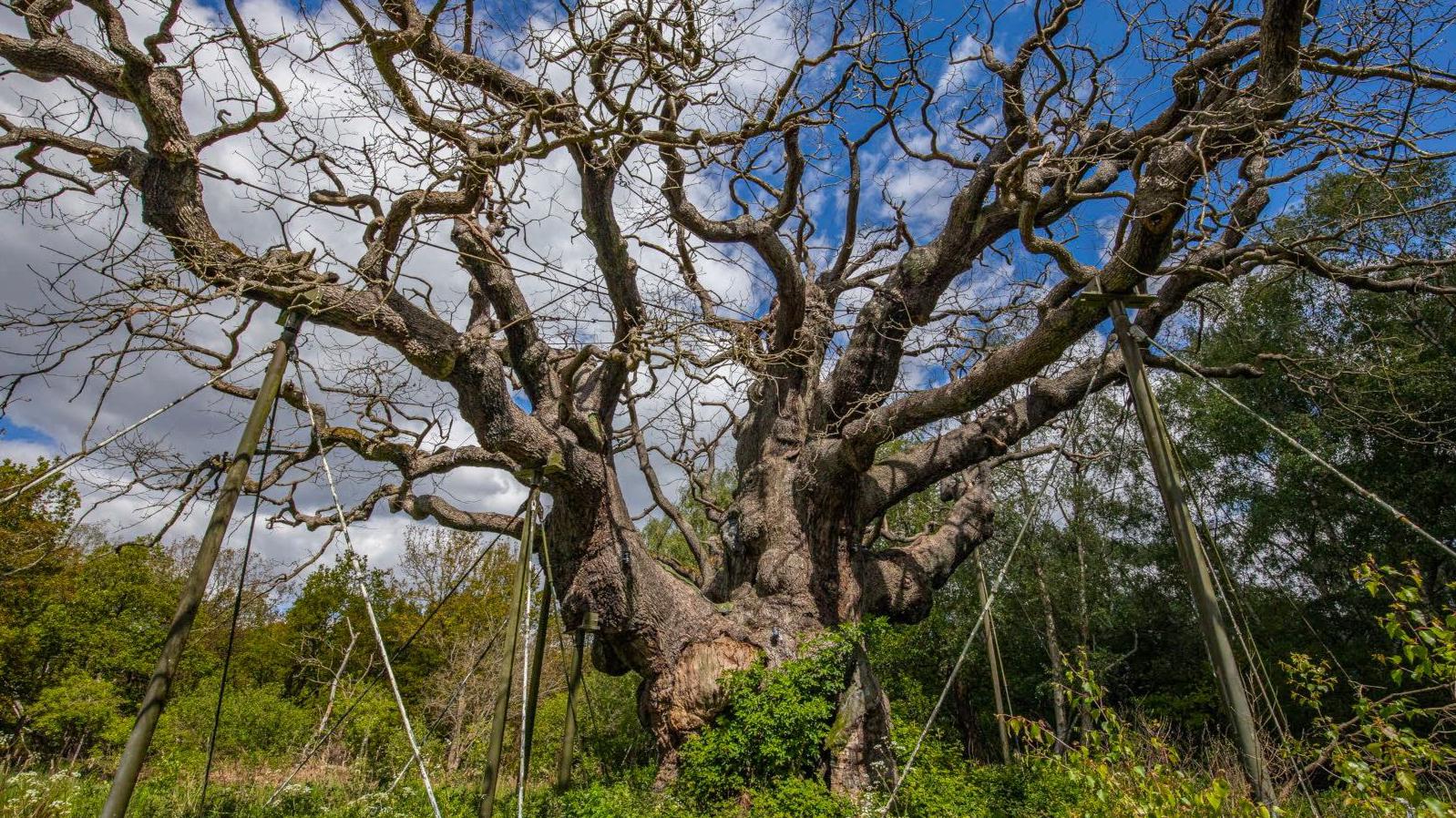
The iconic Major Oak, a towering 1,200-year-old tree famously associated with the legend of Robin Hood, has died in England’s historic Sherwood Forest, conservation officials have confirmed.
The ancient oak, believed to have sheltered the legendary outlaw who supposedly hid in Sherwood Forest while evading the Sheriff of Nottingham, failed to produce leaves this spring, signaling the end of its remarkable lifespan. The announcement was made by the Royal Society for the Protection of Birds (RSPB), which manages the nature reserve.
Located in Nottinghamshire, the massive tree has long been one of Britain’s most celebrated natural landmarks. For generations, visitors traveled from around the world to admire its sprawling branches and rich connection to English folklore.
According to conservation experts, decades of heavy tourism contributed significantly to the tree’s decline. Millions of visitors over the years compacted the soil surrounding the oak, reducing the amount of water and nutrients able to reach its roots. Tree specialists also discovered that the root system had become severely stressed and deprived of essential resources.

Environmental factors including prolonged droughts, rising temperatures, and other impacts linked to climate change are also believed to have played a role in the tree’s deterioration. Efforts to preserve the oak, including the installation of support cables and poles to stabilize its enormous limbs, may have further strained the aging giant.
“The tree’s failure to produce leaves this year is heart-breaking for everyone,” said Hollie Drake of the RSPB while confirming the loss.
The Major Oak earned its name after being referenced in a 1790 book about oak trees by Major Hayman Rooke. The publication sparked public interest in the tree and transformed it into a popular tourist destination.
Beyond its connection to Robin Hood folklore, Sherwood Forest has historical significance for Britain. Oak trees from the forest were used in the construction of ships for Vice Admiral Horatio Nelson’s Royal Navy during the late 18th and early 19th centuries, while timber from the area also contributed to the roof structure of London’s St. Paul’s Cathedral.
Protected by fencing since the 1970s, the Major Oak escaped logging and survived centuries of environmental changes. Although it is no longer alive, conservationists say the tree will remain standing as a natural monument and continue supporting wildlife and the surrounding ecosystem through its decaying wood.
Experts emphasize that the loss highlights the growing challenges facing ancient trees across the United Kingdom. Often described as irreplaceable environmental treasures, these historic trees provide habitats for countless species while serving as living links to the past.
The Major Oak’s death marks the end of one of Britain’s most famous living landmarks, but its legacy will continue through the enduring legend of Robin Hood and the history of Sherwood Forest.
