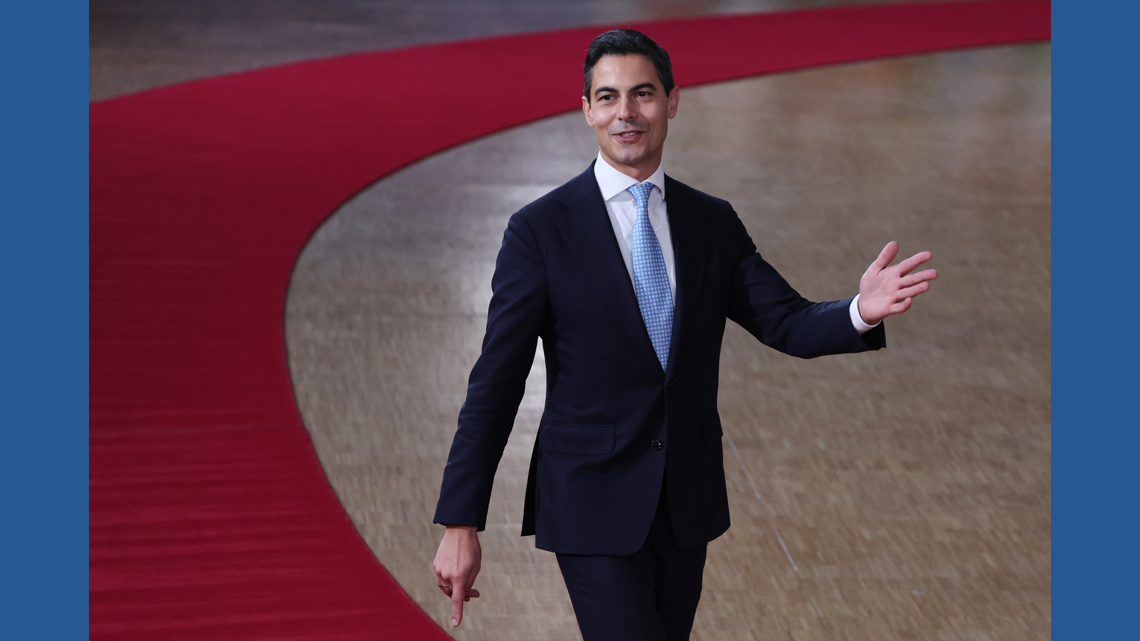
Dutch Prime Minister Rob Jetten has called emergency talks with senior leaders of his coalition partners in an effort to prevent his government from collapsing following a bitter dispute over a proposed tax package for 2027.
The crisis erupted after lawmakers from Jetten’s centrist D66 party and the Christian Democratic Appeal (CDA) supported amendments proposed by two left-leaning opposition parties, PRO and Volt. The changes secured enough parliamentary support for the tax package but angered the coalition’s third partner, the right-wing, pro-business People’s Party for Freedom and Democracy (VVD).
The dispute has exposed deep divisions within the three-party minority government, which has been in power for less than nine months.

Tax agreement triggers coalition dispute
The Dutch parliament approved the amended 2027 tax plan by 76 votes to 74 on Thursday, November 12, despite opposition from the VVD.
The amendments included a revised wealth-tax proposal described by PRO leader Jesse Klaver as a form of “millionaires’ tax.” The original proposal was reduced in scope but is expected to generate approximately €1 billion in additional revenue.
Under the revised arrangement, the tax on savings and investment returns would be divided into two rates: 35.5 per cent on annual returns up to €60,000 and 38.5 per cent on returns exceeding that amount.
A significant portion of the expected revenue would help reduce a planned increase in the lowest income-tax rate. The agreement also includes measures targeting arrangements used to reduce gift and inheritance taxes.
D66 and CDA supported the changes after reaching an agreement with PRO and Volt, allowing the package to pass despite the VVD’s opposition.
The VVD argued that the agreement violated the coalition’s governing arrangements and could negatively affect businesses and the Dutch economy.
Party parliamentary leader Ruben Brekelmans criticised the decision, saying he had not expected the CDA and D66 to move so far towards the left on economic policy.
He described the outcome as deeply disappointing and indicated that his party would reconsider its position within the coalition.
Jetten seeks to prevent government collapse
Following the parliamentary vote, Jetten announced plans to meet his deputy prime ministers, VVD leader Dilan Yesilgöz and CDA representative Bart van den Brink, on Friday.
The prime minister called for a serious fresh start, acknowledging that relations between coalition partners had deteriorated.
Jetten said the country did not need prolonged political disagreements or another general election, urging the parties to find a way forward together.
He also skipped a European leaders’ summit in Ireland to attend the parliamentary debate on the tax package, highlighting the importance of resolving the dispute.
The government is particularly vulnerable because it does not hold a parliamentary majority. Its ability to pass legislation depends on securing support from opposition parties, making cooperation with other political groups essential.
The VVD’s possible withdrawal would create an even more serious political challenge for Jetten’s administration.
Fresh elections remain a possibility
The coalition dispute has raised questions about the political future of the Netherlands, which has experienced repeated government instability in recent years.
If the VVD decides to leave the coalition, the government could collapse, potentially opening the door to another general election.
However, an election is not inevitable. Political parties could attempt to negotiate a different governing arrangement using the existing parliamentary composition.
The tax package must also proceed to the Dutch Senate, where the governing coalition does not have a majority, meaning further negotiations and opposition support will be necessary.
Meanwhile, opposition leader Jesse Klaver argued that the agreement demonstrated the ability of a centre-left parliamentary majority to take responsibility for governing.
The coming discussions between Jetten and his coalition partners will therefore be important in determining whether the three-party administration can overcome its differences and continue governing.
For now, the immediate challenge is restoring trust among coalition partners while finding a workable approach to the country’s economic and taxation policies.
Swifteradio.com