
Southeast Asian leaders, alongside representatives from the United States, China and other major international partners, are expected to renew calls for stronger action against increasingly sophisticated online scam networks during regional summit meetings in Manila, Philippines.
The growing threat of transnational online fraud is expected to feature prominently when leaders of the Association of Southeast Asian Nations (ASEAN) and their international counterparts meet for the East Asia Summit on November 17.
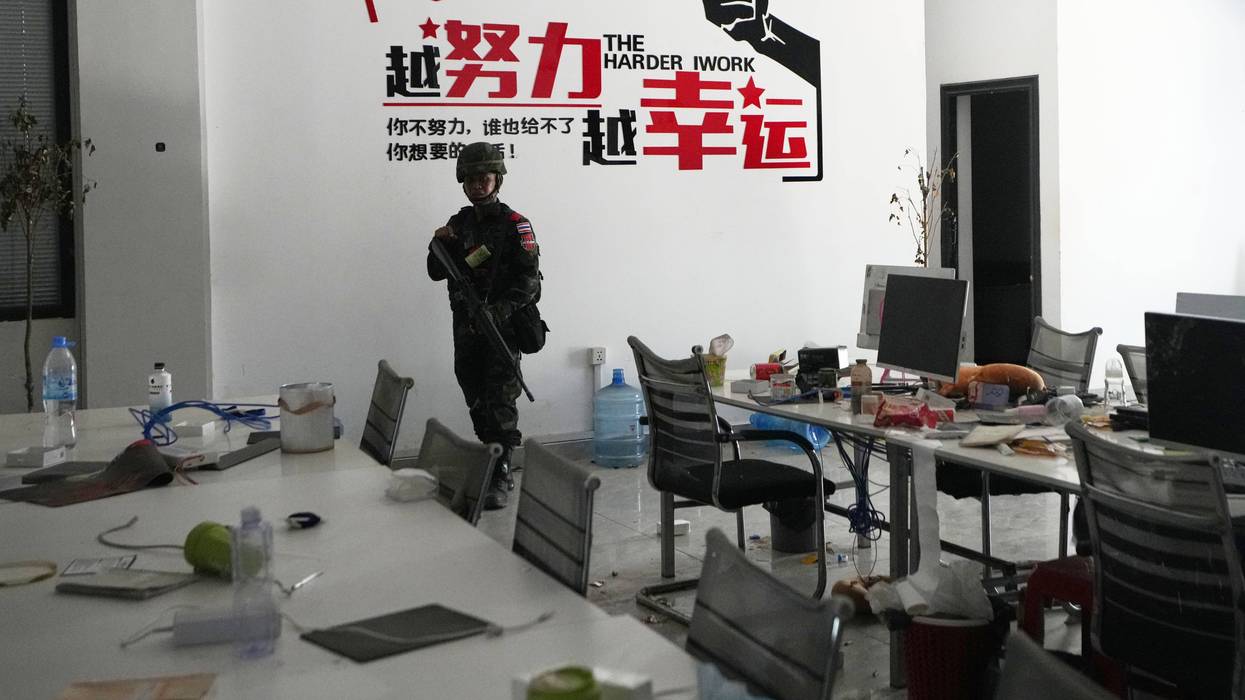
According to a draft joint statement obtained by The Associated Press, leaders will express grave concern over criminal organizations operating online scam centres and engaging in related crimes, including human trafficking and forced labour.

The networks have expanded across Southeast Asia, targeting victims in countries ranging from the United States to nations throughout Asia and beyond. Criminal groups reportedly use advanced digital technologies and financial platforms to steal money, conceal proceeds and move illicit funds across international borders.
Scam centres linked to human trafficking
Authorities in Southeast Asia have documented cases in which people were recruited through seemingly legitimate employment opportunities and transported to scam compounds.
Once inside these facilities, some workers have reportedly been forced to participate in online fraud schemes, including romance scams, investment fraud and impersonation operations.
People who refuse to participate or attempt to escape have faced threats, physical abuse and torture, according to reports from authorities and international organizations.
Countries including Cambodia and the Philippines have been identified as locations where criminal groups have operated such facilities.
The situation has raised concerns about the connection between cybercrime and human trafficking, with victims of fraudulent recruitment sometimes becoming perpetrators under coercion.
Billions of dollars lost to online fraud
The financial consequences of online scams have become increasingly severe.
A July 2026 report by the United Nations Office on Drugs and Crime (UNODC) estimated that global losses associated with scams linked to Southeast Asian criminal networks reached between US$88.3 billion and US$114.1 billion in 2025.
The report highlighted how criminal organizations are increasingly relying on sophisticated technology to expand their operations and reach victims internationally.
Artificial intelligence, malware and deepfake technology have made it easier for criminals to impersonate individuals, manipulate victims and carry out financial fraud.
These tools are also being used in sexual extortion and other forms of online exploitation, creating additional risks for vulnerable individuals.
Leaders expected to strengthen cooperation
The draft statement indicates that participating governments will encourage stronger information-sharing arrangements, coordinated threat assessments and improved cooperation among law-enforcement agencies.
They are also expected to support efforts to strengthen financial and digital safeguards and improve cooperation aimed at identifying and dismantling scam centres.
The proposed commitments reflect growing recognition that individual countries cannot effectively tackle international criminal networks without cooperation across borders.
The leaders are also expected to address the underlying conditions that allow scam operations to flourish. These include poverty, limited employment opportunities, inadequate social protection, outdated laws, corruption and weaknesses in cooperation between public institutions and private companies.
The statement emphasizes that efforts to combat online fraud should comply with international law and respect human rights.
Philippines hosts regional discussions
The Philippines is hosting the 49th ASEAN Summit and related meetings from November 15 to 17, 2026, under the leadership of President Ferdinand Marcos Jr.
The gathering will bring together Southeast Asian leaders and representatives of major international partners, including the United States and China.
Online scams and transnational crime are among several issues expected to receive attention, alongside food and energy security, regional stability and the welfare of migrant workers.
The discussions come as governments face increasing pressure to protect citizens from financial fraud while addressing the exploitation of people forced to work in criminal compounds.
Although the proposed statement outlines areas for stronger cooperation, the effectiveness of the initiative will depend on how governments translate their commitments into coordinated investigations, prosecutions and victim-protection measures.
For millions of people affected by online fraud and human trafficking, the regional discussions could represent an important step towards a more coordinated international response.
Swifteradio.com