
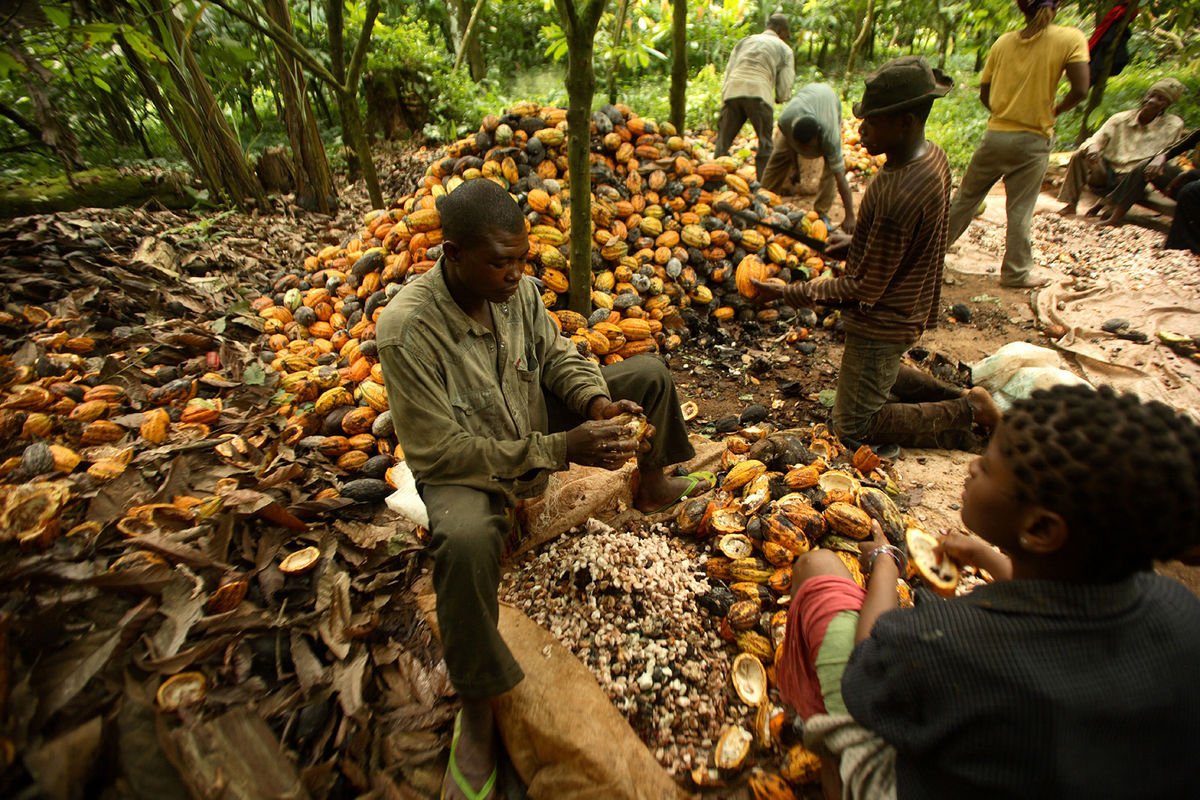
Cocoa farmers across West Africa are raising concerns over persistently low profit margins, despite record or near-record production levels in recent seasons.
The situation has renewed calls for reforms in the global cocoa value chain, as producers argue they are not receiving a fair share of the industry’s growing revenues.
High Output, Low Returns
Countries like Ghana and Ivory Coast—which together account for a significant portion of global cocoa supply—have reported strong production figures.

However, many farmers say increased output has not translated into higher incomes, leaving them struggling to cover rising costs.
Global Market Imbalance
Experts point to structural imbalances in the cocoa industry, where multinational buyers and chocolate manufacturers capture a larger share of profits compared to smallholder farmers.
Price volatility in international markets further complicates earnings for producers in West Africa.
Rising Costs of Farming
Farmers also face increasing expenses related to fertilizers, labour, and transportation, which continue to erode already thin profit margins.
Climate-related challenges, including irregular rainfall and crop diseases, add further pressure.
Calls for Fair Pricing
Farmer groups and industry stakeholders are advocating for fairer pricing mechanisms, including stronger enforcement of living income differentials and direct trade initiatives.
They argue that sustainable cocoa production depends on improving farmer livelihoods.
Government and Industry Response
Authorities in Ghana and Ivory Coast have introduced policies aimed at stabilizing prices and supporting farmers, but challenges remain.
Efforts to regulate supply and negotiate better prices with international buyers are ongoing.
Impact on Future Production
Analysts warn that if profitability does not improve, younger generations may abandon cocoa farming, threatening long-term supply.
This could have ripple effects across the global chocolate industry.
Conclusion
The concerns raised by cocoa farmers in West Africa highlight deep-rooted challenges within the global agricultural economy.
Without meaningful reforms, the gap between high production and low farmer earnings is likely to persist, with significant implications for both producers and global markets.
Swifteradio.com
