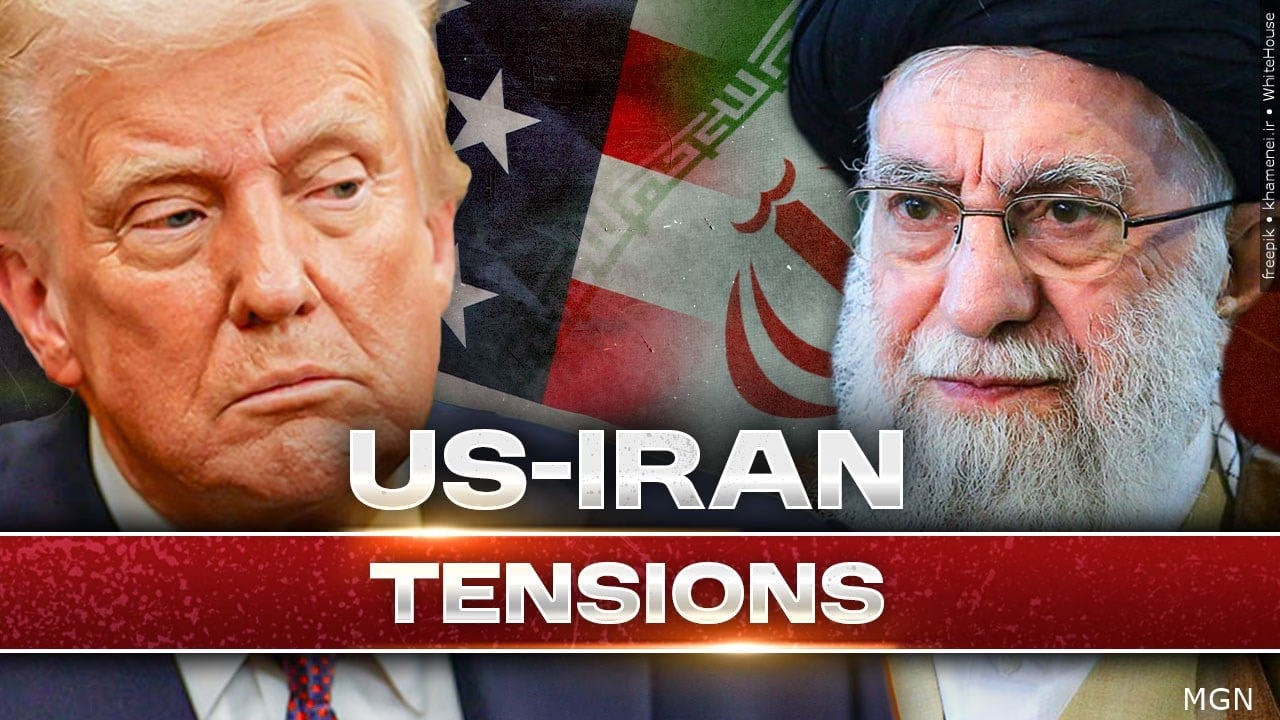
Indirect negotiations between the United States and Iran have entered a crucial third round in Geneva, as Donald Trump warned that military action remains an option if a nuclear agreement is not reached.
The talks, mediated by Omani Foreign Minister Badr Albusaidi, come amid the largest U.S. military build-up in the Middle East since the 2003 invasion of Iraq. Iran has vowed to respond forcefully to any attack, while Washington has deployed thousands of additional troops, two aircraft carriers, fighter jets and refuelling aircraft to the region.
Albusaidi said negotiators had shown “unprecedented openness to new and creative ideas and solutions,” but the prospects for a breakthrough remain uncertain.
The Iranian delegation is led by Foreign Minister Abbas Araghchi, while the U.S. side is represented by special envoy Steve Witkoff and Trump’s son-in-law Jared Kushner.

Trump has said he prefers diplomacy but is considering a limited strike to pressure Iran into accepting a deal. He has not clearly outlined what terms the U.S. is demanding, despite tensions escalating eight months after U.S. and Israeli strikes on Iranian nuclear facilities.
Iran has rejected U.S. calls to halt uranium enrichment on its territory but has signalled willingness to make limited concessions. Tehran insists its nuclear programme is for peaceful purposes, though it remains the only non-nuclear-armed state to enrich uranium at near weapons-grade levels.
In his State of the Union address, Trump accused Iran of rebuilding its nuclear programme and said he could not allow what he called the “world’s number one sponsor of terror” to acquire a nuclear weapon. Hours earlier, Araghchi stated publicly that Iran would “under no circumstances ever develop a nuclear weapon” and described the talks as an “historic opportunity” for an unprecedented agreement.
Iran’s proposals have not been made public, but discussions may include the creation of a regional uranium enrichment consortium and decisions on Iran’s stockpile of roughly 400 kilograms of highly enriched uranium. In exchange, Tehran is seeking relief from international sanctions that have crippled its economy.
Iran has ruled out negotiations on limits to its ballistic missile programme or ending support for allied groups in the region known as the “Axis of Resistance,” which includes Hamas, Hezbollah, militias in Iraq and the Houthis in Yemen.
Reports in U.S. media suggest Trump is considering initial strikes on Iran’s Revolutionary Guards or nuclear sites if diplomacy fails, with some officials warning this could draw the U.S. into a prolonged conflict. Iran has threatened retaliation against American forces and Israel.
Israeli Prime Minister Benjamin Netanyahu has warned against any deal that does not address Iran’s missile programme and regional influence, while U.S.-allied nations in the Middle East fear a wider war if talks collapse.
Following a classified briefing to congressional leaders, Senate minority leader Chuck Schumer said the administration must clearly explain its strategy to the American public, adding that the situation remains “serious.”
