
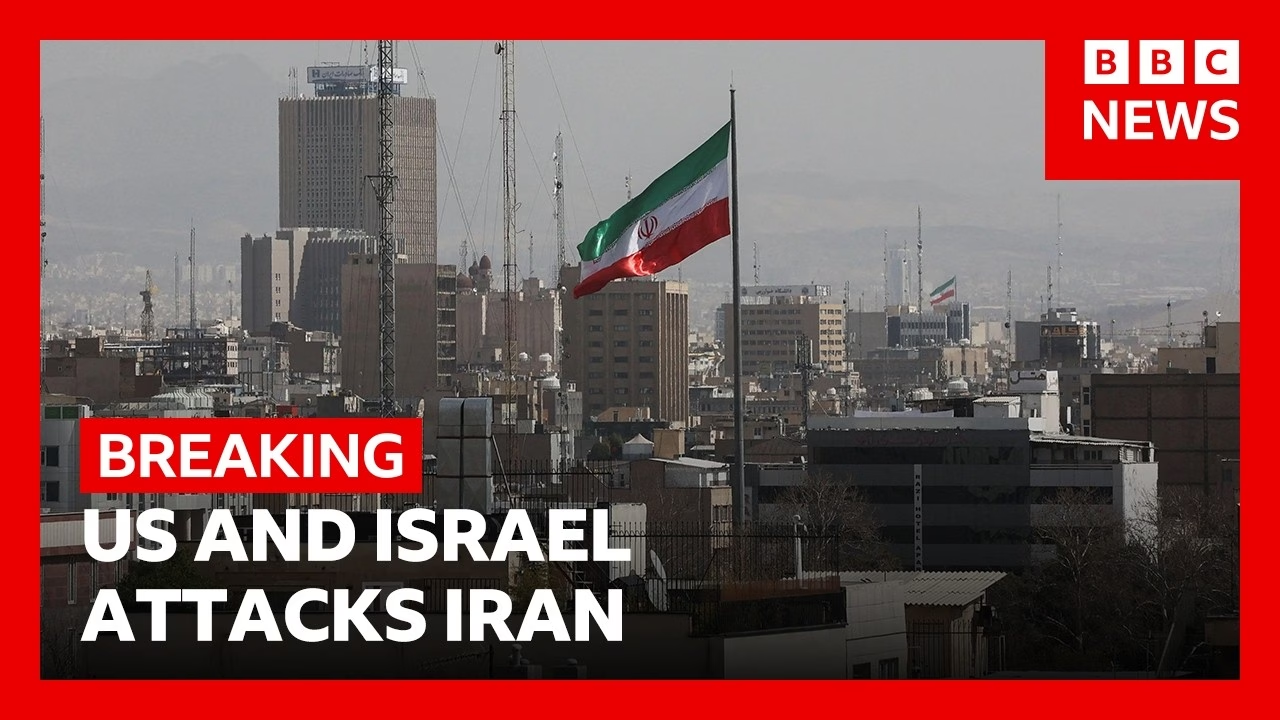
The United States and Israel have carried out a coordinated military attack on Iranian targets, dramatically escalating tensions in the Middle East and raising fears of a broader regional war. The joint operation, confirmed by officials from both Washington and Tel Aviv, targeted strategic Iranian military facilities believed to be connected to weapons development and regional proxy operations.
According to defense sources, the strikes were conducted using a combination of air power and precision-guided munitions aimed at minimizing collateral damage while disrupting Iran’s military infrastructure. Officials described the operation as a “necessary defensive measure,” citing intelligence that suggested imminent threats to Israeli and allied security interests.
Iran responded swiftly, launching retaliatory missile and drone strikes toward Israeli-controlled areas and U.S. military positions in the region. Iranian state media reported that the counter-attack was intended to send a “clear message” that Tehran would not tolerate direct military aggression. Air defense systems in Israel and nearby allied bases were activated, intercepting several incoming projectiles, though initial reports indicate some damage and casualties cannot yet be ruled out.
The escalation marks one of the most serious direct confrontations between Iran and the U.S.–Israel alliance in recent years. Military analysts warn that the exchange risks triggering a prolonged conflict involving multiple actors, including Iran-aligned militias operating across Iraq, Syria, and Lebanon. Regional governments have begun reviewing their security posture, while global powers are urging restraint to prevent further deterioration.

U.S. President Donald Trump said the operation was carried out to protect American personnel and allies, emphasizing that Washington does not seek a wider war but will respond decisively to threats. Israeli Prime Minister Benjamin Netanyahu echoed similar sentiments, stating that Israel “will act wherever necessary to ensure its survival and security.”
The international community has reacted with alarm. Several European leaders called for immediate de-escalation and diplomatic engagement, while the United Nations urged all parties to avoid further military action that could destabilize an already volatile region.
Energy markets also reacted sharply, with oil prices rising amid fears that continued conflict could disrupt supply routes through critical shipping lanes such as the Strait of Hormuz. Security experts warn that any sustained military confrontation could have far-reaching consequences for global trade, regional stability, and international diplomacy.
As both sides assess the aftermath of the strikes and prepare for possible further escalation, the world is watching closely to see whether diplomatic channels can prevent the crisis from spiraling into a full-scale war.
Swifteradio.com
