Tag: US

  • Why NASA’s Artemis II Moon Mission Could Be Politically Significant for Donald Trump

    Why NASA’s Artemis II Moon Mission Could Be Politically Significant for Donald Trump

    NASA’s Artemis II mission, which could launch this week and send astronauts around the Moon for the first time since 1972, arrives at a politically sensitive moment in U.S. President Donald Trump’s presidency.

    With the United States deeply divided over issues such as the war involving Iran, immigration and economic policy, a successful mission could offer a rare moment of national unity while strengthening the administration’s strategic goals in space.

    Image

    Image

    Image

    Image

    A historic return to deep space

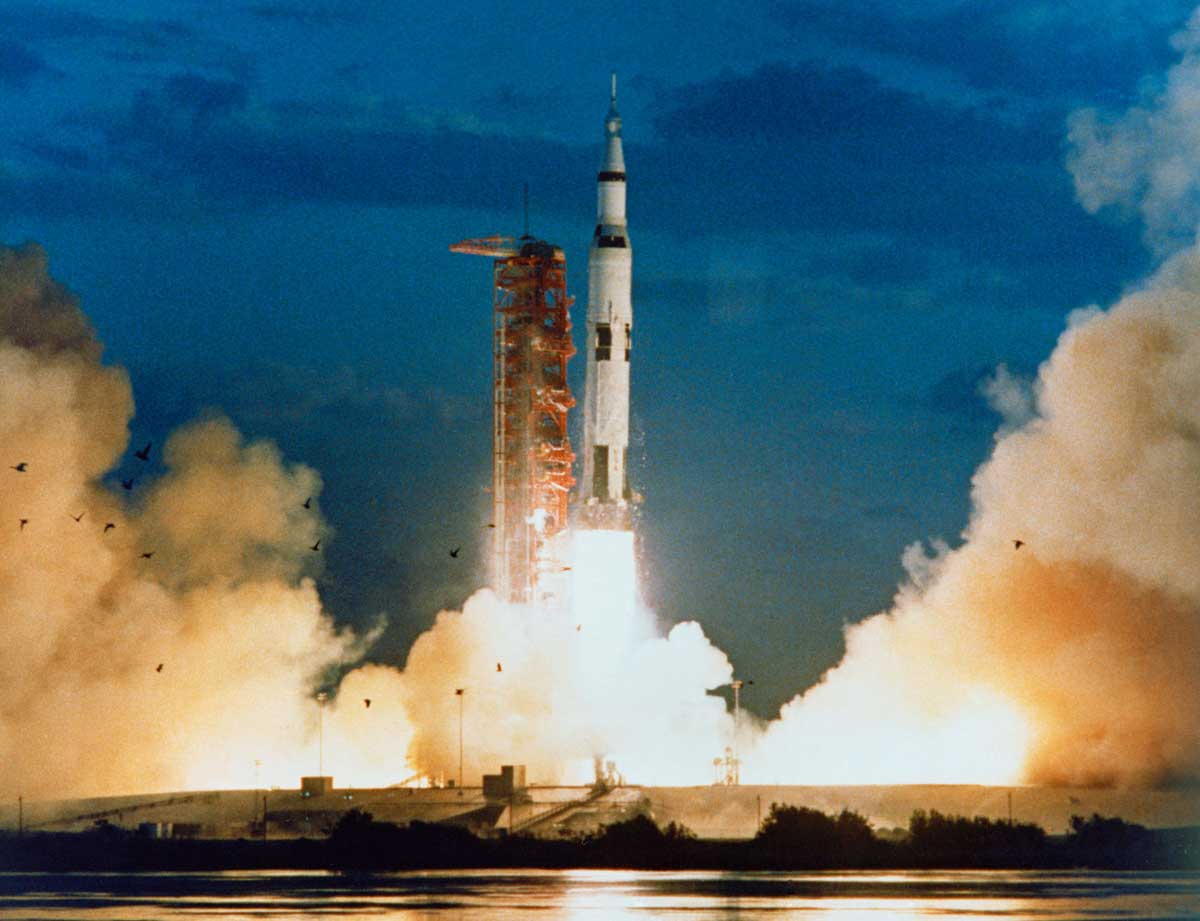
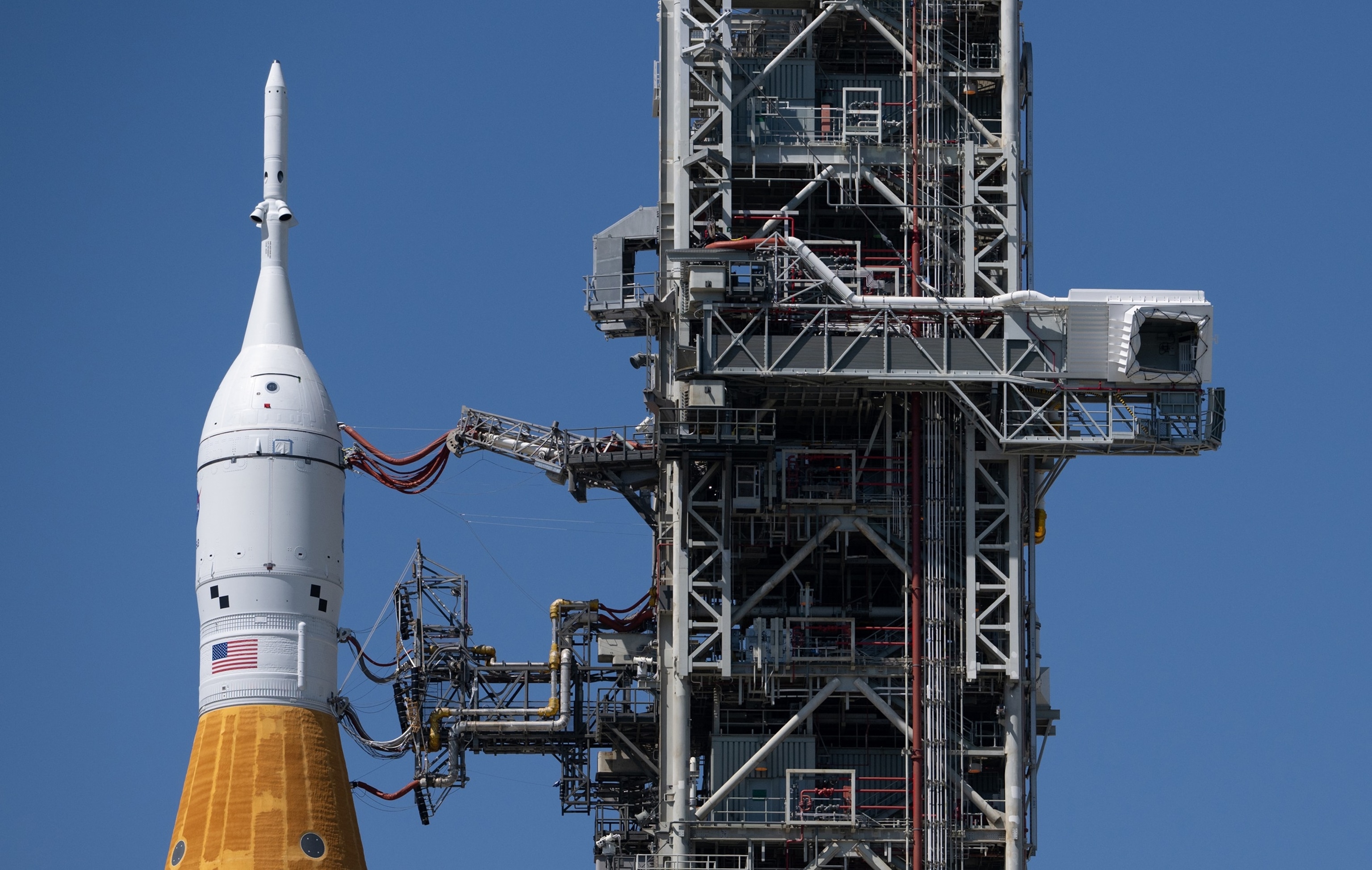
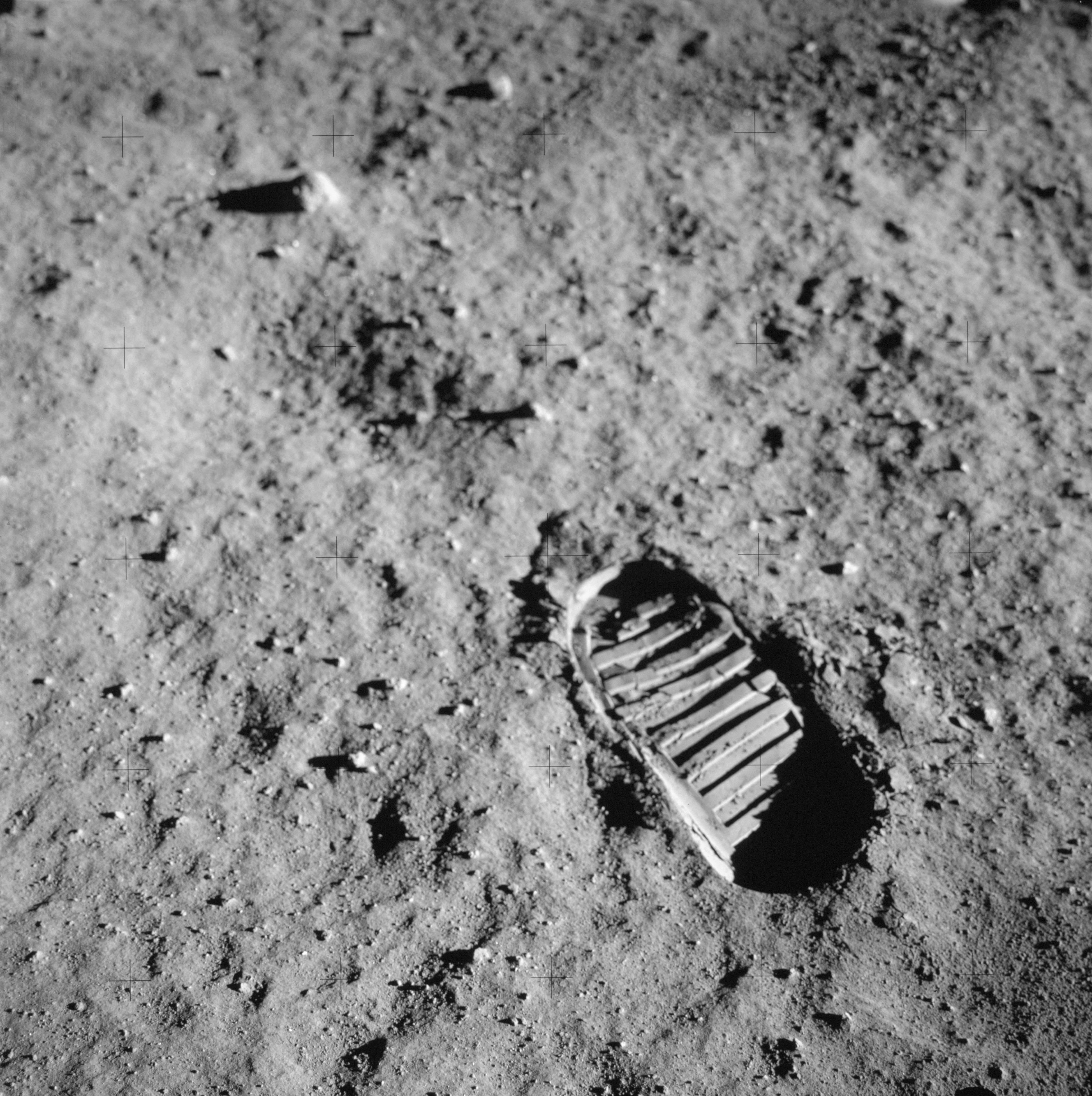
    Artemis II will carry four astronauts — three Americans and one Canadian — on a 10-day mission that will fly around the Moon before returning to Earth. The mission will travel farther into space than any humans since the Apollo 17 mission in 1972.

    While the crew will not land on the lunar surface, the mission is intended to test systems needed for future lunar landings and deep-space exploration. NASA says Artemis is a key step toward building a permanent lunar base and eventually sending humans to Mars.

    Trump helped launch the Artemis initiative during his first presidency, promising to push American astronauts deeper into space. At the time, he spoke of planting “the Stars and Stripes on the planet Mars.”

    During his second term, however, the administration has shifted its near-term focus toward establishing a long-term American presence on the Moon, including a return to the lunar surface by 2028 and a permanent outpost by 2030.

    Strategic competition with China

    Although Trump’s executive order emphasized national vision and economic opportunity, NASA officials have been more explicit about the geopolitical stakes.

    NASA administrator Jared Isaacman recently warned that the United States now faces “a real geopolitical rival” in China, which is developing its own lunar exploration program and plans to send astronauts to the Moon within the next few years.

    The rivalry echoes the Cold War space race between the United States and the Soviet Union, when space exploration became a powerful symbol of technological superiority and ideological influence.
    Image

    Image

    Image

    Image

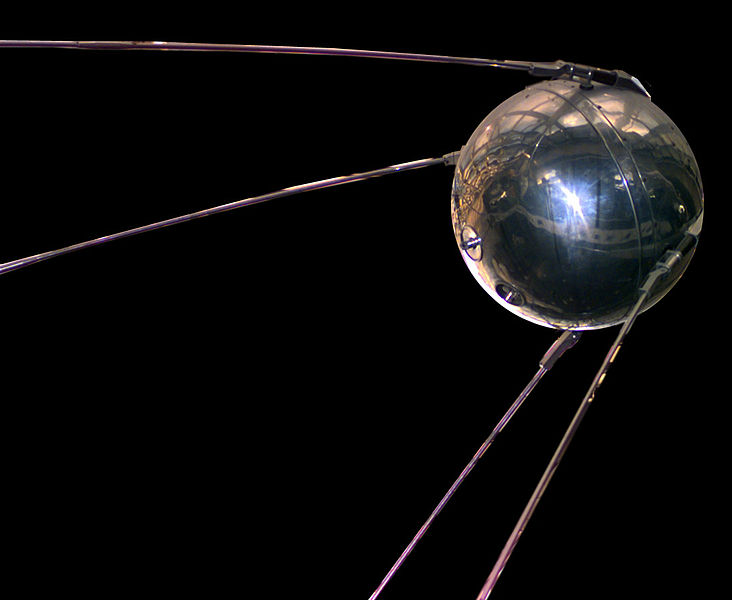
    The Cold War race began in earnest after the Soviet Union launched Sputnik in 1957, the world’s first artificial satellite. The achievement shocked the United States and pushed President John F. Kennedy to commit to landing a man on the Moon.

    In a 1962 conversation with NASA officials, Kennedy bluntly acknowledged the political motivation: reaching the Moon was important because “this is, whether we like it or not, a race.”

    The economic stakes of the Moon

    Beyond geopolitics, the Moon may hold significant economic value. Scientists have identified helium-3, a rare isotope that could potentially power future nuclear fusion reactors. The element currently sells for more than $20,000 per kilogram, making it extremely valuable.

    The Moon also contains water ice, which could be converted into rocket fuel, along with rare earth metals such as lithium and platinum, materials critical for electronics and clean-energy technologies.

    Some analysts describe the coming competition as a potential “lunar gold rush,” where the nations that establish early infrastructure could gain major advantages in accessing these resources.

    A moment of unity?

    Supporters of the Artemis program say the mission could also provide something less tangible but politically valuable: national pride.

    The Apollo 11 Moon landing in 1969 occurred during one of the most turbulent periods in American history — amid the Vietnam War, civil rights tensions and political upheaval. Yet millions of Americans across political divides watched the event together.

    Experts believe Artemis could have a similar cultural impact today.

    “Space is one of the few areas that Americans with different political views can enjoy and watch together,” said Esther Brimmer, a senior fellow at the Council on Foreign Relations.

    For many Americans, the space program has long represented innovation, exploration and national achievement. If Artemis II succeeds, it could become a defining moment in a new era of space exploration — and potentially a rare unifying event during a deeply polarised political era.

  • Mojtaba Khamenei Named Iran’s New Supreme Leader as War Escalates Across the Middle East

    Mojtaba Khamenei Named Iran’s New Supreme Leader as War Escalates Across the Middle East

    Iranian state media says Mojtaba Khamenei, the son of the late Supreme Leader Ali Khamenei, has been appointed as Iran’s new supreme leader, a move that comes as the war involving Iran, Israel and the United States intensifies across the Middle East.

    The announcement early Monday marks a major leadership shift in Tehran after an Israeli strike earlier in the conflict killed Ali Khamenei. Mojtaba Khamenei had long been considered a leading contender for the role despite never having held an elected or formal government position.

    As supreme leader, he will now have ultimate authority over Iran’s military and political strategy, including command influence over the powerful Islamic Revolutionary Guard Corps, which plays a central role in the ongoing war.

    The Guard pledged allegiance to the new leader in a statement broadcast by Iranian state media, declaring its readiness to carry out his orders as the conflict with Israel and the United States continues.

    The leadership transition comes amid rapidly escalating regional tensions. Iranian missiles were launched toward Israel early Monday, with emergency responders in Rishon LeZion reporting one woman injured by flying debris following the attack. Sirens also sounded across central Israel, including the Tel Aviv metropolitan area.

    Meanwhile, oil markets reacted sharply to the widening conflict. Global crude prices surged past $100 per barrel for the first time in more than three years as disruptions threatened exports from the Persian Gulf. Brent crude oil rose to $109.46 a barrel, while West Texas Intermediate crude traded at $107.37.

    The surge in oil prices rattled financial markets across Asia. Japan’s Nikkei 225 plunged more than six per cent, while South Korea’s Kospi dropped a similar amount as investors reacted to fears of prolonged instability in the energy-producing region.

    The conflict has also spread beyond Iran and Israel. Missile and drone attacks were reported in Qatar and Saudi Arabia, while an oil facility fire broke out in Fujairah Oil Industry Zone in the United Arab Emirates following an attack.

    Israeli forces say they have struck more than 3,400 targets inside Iran since the start of the war, including the headquarters of the Islamic Revolutionary Guard Corps’ air force in Tehran. Israel also said it killed several senior commanders linked to the Guard’s overseas Quds Force during a strike in Beirut.

    Military officials warn the conflict could continue for an extended period. Eyal Zamir, chief of staff of the Israel Defense Forces, told the Israeli public to prepare for a long war.

    Meanwhile, Donald Trump said he expects to have influence over Iran’s future leadership once the war ends. The U.S. president previously described Mojtaba Khamenei as “a lightweight” and warned that any new Iranian leader would struggle to remain in power without international backing.

    Iran’s foreign minister Abbas Araghchi rejected the idea of foreign involvement in choosing the country’s leadership, saying the decision belongs solely to the Iranian people.

    The conflict has already claimed significant casualties and caused widespread displacement across the region. According to monitoring group Armed Conflict Location and Event Data Project, more than 1,000 incidents have been recorded across 16 countries during the first week of fighting, with the initial day of the war accounting for more than 40 per cent of reported fatalities.

    As the war spreads across multiple fronts, world leaders are urging restraint. Emmanuel Macron called on Iran to halt its strikes during a phone call with Iranian President Masoud Pezeshkian, while diplomats warn the growing conflict risks destabilizing global energy markets and security across the Middle East.

  • Netanyahu Begs For Forgiveness Over Hostage Killings

    Israeli Prime Minister Benjamin Netanyahu has apologized to Israelis for failing to return six hostages found dead in Gaza on Saturday, as Hamas warned of the possibility of others returning to their families in shrouds if a ceasefire agreement is not reached. His comments came as intense street protests against his handling of the negotiations erupted for the second time in Israel. 

    International pressure also increased after the United Kingdom suspended some arms sales to Israel, citing the risk that the equipment could be used to go against international law.  

    But the Israeli prime minister struck a defiant tone, insisting that his troops must control the Philadelphia-Gaza corridor, a strip of land which is strategically important and is a sticking point in negotiations with Hamas.

    Israelis in their thousands took to the streets on Monday in fresh protests called by the hostages’ families to express their anger at Netanyahu’s failure to secure the release of their loved ones after nearly 11 months.

    The Times of Israel reported that police employed considerable aggression in managing the demonstration outside the prime minister’s residence in Jerusalem, including violently pushing protesters, throwing some to the ground and dragging several others.

    The Times of Israel reported that one member of the police squeezed the throat of one of its reporters.

    The latest demonstrations come after hundreds of thousands of people took to the streets in protests across the country on Sunday, with some demonstrators blocking a major highway in Tel Aviv. 

    Many were dressed in Israeli flags and hung yellow ribbons, a symbol of solidarity with the hostages – from a bridge overlooking the Ayalon Highway.

    A total of 97 hostages are still missing after being kidnapped by Hamas on October 7. 

    On Monday, Hamas said that the hostages would be returned inside coffins if Israel’s military pressure continued, and added that “new instructions” had been given to militants guarding the prisoners if  Israeli troops approached. 

    “Netanyahu’s insistence to free prisoners through military pressure, instead of sealing a deal means they will be returned to their families in shrouds. Their families must choose whether they want them dead or alive,” said a spokesman for the group, without elaborating on the new orders.

    Earlier on Monday, Israel’s largest trade union said hundreds of thousands of people had joined a general strike called to pressure  the government to accept a ceasefire deal and the release of hostages with Hamas in Gaza. 

    Despite this, Tel Aviv’s Ben Gurion Airport reported limited disruption and many restaurants and hospitality services were operating normally. 

    Far-right Finance Minister Bezalel Smotrich boasted that Israelis had gone to work “en masse” and proved  they were no longer slaves to political exigencies. 

    Elsewhere, US President Joe Biden accused Netanyahu of not doing enough to secure a hostage and ceasefire deal with Hamas, amid reports suggesting a new proposal would be sent to the Israeli prime minister as “final”.  

    Many accuse Netanyahu of blocking a deal by prioritizing his own political survival – a claim he disputes. 

    Netanyahu’s far-right allies have threatened to pull out of the coalition government, jeopardizing his chances of staying in power, if he accepts a deal linked to a permanent ceasefire before the destruction of Hamas.

    Mediators from the US, Egyptian and Qatari are trying to negotiate a ceasefire deal that would see Hamas release the 97 hostages still being held, including the 33 presumed dead, in exchange for Palestinian prisoners in Israeli jails.

    On Monday, UK Foreign Secretary David Lammy said that his country had suspended 30 of Israel’s 350 arms export licenses, citing a “clear risk” that the equipment could be used to commit serious violations of international law. 

    Affected equipment includes parts for fighter jets, helicopters and drones.  Lammy said the UK continues to support Israel’s right to defend itself and that this does not amount to an arms embargo. 

    Israeli Defense Minister Yoav Gallant posted on X that he was “deeply disheartened” by the decision, while Foreign Minister Israel Katz said it sent a “very problematic message” to Hamas and Iran.  

    Meanwhile, funerals had been held for some of the hostages killed on Saturday.

    The mother of Hersh Goldberg-Polin, one of the hostages whose body was recovered by Israel on Saturday, spoke at his funeral and said she had been in “such torment and worry” about him for months. 

    Rachel Goldberg-Polin said it was a great honor to be the mother of her son. At the time of his abduction, Hersh had sent two text messages to his family, in which he wrote: “I love you guys” and “I’m sorry.” 

    Mourners lined the streets of Jerusalem and Israeli President Isaac Herzog spoke to relatives at the funeral.  

    The war in the Gaza Strip began after Hamas crossed the Gaza border, killing 1,200 Israelis and kidnapping 251 on October 7. 

    Since then, Israel has killed more than 40,000 Palestinians in revenge attacks, according to Gaza’s Ministry of Health, which is run by Hamas.


    Source: BBC News 

  • UN Calls For Calm After Attacks Between Israel And Hezbollah

    UN Secretary-General António Guterres said he was “deeply concerned” by the most significant cross-border attacks carried out by Israel and the Lebanese Hezbollah movement since the start of  the war in Gaza. 

    Israeli warplanes struck dozens of sites in southern Lebanon on Sunday in what they said were pre-emptive strikes to prevent a much wider attack, and Hezbollah fired hundreds of missiles and drones at Israel. 

    The UN boss cautioned that their actions put civilians at risk and threatened regional security and stability.

    The United States has said it is working to avoid a further escalation of hostilities, and both sides have indicated they are not interested in such a situation. 

    There have been exchanges of fire almost every day on the Israeli-Lebanese border since the day after the war between Israel and Hamas in Gaza began on October 7. 

    Hezbollah said it is acting in support of the Palestinian group. The two groups are supported by Iran and are considered terrorist organizations by Israel, the United Kingdom and other countries.  

    Since October, more than 560 people have been killed, most of them Hezbollah fighters according to the Lebanese Ministry of Health, while 26 civilians and 24 soldiers have been killed in Israel, according to authorities.  

    Close to 200,000 people were also  displaced on both sides of the border.  

    The Israeli attack on Hezbollah began before dawn on Sunday, when the military said about 100 warplanes bombed thousands of missile launchers at more than 40 locations in southern Lebanon.

    The Israeli military said the strikes were launched after the discovery of “extensive preparations” for a large-scale Hezbollah airstrike.  

    Hezbollah said two of its fighters were lost in the attacks, along with another fighter from the allied Amal movement.  

    Hezbollah said 11 military installations were targeted and hit in Israel and the occupied Golan Heights with 340 missiles and a “large number” of drones.

    It said the barrage was in response to the assassination of senior military commander Fuad Shukr, killed in an Israeli strike in Beirut on July 30. 

    The Israeli forces said it had intercepted “numerous threats” fired by Hezbollah and that the shells that landed caused “little damage.” 

    However, it also said a navy soldier had been killed in the fighting in northern Israel, with local media saying he was on a patrol boat when an interceptor missile engaged a drone.

    On Sunday evening, Hezbollah leader Hassan Nasrallah addressed his supporters, who seemed to want an end to the escalation, in a televised broadcast.  

    He said the group’s “initial response” to the retaliation for Shukr’s killing had gone “as planned,” though he said its impact was still being evaluated.

    “If the result is not sufficient, we will reserve the right to respond at another time,” he said.

    In the meantime, he said further, the people of Lebanon “can be at ease and carry on with their lives, as the country has been in tension for a month now”.

    Earlier, Israel’s prime minister, Benjamin Netanyahu, informed a cabinet meeting that “what happened today is not the end of the story”.

    “We are striking Hezbollah with surprising crushing blows,” he said. “Three weeks ago, we eliminated its chief-of-staff and today we thwarted its attack plan.”

    “Nasrallah in Beirut and [Iranian Supreme Leader Ayatollah Ali] Khamenei in Tehran need to know that this is an additional step in changing the situation in the north, and returning our residents securely to their homes.”

    The UN secretary-general called for an “immediate de-escalation” and asked the parties to return urgently and immediately to the cessation of hostilities, a spokesman said. 

    White House National Security Adviser, Jake Sullivan expressed hope that Sunday’s events would not lead to a regional war.


    Source: BBC News