Tag: Trump

  • Trump Threatens Higher Tariffs on Canada Over Wildfire Smoke Affecting U.S. Cities

    Trump Threatens Higher Tariffs on Canada Over Wildfire Smoke Affecting U.S. Cities

    U.S. President Donald Trump has threatened to impose higher tariffs on Canadian goods, citing wildfire smoke drifting from Canada into several American cities as a growing concern. The remarks have added a new dimension to U.S.-Canada relations as both countries continue to deal with one of North America’s most severe wildfire seasons.

    Speaking on the issue, President Trump argued that the smoke from large-scale Canadian wildfires has affected air quality in parts of the United States, disrupting daily life and posing health risks to millions of Americans. He suggested that additional tariffs could be used as a form of pressure if Canada does not take stronger action to address the situation.

    The comments come as Canadian provinces continue to battle widespread wildfires fueled by hot, dry conditions and strong winds. Fire crews from across Canada, the United States, and several international partners have been working together to contain the blazes and protect affected communities.

    Canadian officials have consistently described the wildfires as natural disasters intensified by extreme weather conditions and climate-related factors. Authorities have emphasized that firefighting efforts remain their top priority and have not indicated that tariffs are an appropriate response to cross-border smoke.

    Environmental experts note that wildfire smoke can travel hundreds or even thousands of kilometers, affecting air quality far beyond the locations where fires are burning. Public health agencies in both countries have advised residents in affected areas to monitor air quality forecasts, limit outdoor activities when smoke levels are high, and take precautions to reduce exposure.

    The latest comments from President Trump are expected to draw reactions from Canadian officials, business leaders, and environmental experts, particularly as the United States and Canada maintain one of the world’s largest trading relationships. Analysts say any move to increase tariffs could have broader economic implications for industries on both sides of the border.

    Swifteradio.com

  • Trump Announces U.S. Shipping Blockade Amid Renewed Iranian Attacks

    Trump Announces U.S. Shipping Blockade Amid Renewed Iranian Attacks

    U.S. President Donald Trump has announced that the United States is reimposing a shipping blockade in response to renewed attacks attributed to Iran, escalating tensions in the Middle East and raising concerns over global maritime security.

    According to President Trump, the decision comes after a series of renewed Iranian attacks that he said threatened international shipping routes and regional stability. The administration argues that the blockade is intended to protect commercial vessels, safeguard U.S. interests, and deter further hostile actions in strategically important waterways.

    The announcement marks a significant escalation in Washington’s response to the latest developments involving Iran. Senior U.S. officials have emphasized that the measures are designed to strengthen maritime security while increasing pressure on Tehran to halt activities that endanger international trade and navigation.

    The renewed blockade is expected to have implications for global energy markets, as key shipping lanes in the Middle East are critical to the transportation of oil and other goods. Analysts warn that any disruption to maritime traffic in the region could affect global supply chains and increase volatility in energy prices.

    Iran has previously rejected accusations of targeting international shipping and has maintained that its military actions are defensive in nature. The latest developments are likely to intensify diplomatic efforts among regional and global powers seeking to prevent a broader conflict.

    As tensions continue to rise, the international community is closely monitoring the situation, with governments urging restraint and calling for diplomatic engagement to reduce the risk of further escalation in one of the world’s most strategically important regions.

    Swifteradio.com

  • Why NASA’s Artemis II Moon Mission Could Be Politically Significant for Donald Trump

    Why NASA’s Artemis II Moon Mission Could Be Politically Significant for Donald Trump

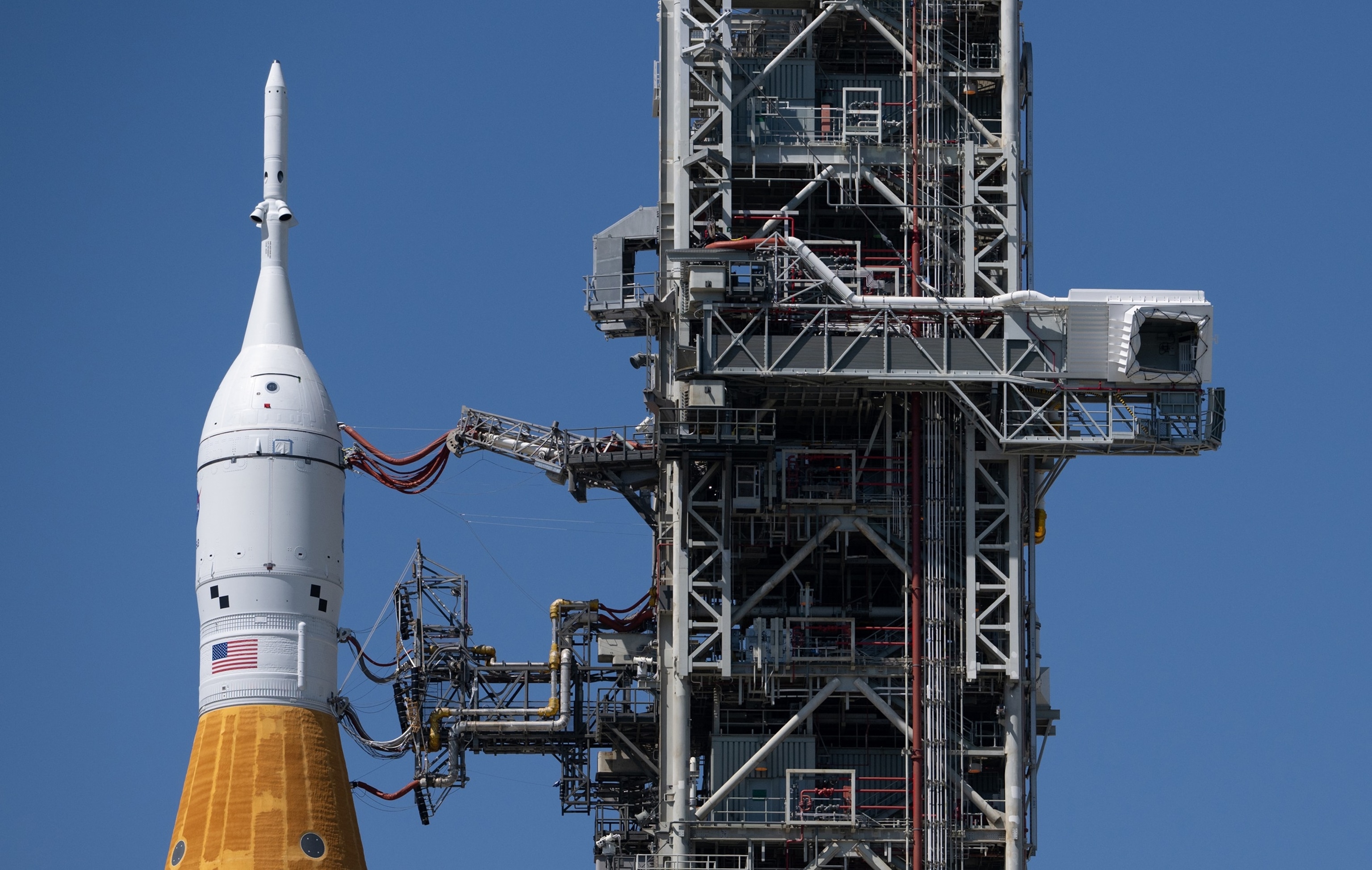
    NASA’s Artemis II mission, which could launch this week and send astronauts around the Moon for the first time since 1972, arrives at a politically sensitive moment in U.S. President Donald Trump’s presidency.

    With the United States deeply divided over issues such as the war involving Iran, immigration and economic policy, a successful mission could offer a rare moment of national unity while strengthening the administration’s strategic goals in space.

    Image

    Image

    Image

    Image

    A historic return to deep space

    Artemis II will carry four astronauts — three Americans and one Canadian — on a 10-day mission that will fly around the Moon before returning to Earth. The mission will travel farther into space than any humans since the Apollo 17 mission in 1972.

    While the crew will not land on the lunar surface, the mission is intended to test systems needed for future lunar landings and deep-space exploration. NASA says Artemis is a key step toward building a permanent lunar base and eventually sending humans to Mars.

    Trump helped launch the Artemis initiative during his first presidency, promising to push American astronauts deeper into space. At the time, he spoke of planting “the Stars and Stripes on the planet Mars.”

    During his second term, however, the administration has shifted its near-term focus toward establishing a long-term American presence on the Moon, including a return to the lunar surface by 2028 and a permanent outpost by 2030.

    Strategic competition with China

    Although Trump’s executive order emphasized national vision and economic opportunity, NASA officials have been more explicit about the geopolitical stakes.

    NASA administrator Jared Isaacman recently warned that the United States now faces “a real geopolitical rival” in China, which is developing its own lunar exploration program and plans to send astronauts to the Moon within the next few years.

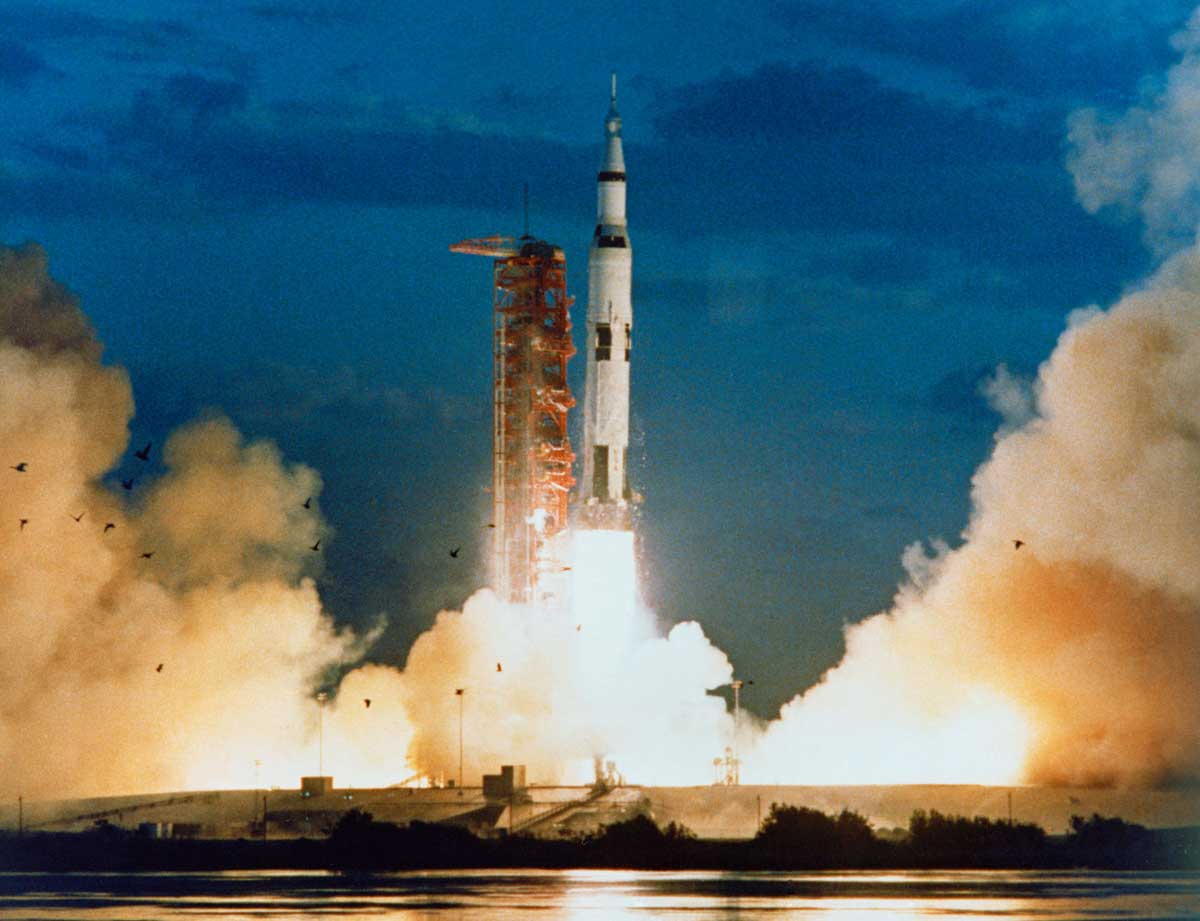
    The rivalry echoes the Cold War space race between the United States and the Soviet Union, when space exploration became a powerful symbol of technological superiority and ideological influence.

    Image

    Image

    Image

    Image

    The Cold War race began in earnest after the Soviet Union launched Sputnik in 1957, the world’s first artificial satellite. The achievement shocked the United States and pushed President John F. Kennedy to commit to landing a man on the Moon.

    In a 1962 conversation with NASA officials, Kennedy bluntly acknowledged the political motivation: reaching the Moon was important because “this is, whether we like it or not, a race.”

    The economic stakes of the Moon

    Beyond geopolitics, the Moon may hold significant economic value. Scientists have identified helium-3, a rare isotope that could potentially power future nuclear fusion reactors. The element currently sells for more than $20,000 per kilogram, making it extremely valuable.

    The Moon also contains water ice, which could be converted into rocket fuel, along with rare earth metals such as lithium and platinum, materials critical for electronics and clean-energy technologies.

    Some analysts describe the coming competition as a potential “lunar gold rush,” where the nations that establish early infrastructure could gain major advantages in accessing these resources.

    A moment of unity?

    Supporters of the Artemis program say the mission could also provide something less tangible but politically valuable: national pride.

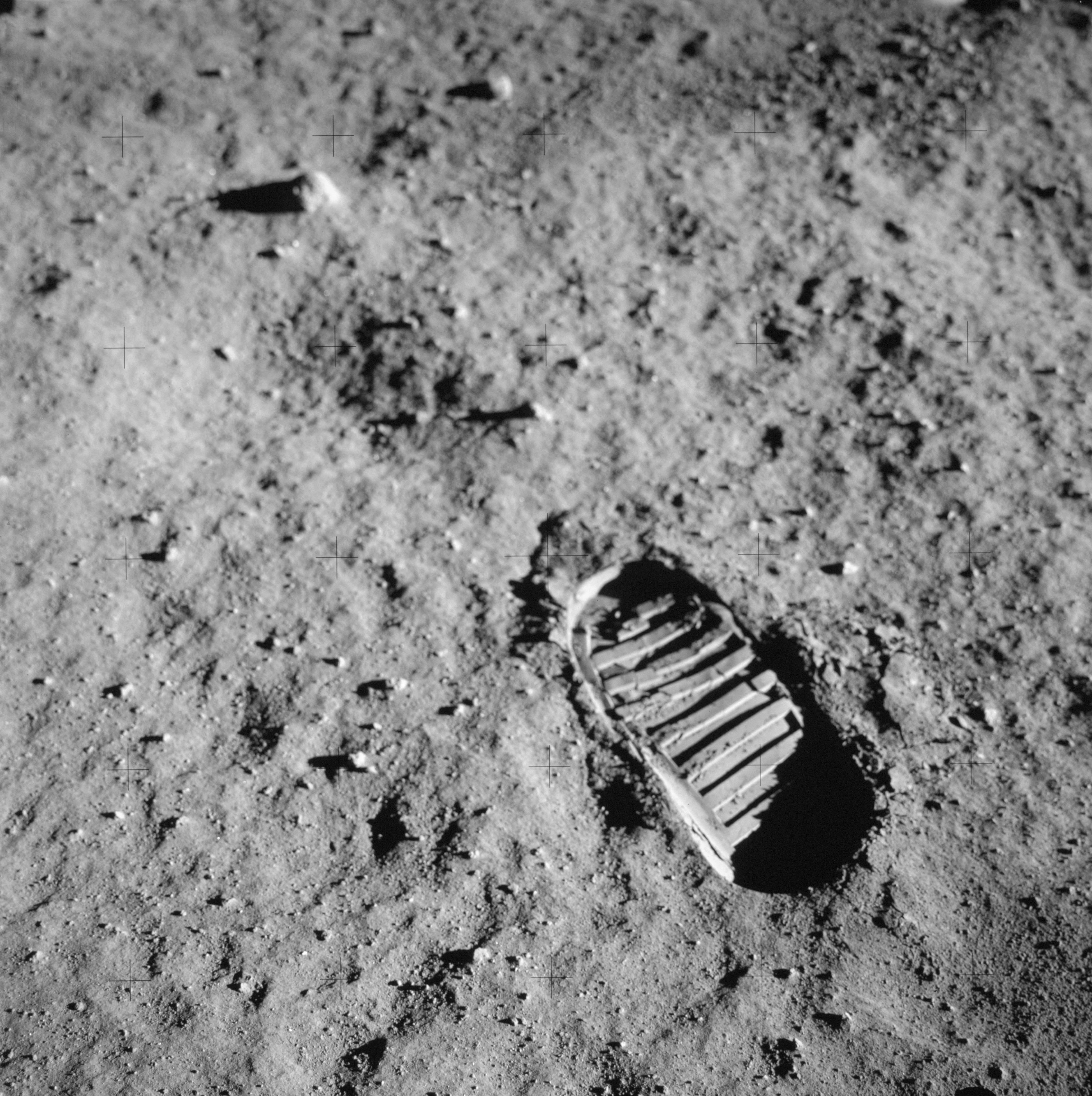
    The Apollo 11 Moon landing in 1969 occurred during one of the most turbulent periods in American history — amid the Vietnam War, civil rights tensions and political upheaval. Yet millions of Americans across political divides watched the event together.

    Experts believe Artemis could have a similar cultural impact today.

    “Space is one of the few areas that Americans with different political views can enjoy and watch together,” said Esther Brimmer, a senior fellow at the Council on Foreign Relations.

    For many Americans, the space program has long represented innovation, exploration and national achievement. If Artemis II succeeds, it could become a defining moment in a new era of space exploration — and potentially a rare unifying event during a deeply polarised political era.

  • Trump Appears to Fall Asleep During Michigan Event, Sparking Criticism from Harris Campaign

    Trump Appears to Fall Asleep During Michigan Event, Sparking Criticism from Harris Campaign

    Former President Donald Trump appeared to briefly doze off during a campaign roundtable in Oakland County, Michigan, on Friday, drawing sharp criticism from Vice President Kamala Harris’ campaign. This incident adds to mounting scrutiny over Trump’s recent string of canceled media appearances, which an advisor attributed to his “exhausted” state.

    Event Details

    The former president, 78, closed his eyes during a discussion on local educational issues, raising speculation that he may have fallen asleep. The event was part of Trump’s effort to engage with voters in the crucial swing state of Michigan, ahead of a scheduled rally in Detroit later that evening. During the roundtable, Trump made a quip about his demanding schedule, asking attendees, “You think this is an easy life I have, right?”

    Despite the roundtable’s incident, Trump continued his day with the Detroit rally, which lasted approximately 90 minutes. However, the rally was marred by technical problems, including a microphone failure that left Trump without sound for about 20 minutes. Expressing frustration, Trump joked, “I won’t pay the bill,” hinting at a potential dispute with the event’s technical team.

    Harris Campaign Criticism

    The Harris campaign quickly seized on the moment, referring to Trump as an “exhausted Trump.” The former president’s fatigue has raised questions, especially after he canceled several media interviews earlier in the week. According to Politico, one Trump advisor said the cancellations were due to Trump being “exhausted,” though they suggested he may resume interviews soon.

    Polls and Key Election Dynamics

    Recent polling shows a tight race between Trump and Harris in Michigan. A Wall Street Journal poll has Harris leading by two points (47% to 45%), but a separate Quinnipiac poll from October 9 showed Trump ahead by three points (50% to 47%).

    Trump’s mental and physical fitness have become focal points as he campaigns to return to the White House. The former president has previously drawn attention for appearing fatigued, including during his hush money trial earlier this year. Trump, who has declined to release updated medical records, insists he remains in excellent health and has repeatedly touted his performance on an unspecified cognitive test.

    Meanwhile, Harris, 59, recently released her own medical report, using the disclosure to criticize Trump’s lack of transparency. She suggested during a rally this week that Trump might be “too weak and unstable to lead America.”

    Campaign Strategy and Next Steps

    Trump has increased the frequency of his events since August, a move described by one advisor as “Trump on steroids,” aimed at countering Harris’ recent rise in the polls. However, his visible fatigue may fuel further concerns about his ability to endure the rigors of a demanding campaign.

    With Michigan poised to play a decisive role in the 2024 election, both campaigns are ramping up efforts to secure voter support in the state. As Trump faces heightened scrutiny over his stamina and readiness, Harris’ camp appears set to capitalize on any perceived signs of weakness.


    Source : Swifteradio.com

  • Trump “Resorted to Crimes” After 2020 Election Loss, Federal Prosecutors Claim in Unsealed Court Filing

    Trump “Resorted to Crimes” After 2020 Election Loss, Federal Prosecutors Claim in Unsealed Court Filing

    Federal prosecutors have revealed in a newly unsealed court filing that former President Donald Trump “resorted to crimes” following his defeat in the 2020 election. The prosecutors argue that Trump is not entitled to immunity from prosecution related to his attempts to cling to power after losing to Democrat Joe Biden.

    This filing, submitted by special counsel Jack Smith’s team, comes in the wake of a Supreme Court ruling that granted former presidents broad immunity for official acts performed while in office. The ruling, however, has not altered the charges against Trump, which include conspiring to overturn the electoral results.

    The purpose of this legal brief is to persuade U.S. District Judge Tanya Chutkan that the actions outlined in the indictment are private rather than official acts, which would allow them to remain part of the ongoing case. Among the actions detailed is Trump’s effort to persuade former Vice President Mike Pence to refuse to certify the electoral votes on January 6, 2021.

    Smith’s team stated, “Although the defendant was the incumbent President during the charged conspiracies, his scheme was fundamentally a private one. Working with a team of private co-conspirators, the defendant acted as a candidate when he pursued multiple criminal means to disrupt, through fraud and deceit, the government function by which votes are collected and counted—a function in which the defendant, as President, had no official role.”

    The filing continues, “When the defendant lost the 2020 presidential election, he resorted to crimes to try to stay in office,” underscoring the seriousness of the allegations against Trump as the legal battle continues to unfold.

    As this case develops, it raises important questions about the accountability of public officials and the limits of presidential immunity, further intensifying the ongoing political discourse surrounding Trump’s actions during and after the election.

    Source: AP

  • Trump Agrees to Fox Debate as Harris Sticks with ABC Plan: Latest Updates

    Trump Says He’s Agreed to Fox Debate While Harris Sticks with ABC Plan

    In the midst of a highly contentious presidential election, the candidates’ debate schedule has become a major point of contention. On one side, we have President Donald Trump, who has agreed to participate in a debate hosted by Fox News, while on the other side, we have Democratic nominee Kamala Harris, who has chosen to stick with the original plan of an ABC-hosted debate.

    Trump’s decision to participate in a Fox-hosted debate comes as no surprise. Throughout his presidency, he has maintained a close relationship with the conservative news network, often giving them exclusive interviews and praising their coverage of his administration.

    However, Harris’ decision to stick with ABC has sparked some debate among political analysts and voters alike. Some argue that her choice shows a lack of willingness to engage with a more conservative audience, while others argue that it is a strategic move to avoid giving legitimacy to a news network that has been criticized for biased reporting.

    Regardless of the reasoning behind Harris.


    Source: CBS News

  • Trump VP Supports Big Tech Antitrust Crackdown

    Republican vice presidential candidate J.D. Vance arrives for Day 1 of the Republican National Convention (RNC), at the Fiserv Forum in Milwaukee, Wisconsin, U.S., July 15, 2024. REUTERS/Callaghan O’Hare

    Former U.S. President Donald Trump’s vice presidential pick, J.D. Vance, has openly praised the work of Federal Trade Commission (FTC) Chair Lina Khan, signaling potential support for the agency’s broad antitrust enforcement approach in a second Trump administration.

    Vance, a Republican U.S. senator from Ohio, joined the presidential ticket on Monday at the Republican National Convention in Milwaukee, where Trump was officially nominated as the party’s candidate.

    Vance is among several Republican lawmakers, including U.S. Senator Josh Hawley of Missouri and Florida U.S. Representative Matt Gaetz, who are dubbed “Khanservatives” for aligning with Khan’s perspective that U.S. antitrust law should encompass more than just keeping consumer prices low.

    “She recognized there has to be a broader understanding of how we think about competition in the marketplace,” Vance said at a Washington event in February.

    This stance highlights a division within the conservative movement, between those advocating for shrinking regulatory agencies and those supporting the use of antitrust laws to challenge powerful corporations, especially Big Tech, where there is a concern over perceived censorship of conservatives online.

    Joseph Coniglio, director of antitrust policy at the Information Technology and Innovation Foundation, noted that Vance’s selection as vice president indicates a commitment to this broader antitrust approach.

    Scrutiny of Big Tech is not new for Trump. During his presidency, the FTC and Department of Justice initiated investigations into Meta, Amazon, Apple, and Google over alleged antitrust violations. All four companies were sued and have denied wrongdoing.

    Vance, a Yale-educated lawyer and venture capitalist, has previously worked at Sidley Austin and assisted Trump with fundraising in Silicon Valley. He has also called for breaking up major tech companies, particularly Google, criticizing its monopolistic control of information.

    It remains unclear what specific focus a second Trump administration would adopt. The conservative Heritage Foundation’s Project 2025 policy platform suggests ways to champion conservative causes through antitrust enforcement, while also questioning the continued existence of the FTC.

    Business groups have criticized President Joe Biden’s antitrust enforcers for expanding their focus beyond traditional considerations of price competition to include issues like labor. The U.S. Chamber of Commerce has sued to block the FTC’s recent ban on non-compete agreements for workers.

    At the February event, hosted by Silicon Valley startup incubator Y Combinator, Vance emphasized that his antitrust views include supporting small firms, workers, and the quality of consumer goods. He criticized the notion held by some conservatives that corporate behavior cannot be “tyrannical.”

    “I want people to live good lives in our country,” Vance said. “I don’t really care if the entity that is most threatening to that vision is a private entity or a public entity.

    Source: reuters