Tag: human rights

  • Historic Re-Election for Tlaib and Omar: First Muslim Women in U.S. Congress Secure Continued Terms

    Historic Re-Election for Tlaib and Omar: First Muslim Women in U.S. Congress Secure Continued Terms

    Rashida Tlaib and Ilhan Omar, trailblazers as the first Muslim women elected to the U.S. Congress, have secured re-election, extending their historic and impactful roles in the House of Representatives. Both members of the Democratic Party, Tlaib and Omar represent diverse constituencies and have been pivotal figures in shaping progressive policy discussions, especially regarding U.S. foreign policy and social justice issues.

    Rashida Tlaib: Fourth Term Win in Michigan with Strong Arab-American Backing

    Rashida Tlaib, the first Palestinian American woman to serve in Congress, won her fourth term as Michigan’s representative, largely due to robust support from the Arab-American community in Dearborn. Michigan’s 12th Congressional District, where Tlaib has maintained a strong foothold, includes parts of Detroit and is home to one of the largest Arab-American populations in the country. Tlaib’s re-election reinforces her prominent voice in Washington, especially on issues that impact her community and other marginalized groups.

    As a Congresswoman, Tlaib has been vocal on numerous national issues, but her criticisms of U.S. foreign policy—particularly concerning U.S. aid to Israel and its involvement in the Gaza conflict—have garnered significant attention. She has consistently advocated for Palestinian rights, calling for humanitarian aid to Gaza and opposing measures she perceives as unjust. Her re-election comes at a time when these issues are even more pronounced in the public discourse, further positioning Tlaib as a central figure on international human rights within the U.S. political landscape.

    Ilhan Omar: Somali-American Advocate Wins Third Term in Minnesota

    Ilhan Omar, the first Somali American and former refugee to serve in Congress, has similarly achieved re-election, securing her third term representing Minnesota’s 5th District. Omar’s district includes Minneapolis, known for its progressive values and as the epicenter of recent social justice movements in the U.S. Omar’s career has been marked by her outspoken stance on issues ranging from racial justice and police reform to economic equality and U.S. foreign policy.

    A leading critic of the U.S. stance on Israel and its military actions in Gaza, Omar has repeatedly called for a reassessment of U.S. aid to Israel, advocating for a balanced approach to peace and security in the region. Her re-election campaign mobilized significant grassroots support; in a post-election statement, Omar shared the campaign’s impressive outreach efforts, noting they knocked on over 117,000 doors and made 108,000 calls. “This victory belongs to all of us who believe in a better future,” she stated, expressing gratitude to her supporters and underscoring her commitment to progress.

    The “Squad” and Their Continued Influence

    Tlaib and Omar are part of the informal group of progressive lawmakers known as “The Squad.” This coalition, which includes representatives like Alexandria Ocasio-Cortez from New York, Jamaal Bowman, and Cori Bush, has become synonymous with progressive causes within the Democratic Party. The group has notably advocated for policies on climate change, economic justice, and systemic reform. Members of the Squad are well-known for challenging mainstream perspectives within their party, especially on U.S.-Israel relations.

    While Tlaib and Omar achieved re-election, other Squad members faced challenging primary races. Jamaal Bowman of New York and Cori Bush of Missouri encountered well-funded opponents supported by the American Israel Public Affairs Committee (AIPAC). This pro-Israel lobbying group has directed substantial resources into Congressional races, reportedly investing over $100 million in 2024. AIPAC’s efforts to counteract pro-Palestinian voices underscore the contentious environment these progressive lawmakers navigate.

    Future of U.S. Foreign Policy and Domestic Advocacy

    With their re-election, Tlaib and Omar are poised to continue pushing the envelope on progressive policies, especially in foreign relations and social equity. They will likely remain vocal in debates on U.S. involvement in the Middle East, refugee rights, and aid distribution. Their influence may encourage other lawmakers to examine issues affecting marginalized communities, both domestically and internationally.

    In Congress, Tlaib and Omar’s presence as the first Muslim women reflects a broader shift toward greater representation and diversity in American politics. Their leadership has not only provided a voice for underrepresented communities but also challenged conventional perspectives on foreign policy, equality, and human rights. Their re-election signifies a mandate from their constituents to continue advocating for change, suggesting that these issues will remain focal points in upcoming Congressional discussions.

    As Tlaib, Omar, and other progressive lawmakers advance their agenda, the influence of their voices in Washington will be crucial in shaping policy for the next generation. Their continued roles underscore the importance of representation and progressive advocacy in American government, setting the stage for ongoing transformation in U.S. policy and a broader acceptance of diverse perspectives in Congress.

    Source : Swifteradio.com
  • Protesters in Mozambique Face Violence Amid Demand for Political Change

    Protesters in Mozambique Face Violence Amid Demand for Political Change

    In the wake of Mozambique’s recent elections, rights activist Cidia Chissungo has been thrust into the harrowing realities of post-election violence. Over the past week, she has been inundated with disturbing images, including young men bearing the marks of brutal police repression—bloodied bodies and swollen faces tell a chilling story of a nation in turmoil. The stark visual evidence of this violence, particularly against young protesters, has kept her awake at night.

    “I’ve seen images of a 16-year-old who was shot in the mouth; his injuries are unimaginable,” Chissungo shared with Al Jazeera. “Every time I close my eyes, I see that image. It haunts me.”

    This violence erupted following the October 9 elections, where clashes broke out after police opened fire on supporters of opposition candidate Venancio Mondlane. As of the latest reports, at least 11 individuals have lost their lives, and hundreds have been detained amid protests that are sweeping through the capital, Maputo, and other cities.

    A Call for Protest

    Thousands of protesters are expected to take to the streets once again, ignoring appeals from outgoing President Filipe Nyusi for calm. Demonstrators are incensed by the election results, which saw the ruling Frelimo party, led by candidate Daniel Chapo, claim a sweeping victory. In stark contrast, Mondlane—an independent candidate and a youth favorite—finished a distant second. Allegations of election fraud, including vote rigging and irregularities, have fueled discontent.

    The brutal killings of two of Mondlane’s close associates, which occurred shortly after the election, have only intensified the outrage among supporters. Mondlane’s political platform is backed by the extra-parliamentary group, The Optimist Party for the Development of Mozambique (Podemos), further galvanizing his followers.

    The Climate of Fear and Anger

    The aftermath of the elections has left Maputo scarred. Evidence of chaos remains evident in burned police stations, looted businesses, and makeshift roadblocks littered with debris. Yet, despite this turmoil, the everyday life of citizens has resumed, albeit with tension hanging in the air.

    On social media, Mondlane has urged his supporters to protest, and young people are responding with enthusiasm, chanting “Vamos, Vamos!”—“Let’s go!” The desire for political change runs deep among Mozambique’s youth, who comprise two-thirds of the nation’s 35 million population. Many see the elections as a crucial opportunity to unseat the Frelimo party, which has been in power since gaining independence from Portugal in 1975.

    Chissungo has observed a growing sentiment of hopelessness among young Mozambicans. “We have kids studying under trees, unpaid teachers striking constantly, and schools shutting down due to unpaid bills,” she lamented. “Yet, we have funds for luxury cars for top government officials.”

    Accusations of Election Fraud

    While the initial days following the election were relatively calm, reports of irregularities began to emerge. Observers from organizations like the African Union and the European Union noted serious discrepancies, including ballot stuffing and ghost voters.

    Veteran academic Joseph Hanlon, who has extensively studied Mozambican politics, criticized the electoral process as fundamentally flawed. “It was organized to steal the elections,” he stated, pointing to altered result sheets and evidence of irregularities throughout the election cycle.

    As tension escalated among opposition supporters, Mondlane and Renamo leader Ossufo Momade openly rejected the election results, claiming Frelimo had committed fraud. On October 19, the situation took a deadly turn when two prominent members of Podemos were assassinated, sending shockwaves through the nation.

    International and Local Outcry

    The international community, including United Nations Secretary-General Antonio Guterres, has called for investigations into the killings. Despite the gravity of the situation, the Frelimo party remains reluctant to concede any wrongdoing, further entrenching the divisions within the country.

    On the streets of Maputo, Mondlane continues to rally support. At a vigil for the fallen members of his party, he proclaimed, “We will not be deterred. The blood of two young men is now on the ground! We will protest with our signs.”

    Future Uncertain

    As protests continue to erupt across Mozambique, with demonstrators expressing their outrage at the government, police responses have become increasingly violent. Reports indicate that security forces have fired both rubber bullets and live ammunition to disperse crowds, leading to further casualties.

    Among those killed during recent protests was a 29-year-old man named Jacinto, who was shot as he stepped out of his home, illustrating the indiscriminate nature of the violence. In hospitals, the number of casualties continues to climb, though many are reluctant to seek medical attention due to fears of arrest.

    Despite these challenges, Chissungo and her fellow activists remain resolute. “People are clear that this is the time for us as young people to make history,” she asserted. “The police could scare them before, but now, without fear, that’s a problem. People are saying we are ready to die, and the more suppression there is, the more powerful we feel.”

    As Mozambique stands at a crossroads, the actions of its youth and the response of the government will shape the future of this nation. The cry for change is unmistakable, and the resolve of the young protesters may ultimately dictate the course of Mozambican politics in the coming years.

    Source : Swifteradio.com

  • Women’s Soccer Players Call Out FIFA Over Saudi Aramco Sponsorship, Citing Human Rights and Environmental Concerns

    More than 100 international women’s soccer players have signed an open letter to FIFA, urging the organization to reconsider its sponsorship deal with Saudi Aramco, a state-owned oil giant. The players criticize the sponsorship as a “middle finger to women’s soccer,” pointing out Saudi Arabia’s human rights violations, especially against women and the 2SLGBTQ+ community, which directly contradict the sport’s core values of equality and inclusion.

    The athletes, including Canadian stars Jessie Fleming and Erin McLeod, emphasize the risks faced by gay players in Saudi Arabia, where homosexuality is criminalized. They also highlight the environmental impact of Saudi Aramco, the world’s largest oil producer. Despite these concerns, FIFA’s decision to partner with the company has sparked outrage within the women’s soccer community.

    In response, FIFA defended its partnership with Aramco, stating that sponsorship revenues are reinvested into the game and women’s football development. However, the players demand FIFA justify this sponsorship and address how it aligns with their public stance on human rights.

    Source: Swifteradio.com

  • Top International Scholars Urge Canada to Release War Criminals Report

    Top International Scholars Urge Canada to Release War Criminals Report


    Topic: War Criminals in Canada

    Story Summary:

    A group of prominent international scholars is calling on Canada to release a report on suspected war criminals residing in the country. The report, which has been kept under wraps, contains details about individuals who are believed to have committed atrocities in their home countries before seeking refuge in Canada.

    Key Points:

    • Call for Transparency: The scholars are urging the Canadian government to release the long-withheld report, which they argue is crucial for upholding Canada’s commitment to human rights and international law. The report is said to contain information on suspected war criminals from various countries, including those involved in genocide, war crimes, and crimes against humanity.
    • Scholars’ Appeal: These international academics stress that withholding such information undermines Canada’s reputation as a country that promotes justice and accountability. They argue that the public has a right to know about the presence of such individuals and that it is essential to bring them to justice.
    • Government Response: The Canadian government has yet to release the report, citing various legal and diplomatic concerns. There is ongoing debate within government circles about the potential consequences of making the information public, especially concerning Canada’s international relations and legal obligations.

    Source: The Globe and Mail

  • Russian POWs in Ukraine Face New Reality Amid War

    Russian POWs in Ukraine Face New Reality Amid War


    Overview:

    Topic: Russian POWs in Ukraine Adjust to Captivity

    Story Summary:

    Russian prisoners of war (POWs) in Ukraine are navigating a new and uncertain reality as they adapt to life in captivity. With the ongoing war between Russia and Ukraine, the treatment and exchange of these POWs remain a sensitive topic in international discussions, highlighting the human cost of the conflict.

    Key Points:

    • POWs’ Experience: Russian soldiers captured during the conflict are being held in Ukrainian POW camps, where they are adjusting to conditions markedly different from life on the battlefield. Some prisoners have described their time in captivity as a stark transition from active combat to the mundane routines of confinement.
    • Humanitarian Concerns: The treatment of POWs is being closely monitored by international organizations, ensuring compliance with humanitarian standards as per the Geneva Conventions. Human rights groups have been advocating for the fair treatment of all prisoners, regardless of nationality, to prevent abuses during their detention.
    • Prisoner Exchanges: Efforts to negotiate POW exchanges between Ukraine and Russia are ongoing, although progress has been slow and fraught with diplomatic challenges. These exchanges are critical to both sides, as they represent not only a humanitarian effort but also a political tool in the broader context of the war.
    • Mental and Emotional Toll: Life in captivity has reportedly taken a toll on the prisoners’ mental health, with many struggling to cope with the uncertainty of their future. Some Russian POWs have expressed regret for their involvement in the war, while others remain defiant in their support of Russia’s military objectives.
    • International Perspective: The presence of Russian POWs in Ukraine has drawn global attention to the human side of the conflict. As negotiations continue and the war drags on, the fate of these prisoners symbolizes the broader struggle between the two nations and the enduring impact on individual lives.

    Source: The Globe and Mail

  • Nigerian President Tinubu Calls for End to Protests Amid Economic Reforms and Rising Tensions

    Nigeria’s Tinubu Appeals for Calm Amid Widespread Protests Over Economic Hardship

    In a dramatic turn of events, Nigerian President Bola Tinubu has issued a heartfelt plea for an end to the violent protests that have erupted across the country in response to his administration’s economic policies. The President’s call for peace comes as demonstrations, sparked by soaring living costs and economic reforms, have intensified, leading to significant unrest and casualties.

    Tinubu’s Address: A Call for Peace and Dialogue

    In a televised address on August 4, 2024, President Tinubu acknowledged the widespread frustration among Nigerians, particularly the youth, who have taken to the streets to protest against the rising cost of living. Tinubu assured the public that his government is committed to addressing their concerns but urged for the suspension of protests to prevent further violence and destruction.

    “My dear Nigerians, especially our youth, I have heard you loud and clear,” Tinubu said. “I understand the pain and frustration that drive these protests, and I want to assure you that our government is committed to listening and addressing the concerns of our citizens. But we must not let violence and destruction tear our nation apart.”

    Economic Reforms and Public Reaction

    Since taking office in May 2023, President Tinubu has implemented several controversial economic reforms aimed at tackling Nigeria’s deep-rooted economic issues. These reforms include the partial removal of petrol and electricity subsidies and the devaluation of the naira. Tinubu has defended these measures as necessary steps to rectify years of economic mismanagement and to put the country on a path to sustainable growth.

    However, the public’s reaction has been overwhelmingly negative. On August 1, thousands of Nigerians began protesting against the government’s policies, demanding reductions in fuel prices and electricity tariffs. The protests have quickly gained momentum, with demonstrators mobilizing both on the streets and online.

    Activists and Critics Respond

    The President’s address has been met with mixed reactions from activists and critics. Opeyemi Folarin, a prominent Lagos-based activist, described Tinubu’s speech as “underwhelming” and criticized the President for failing to make significant concessions. “If he was willing for dialogue, he should have made a concession,” Folarin told Al Jazeera, emphasizing that protesters are determined to continue their demonstrations until the government addresses their demands.

    Ahmed Idris, reporting from a protest in Lagos, noted that while Tinubu’s administration is focusing on economic reforms, the President’s speech did not address the fundamental demands of the protesters, particularly the reinstatement of fuel subsidies. “People are really desperate for relief,” Idris said. “That is why people are going to continue to demand quicker reforms and government action to ease the pain.”

    Security Forces and Human Rights Concerns

    The protests have also led to significant clashes with security forces. Amnesty International has accused Nigerian police of using excessive force, resulting in at least 13 reported deaths. The organization has called for the release of detained protesters and has criticized the use of live ammunition to disperse crowds.

    In response to these allegations, President Tinubu urged security operatives to maintain peace while adhering to human rights conventions. “Security operatives should continue to maintain peace, law, and order in our country following the necessary conventions on human rights, to which Nigeria is a signatory,” Tinubu stated.

    Government Response and Future Prospects

    In his address, Tinubu highlighted ongoing efforts to address the economic crisis, including increased government spending on infrastructure projects, a new loan scheme for university students, and the construction of housing units across Nigeria’s 36 states. These measures are part of a broader strategy to stimulate economic growth and improve public services.

    Government revenues have seen a substantial increase, more than doubling to 9.1 trillion naira ($5.55 billion) in the first half of 2024. Notably, the proportion of revenue allocated to debt servicing has decreased from 97 percent to 68 percent since Tinubu assumed office.

    SOURCE: AL JAZEERA

  • Israel’s War on Gaza: ‘All Rules of War’ Broken as Eight Schools Bombed

    Gaza City, July 18, 2024 – The humanitarian crisis in Gaza deepens as Israeli airstrikes continue to devastate the region, with at least eight schools sheltering displaced Palestinians bombed in the last ten days. Philippe Lazzarini, chief of the United Nations Relief and Works Agency (UNRWA), stated, “All rules of war have been broken in Gaza.”

    Latest Air Strikes and Casualties A recent Israeli airstrike near Cairo School in Gaza City resulted in the deaths of nine Palestinians, including three children. Additionally, the collapse of the Abdullah Azzam Mosque in Nuseirat, following an Israeli bombing, left at least two people dead and 15 injured.

    UNRWA Chief Under Fire David Mencer, an Israeli government spokesperson, has sparked outrage with his inflammatory remarks against UNRWA Commissioner-General Philippe Lazzarini, accusing him of being a “terrorist sympathiser” and “Jew-killing enabler.” The UN condemned these comments as “unacceptable” and “dangerous,” stressing the increased risk to Lazzarini’s safety.

    International Condemnation Saudi Arabia’s Foreign Ministry strongly condemned the ongoing Israeli attacks, describing them as “genocidal crimes” and calling for accountability for those responsible. This condemnation follows a wave of Israeli strikes, including one that killed 23 Palestinians sheltering in a UNRWA school in Nuseirat.

    Protests in the United States Protests outside the Republican National Convention in Milwaukee highlighted concerns over the US-backed Gaza war, linking it to broader issues like economic inequality and civil rights. Demonstrations are set to continue at the Democratic National Convention in Chicago, with activists targeting President Biden’s policies.

    Threats in Jenin The Israeli military has escalated tensions by dropping leaflets in the Jenin refugee camp, threatening to kill wanted individuals if they do not surrender. This area has been a significant center of Palestinian resistance in the West Bank.

    Further Casualties Israeli attacks across Gaza have resulted in the deaths of seven Palestinians, including children. Strikes targeted residential areas, including the al-Ramli family home and an apartment in az-Zawayda, causing extensive damage and injuries.

    Knesset Resolution Israel’s Knesset adopted a resolution opposing the establishment of a Palestinian state west of the Jordan River, further straining the prospects of a two-state solution. This move comes amidst ongoing violence and administrative changes in the occupied West Bank, which UN Secretary-General Antonio Guterres criticized as undermining peace efforts.

    Summary The conflict in Gaza has intensified, with increasing casualties and widespread destruction. The international community continues to call for restraint and humanitarian relief, while local and global protests reflect growing discontent with the handling of the crisis. As the violence escalates, the hope for a peaceful resolution seems increasingly elusive.

  • Water: At the Core of Sustainable Development and Human Rights

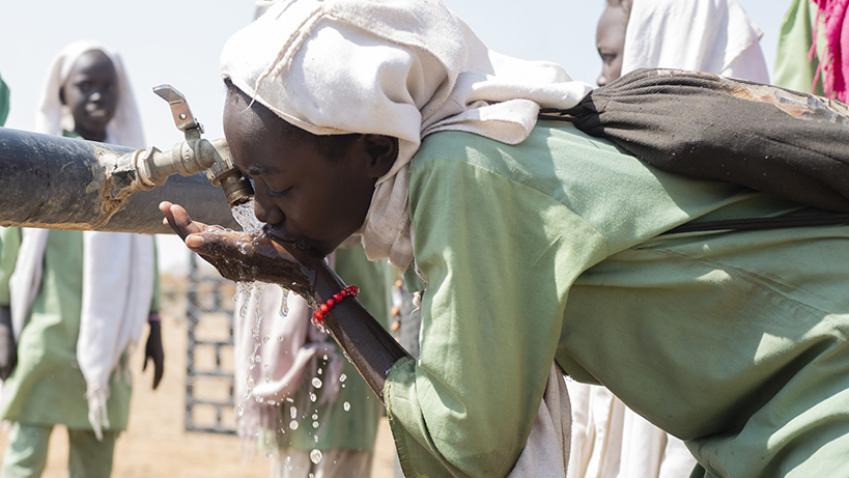
    Water is central to sustainable development, playing a critical role in socio-economic progress, energy and food production, healthy ecosystems, and human survival. It is also vital for adapting to climate change, acting as a crucial link between society and the environment.

    Water and Human Rights

    As the global population increases, the need to balance commercial demands on water resources becomes more pressing to ensure communities have enough for their needs. Access to clean, private sanitation facilities is particularly crucial for women and girls, enabling them to manage menstruation and maternity with dignity and safety.

    The Interconnection of Water and Sanitation

    Water cannot be considered in isolation from sanitation. Together, they are essential for reducing the global burden of disease and improving the health, education, and economic productivity of populations. A significant milestone in this regard was the recognition by the United Nations General Assembly in July 2010 of the human right to water and sanitation. This recognition entitles every human being to access sufficient water for personal and domestic uses—between 50 and 100 liters per person per day. The water must be safe, acceptable, and affordable, with costs not exceeding 3% of household income. Moreover, water sources should be within 1,000 meters of the home, with collection time not exceeding 30 minutes.

    Sustainable Development Goal 6

    Sustainable Development Goal (SDG) 6 aims to “Ensure availability and sustainable management of water and sanitation for all.” The targets cover all aspects of the water cycle and sanitation systems, contributing to progress across various other SDGs, notably those related to health, education, economics, and the environment. The United Nations has long been addressing the global crisis of insufficient water supply to satisfy basic human needs and meet the growing demands on the world’s water resources for human, commercial, and agricultural purposes.

    Historical Milestones and Global Efforts

    Several significant efforts have been made over the years to address water-related challenges. These include the United Nations Water Conference (1977), the International Drinking Water Supply and Sanitation Decade (1981-1990), the International Conference on Water and the Environment (1992), and the Earth Summit (1992). The ‘Water for Life’ International Decade for Action (2005-2015) helped around 1.3 billion people in developing countries gain access to safe drinking water and drove progress on sanitation as part of the effort to meet the Millennium Development Goals.

    Recent Initiatives and Future Plans

    The UN 2023 Water Conference adopted the Water Action Agenda, representing voluntary commitments by nations and stakeholders to achieve the SDGs and their water-related targets. The outcomes of this conference will be followed up at three major upcoming summits: the SDG Summit, the Summit of the Future in 2024, and the World Social Summit in 2025. Recent milestone agreements include the 2030 Agenda for Sustainable Development, the 2015-2030 Sendai Framework for Disaster Risk Reduction, the 2015 Addis Ababa Action Agenda on Financing for Development, and the 2015 Paris Agreement within the UN Convention Framework on Climate Change.

    The Ongoing Crisis

    Contaminated water and a lack of basic sanitation are undermining efforts to end extreme poverty and disease in the world’s poorest countries. In 2022, 2 billion people worldwide did not have access to basic sanitation facilities such as toilets or latrines, and 653 million people had no sanitation facilities at all. According to the WHO/UNICEF Joint Monitoring Programme for Water Supply and Sanitation, at least 1.2 billion people worldwide are estimated to drink water that is not protected against contamination from feces. Unclean water and poor sanitation are leading causes of child mortality, with childhood diarrhea estimated to cause 1.5 million child deaths per year, mostly among children under five in developing countries.

    Economic and Social Benefits

    The links between lack of water and sanitation access and development goals are clear, and the solutions to the problem are known and cost-effective. A 2012 WHO study showed that every US $1 invested in improved sanitation translates into an average global economic return of US $5.5. These benefits are particularly experienced by poor children and disadvantaged communities that need them most.

    International Observances and Decades of Action

    Every year, there are two UN international observances on water and sanitation: World Water Day on March 22 and World Toilet Day on November 19. Each day is marked by a public campaign to raise awareness, focus attention on a particular theme, and inspire action. The International Decade for Action, ‘Water for Sustainable Development,’ started on World Water Day on March 22, 2018, and will end on World Water Day on March 22, 2028. This decade aims to accelerate efforts toward meeting water-related challenges, including limited access to safe water and sanitation, increasing pressure on water resources and ecosystems, and exacerbated risks of droughts and floods.

    source: un.org