Tag: Africa

  • South Africa Calls for Continental Migration Talks After Internal Violence and Ceuta Border Crisis

    South Africa Calls for Continental Migration Talks After Internal Violence and Ceuta Border Crisis

    The government of South Africa has called for a continent-wide dialogue on migration following a wave of violent domestic protests and renewed tensions surrounding the Ceuta border crisis, arguing that Africa needs a coordinated approach to managing migration challenges.

    South African officials said recent events have highlighted the urgent need for African nations to work together on migration policies, border management, and regional cooperation. The government stressed that migration is a shared continental issue that requires collective solutions rather than isolated national responses.

    The call comes after violent protests in parts of South Africa, where frustrations over unemployment, public services, and undocumented migration contributed to unrest. At the same time, renewed pressure at the Spanish enclave of Ceuta has once again drawn international attention to migration routes between Africa and Europe.

    Officials said discussions should focus on strengthening legal migration pathways, improving border security, tackling human trafficking networks, and addressing the root causes of migration, including conflict, poverty, unemployment, and climate-related displacement.

    South Africa also urged greater collaboration through the African Union, emphasizing that coordinated regional policies would better protect migrants while supporting economic development and stability across the continent.

    Migration experts note that increasing movement within Africa, as well as migration toward Europe, has become one of the continent’s most pressing policy challenges. They argue that long-term solutions must balance humanitarian responsibilities with national security and economic priorities.

    European governments continue to monitor developments closely, particularly as migration pressures at Ceuta and other border points remain a significant concern for regional security and immigration policy.

    As diplomatic consultations continue, South Africa says it hopes African leaders will prioritize a comprehensive migration framework capable of addressing both immediate security concerns and the long-term drivers of displacement.

    Swifteradio.com

  • Women’s Health at Risk in Africa as U.S. Expands Global Anti-Abortion Policies

    Women’s Health at Risk in Africa as U.S. Expands Global Anti-Abortion Policies

    Health experts and humanitarian organizations are warning that women across Africa are facing growing health risks as the United States intensifies its global anti-abortion policies, with advocates arguing that funding restrictions are limiting access to essential reproductive healthcare services.

    According to reproductive health organizations, expanded U.S. policies affecting foreign aid have reduced financial support for healthcare providers that offer or discuss abortion-related services, even in countries where such care is legal. Critics say the restrictions have forced some clinics to reduce operations, cut family planning programs, or close altogether.

    Healthcare advocates warn that the decline in reproductive health services is contributing to an increase in unsafe abortions, maternal complications, and preventable deaths in parts of Africa where access to quality healthcare is already limited.

    Medical organizations argue that many clinics affected by the funding changes also provide a wide range of essential services beyond abortion, including prenatal care, contraception, HIV prevention, maternal healthcare, and sexual health education. They say reductions in funding have had broader consequences for women’s healthcare systems across several African countries.

    Supporters of the U.S. policy maintain that taxpayer funds should not be used to support organizations involved in abortion services overseas. They argue the measures are intended to ensure U.S. foreign assistance aligns with policies that oppose abortion.

    Public health experts, however, caution that limiting reproductive healthcare funding may have unintended consequences, particularly in low-income communities where healthcare resources are scarce and maternal mortality rates remain high.

    Several international organizations have urged governments and donors to increase investment in maternal and reproductive healthcare to help offset funding gaps and ensure women continue receiving life-saving medical services.

    The debate has reignited global discussions over the impact of foreign aid policies on healthcare systems, women’s rights, and maternal health outcomes in developing countries.

    Health advocates continue calling for expanded access to comprehensive reproductive healthcare, arguing that improved medical services remain essential to reducing preventable maternal deaths and improving overall public health across Africa.

    Swifteradio.com

  • Africa Secures $900 Million in New Commitments to Expand Clean Cooking Access

    Africa Secures $900 Million in New Commitments to Expand Clean Cooking Access

    African nations have secured $900 million in new financial commitments aimed at expanding access to clean cooking solutions, marking a major step toward improving public health, protecting the environment, and increasing energy access across the continent.

    The new funding will support initiatives designed to promote cleaner cooking technologies, including improved cookstoves, liquefied petroleum gas (LPG), electricity, biogas, and other sustainable energy solutions that reduce reliance on traditional fuels such as firewood and charcoal.

    Officials said the commitments were announced as part of broader efforts to accelerate the transition to clean energy while addressing the health and environmental challenges associated with household air pollution.

    According to development partners, millions of people across Africa still rely on traditional cooking methods that expose families to harmful indoor smoke, contributing to respiratory illnesses, environmental degradation, and deforestation.

    The newly secured funding is expected to help governments, private sector partners, and development organizations expand access to affordable and reliable clean cooking technologies, particularly in underserved rural and low-income communities.

    Experts say increasing access to clean cooking solutions can significantly reduce greenhouse gas emissions, improve health outcomes, create economic opportunities, and support climate resilience across the continent.

    Development agencies also noted that expanding clean cooking infrastructure could generate new jobs through manufacturing, distribution, maintenance, and energy services while improving the quality of life for millions of households.

    Several African governments welcomed the financial commitments, describing them as an important contribution toward achieving sustainable development goals related to health, energy access, gender equality, and environmental protection.

    International partners emphasized that continued investment will be necessary to close the clean cooking access gap and ensure long-term progress toward universal access to modern energy services.

    Energy specialists believe stronger collaboration between governments, financial institutions, and private investors will play a key role in scaling clean cooking programmes throughout Africa.

    As implementation begins, stakeholders are expected to focus on expanding infrastructure, lowering consumer costs, and increasing public awareness of the benefits of adopting cleaner cooking technologies.

    The latest funding commitments underscore growing international support for Africa’s clean energy transition while reinforcing efforts to improve health, reduce emissions, and strengthen sustainable development across the continent.

    Swiferadio.com

  • King Charles Host Historic Nigerian State Visit as Tinubu Arrives in UK

    King Charles Host Historic Nigerian State Visit as Tinubu Arrives in UK

    King Charles III is set to host the first Nigerian state visit to the United Kingdom in 37 years, welcoming Bola Ahmed Tinubu and First Lady Oluremi Tinubu to Windsor Castle for a two-day diplomatic engagement.

    The visit will begin with a ceremonial استقبال at Windsor, where the Nigerian leaders will be greeted by senior members of the royal family, including Queen Camilla and Prince William alongside Catherine, Princess of Wales.

    A state banquet at St George’s Hall will headline the visit, where both King Charles and President Tinubu are expected to deliver speeches in the presence of political figures and prominent guests with ties to Nigeria. However, in recognition of the holy month of Ramadan, there will be no traditional luncheon, as the Nigerian president is observing fasting.

    According to Nigeria’s government spokesman, Mohammed Idris, the visit is aimed at transforming long-standing diplomatic ties into a modern economic partnership, with a focus on trade, finance, and defence cooperation.

    “This state visit is about turning a historic relationship into a modern economic partnership,” Idris said, highlighting the United Kingdom as a key partner in Nigeria’s economic reforms and growth ambitions.

    President Tinubu arrived in the UK on Tuesday ahead of the مراسم, which will include a carriage procession, military parade, and the exchange of gifts. Items connected to Nigeria from the Royal Collection will also be showcased.

    As part of the visit, the Nigerian president and first lady will lay a wreath at the tomb of Queen Elizabeth II inside St George’s Chapel and attend an interfaith event designed to promote religious harmony.

    The visit comes amid heightened global tensions, including the ongoing conflicts in the Middle East and Ukraine. Notably, Volodymyr Zelensky also met King Charles earlier this week.

    Domestically, Nigeria continues to face security challenges. In Borno State, recent attacks attributed to Boko Haram left at least 23 people dead and more than 100 injured. President Tinubu condemned the violence, while UK lawmakers have called for stronger protections for religious freedom in Nigeria.

    The high-profile visit underscores efforts by both nations to deepen diplomatic, economic, and cultural ties, while also reflecting the broader geopolitical landscape shaping international relations.

  • Mauritania Election Update: President Ghazouani Secures Reelection with Provisional Results

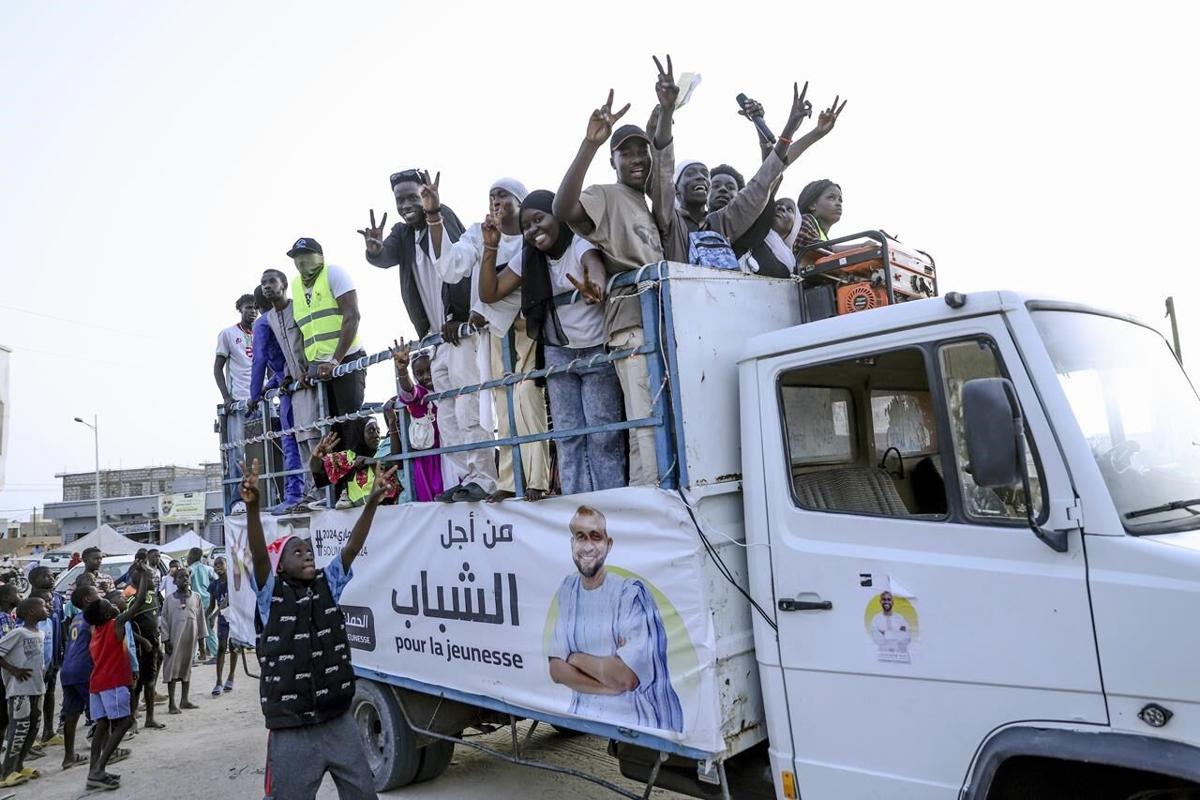
    NOUAKCHOTT, Mauritania (AP) — Mauritania’s President Mohamed Ould Ghazouani will be reelected, provisional results from all polling stations showed on Sunday, after positioning the country as a strategic ally of the West in a region swept by coups and violence.

    Ghazouani, who campaigned on a pledge of providing security and economic growth, obtained 56.1% of votes, the country’s independent electoral commission said late on Saturday. His main rival, anti-slavery activist Biram Dah Abeid, received 22.1% of votes but earlier on Sunday rejected the results, alleging fraud.

    The country’s constitutional court is now expected to review the results to announce the final outcome of the election, but it remained unclear when it would happen. The turnout was 54% of the two million eligible voters, the commission said.

    Although his opponents accused him of corruption and mismanagement, Ghazouani, a former army chief, remains popular among Mauritanians who see him as a beacon of stability. The vote is taking place in a tense regional climate, with Mauritania’s neighbors shaken by military coups and jihadi violence.

    Mauritania is rich in natural resources including iron ore, copper, zinc, phosphate, gold, oil, and natural gas. It is poised to become a gas producer by the end of the year, with the planned launch of the BP-operated Greater Tortue Ahmeyin offshore gas project on the border with Senegal.

    Yet almost 60% of the population lives in poverty, according to the United Nations, working as farmers or employed informally. With few economic opportunities for young people at home, many are attempting to reach Europe, and some are even trying to get to the United States through Mexico.

    “The last word belongs to the Mauritanian voters,” Ghazouni said after voting in Ksar, a suburb of the capital. “I commit myself to respecting their choice.”

    Saturday’s vote unfolded peacefully, according to observers.

    “Nothing has been detected so far and the CENI has not received any complaints,” said Taghioullah Ledhem, the spokesman for CENI, the country’s independent electoral commission.

    But some opposition candidates held a different view. CENI is made up of representatives of political parties and its president is appointed by the government, and some accused it of colluding with Ghazouani’s regime.

    Biram Dah, who came second in the vote, rejected the provisional results and warned of an “electoral coup d’état for the benefit of Ghazouani, who was defeated by voters.”

    During a press conference Sunday morning, he accused the electoral commission of fraud by giving Ghazouni thousands of votes “out of nowhere.”

    Speaking later on Sunday from his home in Riadh, a poor suburb of the Mauritanian capital, he called for civil disobedience and appealed to the military and security forces to not “accept being used by the government against the people.”

    “The battle is not over, we are not defeated,” he said. “The people are not defeated and will not be defeated, we are there to defend the people until the last drop of blood.”

    The African Union sent an observation mission to Saturday’s vote but have yet to release their statement.


    SOURCE: thestar.com