
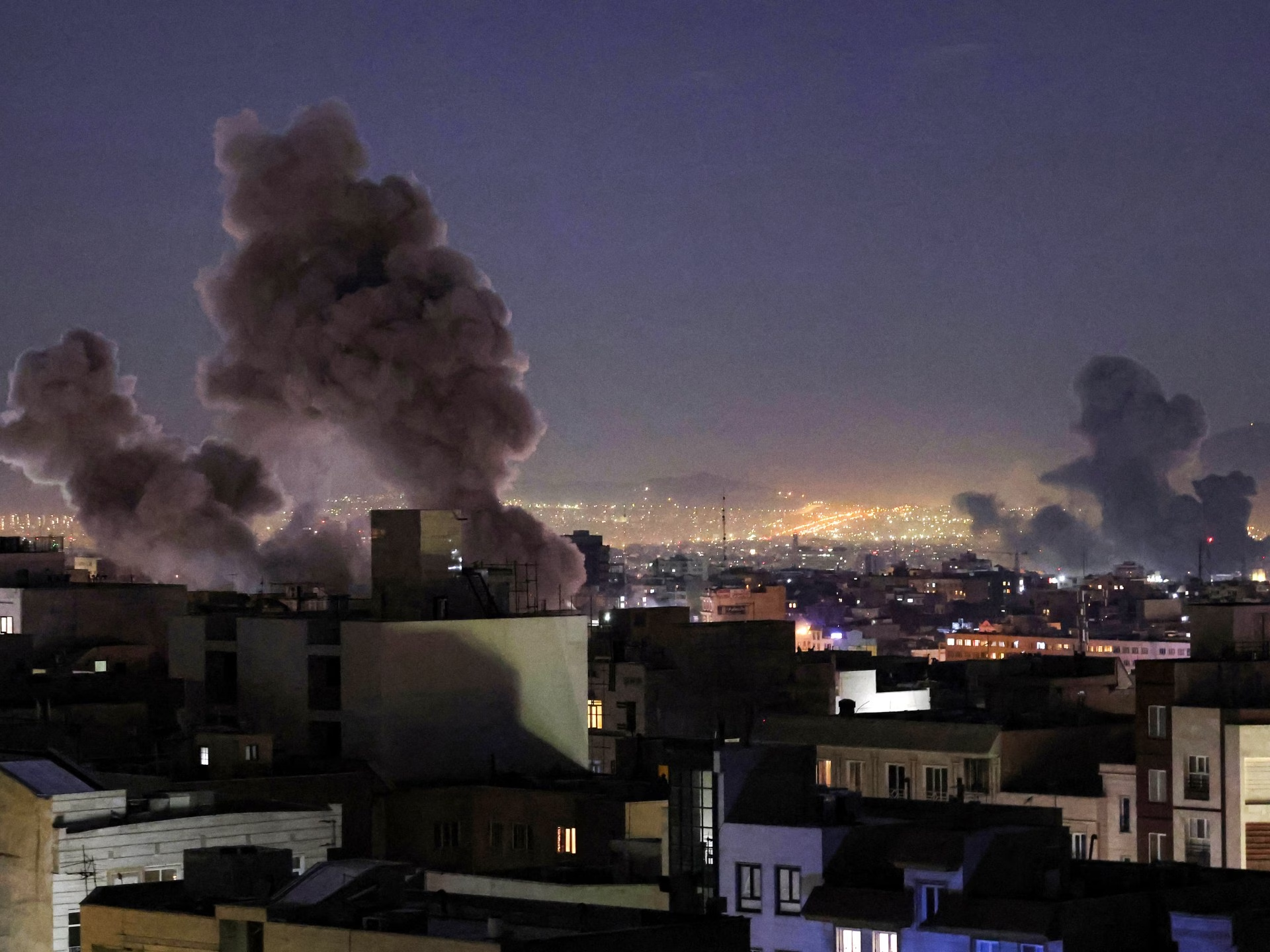
The United States and Israel launched a major coordinated military strike on Iran on Saturday, sharply escalating tensions in the Middle East and prompting strong reactions from world leaders. U.S. President Donald Trump urged the Iranian public to “seize control of your destiny” by rising up against the Islamic leadership that has governed the country since 1979.
Iran retaliated within hours, launching missiles and drones toward Israel and U.S. military bases across the region. Some of the first reported strikes inside Iran appeared to hit areas near the offices of Supreme Leader Ayatollah Ali Khamenei in Tehran. Smoke was seen rising over the capital as Iranian media reported nationwide attacks. It was not immediately known whether the 86-year-old leader was present at the time.
Canada formally backed the U.S. action, with Prime Minister Mark Carney and Foreign Affairs Minister Anita Anand stating that Ottawa supports efforts to prevent Iran from acquiring nuclear weapons and threatening international security. The statement described Iran as the principal source of instability in the Middle East and reaffirmed Canada’s support for Israel’s right to defend itself.
Conservative Party Leader Pierre Poilievre also expressed support for the United States and Israel, calling for the dismantling of Iran’s clerical military leadership.

Air travel in the region was disrupted as Air Canada cancelled flights to and from Dubai, citing security concerns. The airline said it was monitoring developments closely and would adjust schedules as needed.
The United Nations warned the attacks could further destabilize the region. UN Secretary-General António Guterres said the strikes and Iran’s retaliation undermine international peace and security and called for an immediate cessation of hostilities and de-escalation to prevent a wider regional war.
In the United States, congressional leaders confirmed they were notified ahead of the strikes, as required by law, though some lawmakers said the scale of the operation was broader than expected. Secretary of State Marco Rubio personally briefed senior members of Congress. Representative Jim Himes warned that the U.S. was entering what he described as a “war of choice” without a clear strategic endgame.
Saudi Arabia reported that Iran attempted to target its capital and eastern region, calling the action “blatant and cowardly” and confirming the attack was repelled. The development came despite a Chinese-brokered rapprochement between Riyadh and Tehran in 2023.
China’s Foreign Ministry said it was highly concerned by the strikes and urged all sides to halt military actions and return to negotiations, emphasizing respect for Iran’s sovereignty and territorial integrity.
Ukrainian President Volodymyr Zelenskyy voiced support for the U.S.-led operation, accusing Iran of enabling Russia’s war against Ukraine through the supply of Shahed drones. He said the focus must now be on saving lives and preventing the conflict from spreading further.
Oman’s Foreign Minister Badr Albusaidi, who recently served as a mediator in talks involving Iran, urged Washington not to become further drawn into the conflict and called for restraint.
As missile exchanges continue and diplomatic pressure mounts, international leaders warned that failure to de-escalate could lead to a wider regional conflict with serious consequences for civilians and global stability.
