
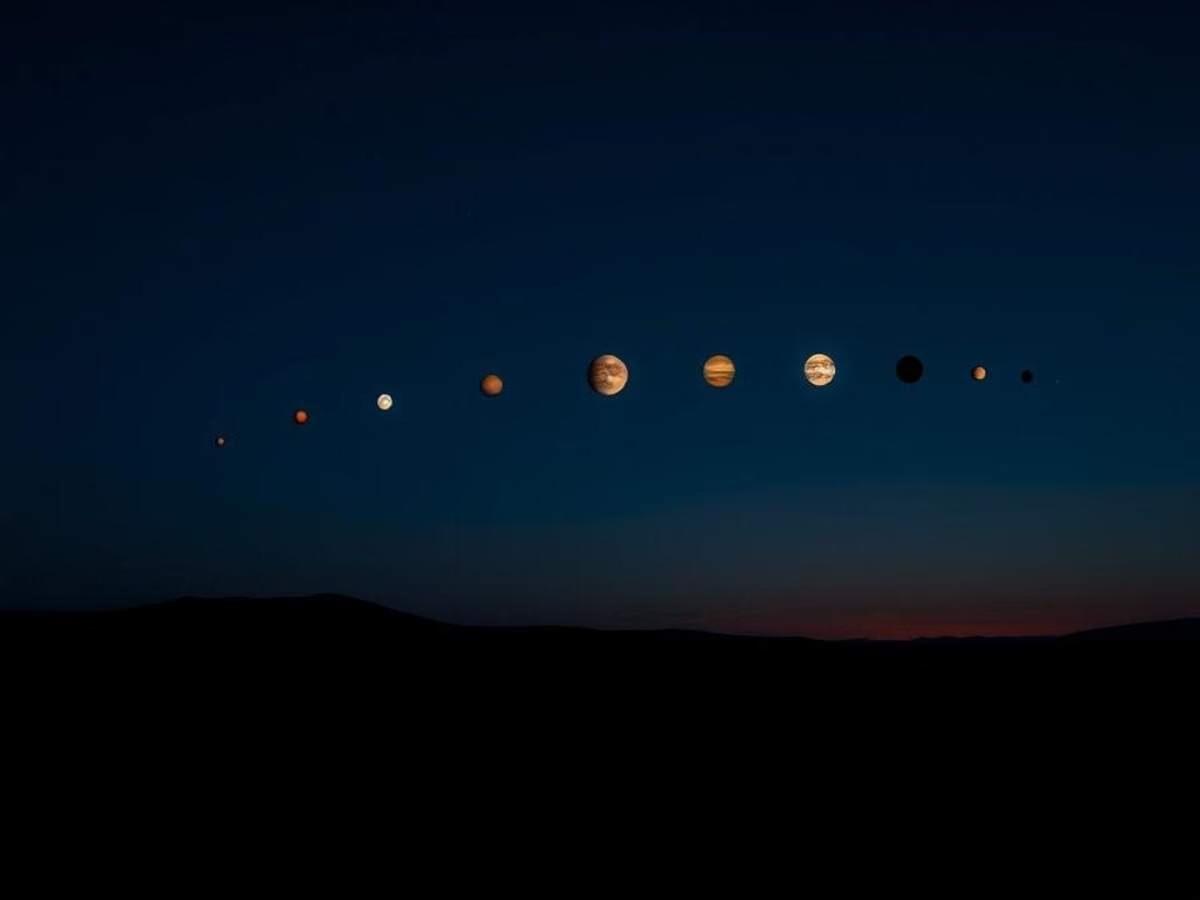
Six planets will appear to cluster together in the evening sky at the end of February in a rare celestial display known as a planetary parade, and most of them will be visible to the naked eye.
The phenomenon occurs when several planets appear close together from Earth’s perspective. While they are not actually aligned in space, they gather on one side of the sun, creating the illusion of a straight line across the sky.
Sara Mazrouei, an educational developer and planetary scientist at Humber Polytechnic, says planetary alignments are not once-in-a-lifetime events, but seeing as many as six planets at the same time is fairly uncommon.
“I wouldn’t say it’s very rare or super uncommon, but it is fairly uncommon, especially when you get to see more planets at a time,” Mazrouei said. “Sometimes we have a planetary alignment where you can see three or four planets in the same line, but this time we’ve got more.”

This time, Mercury, Venus, Jupiter and Saturn will be visible without special equipment, while Uranus and Neptune will require binoculars or a telescope.
Mazrouei says the peak viewing date will be February 28, and what makes this alignment special is that it occurs in the evening rather than before dawn. The best time to look is about 30 to 60 minutes after sunset.
Cloud cover could interfere, especially during Canada’s winter months, but viewers will still have opportunities before and after the peak date. From February 27 through early March, the planets should remain visible if skies are clear.
Some planets will appear low on the horizon, particularly Saturn and Mercury, while Jupiter will be higher in the sky. Venus, Jupiter and Saturn are expected to be among the brightest objects visible, with Venus shining brightest after the moon.
Mazrouei says planets can be distinguished from stars by their steady light. Stars twinkle because their own light is distorted as it passes through Earth’s atmosphere, while planets reflect sunlight and appear as solid, bright points.
For those unsure of what they are seeing, she recommends using free sky-viewing smartphone apps that identify celestial objects when users point their device at the sky.
