
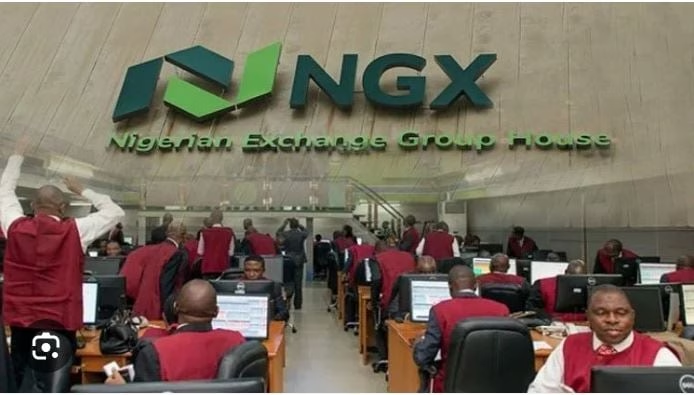
Nigeria’s stock market closed on a negative note as profit-taking by investors pushed major indices lower, wiping out about N725 billion from the market’s total capitalization.
Trading data from the Nigerian Exchange Limited showed that the market experienced a broad sell-off as investors moved to lock in gains following recent rallies in several blue-chip stocks.
Market analysts say the decline reflects a typical pattern in equity markets where investors sell shares after a period of sustained price increases to secure profits.
Broad Market Decline

The benchmark All-Share Index (ASI) on the Nigerian Exchange Limited dropped during the trading session, dragging the overall market capitalization down by approximately N725 billion.
The decline was largely driven by selling pressure in major sectors including banking, consumer goods, and industrial stocks.
Several previously strong performers recorded price declines as traders adjusted their portfolios and responded to shifting market sentiment.
Investors Lock in Gains
Financial analysts attributed the downturn primarily to profit-taking activities, where investors sell shares that have recently appreciated in value.
This strategy allows investors to realize gains while waiting for new opportunities to re-enter the market at more attractive prices.
Profit-taking often occurs after a strong bullish run, especially when investors anticipate short-term corrections in stock prices.
Market watchers say the current movement does not necessarily indicate a long-term downturn but rather a temporary adjustment within the broader market trend.
Mixed Sector Performance
Despite the overall decline, some sectors showed pockets of resilience during the trading session. A few stocks recorded gains as bargain hunters took advantage of lower prices.
However, the overall sentiment remained cautious, with many investors adopting a wait-and-see approach as they monitor economic indicators and corporate earnings reports.
Analysts note that macroeconomic factors such as inflation, interest rates, and currency movements continue to influence investor decisions in Nigeria’s equity market.
Outlook for the Market
Market experts believe trading activity in the coming sessions will likely remain mixed as investors rebalance their portfolios.
They say sustained investor confidence will depend on strong corporate earnings, stable economic policies, and improved macroeconomic conditions.
Despite the short-term decline, the Nigerian Exchange Limited remains one of Africa’s most active financial markets, attracting both domestic and foreign investors.
As the market adjusts to ongoing economic developments, analysts expect volatility to continue while investors look for new opportunities across different sectors.
Swifteradio.com
