
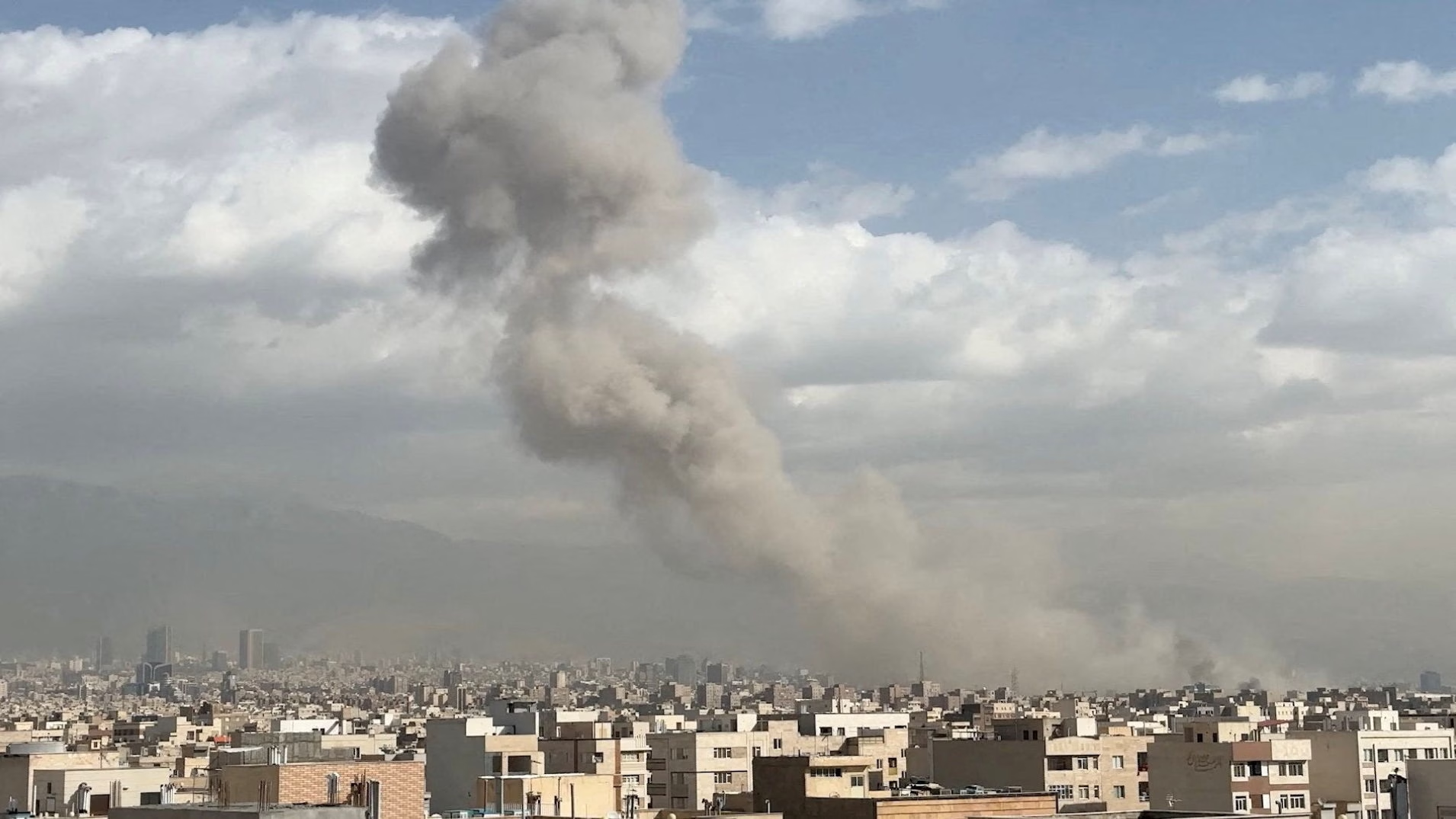
Military analysts say Iran would be significantly outmatched in a direct war with the United States, but caution that Tehran still possesses the capability to inflict serious military, economic, and geopolitical consequences in any potential conflict. The assessment comes amid renewed tensions between Washington and Tehran and growing global concern over stability in the Middle East.
The United States maintains the world’s most advanced military, with superior air power, naval forces, cyber capabilities, and global logistics infrastructure. Defense experts widely agree that in a conventional war, US forces would likely achieve military dominance due to their technological edge, intelligence capabilities, and ability to project force across long distances.
However, Iran’s military strategy relies heavily on asymmetric warfare, a method designed to counter more powerful opponents through unconventional tactics. Iran has invested extensively in ballistic missiles, drones, cyber operations, and regional proxy forces. These assets could be used to target US military bases, naval vessels, and strategic infrastructure across the Middle East.
One of Iran’s most significant strategic advantages is its geographic position along the Strait of Hormuz, a critical global oil shipping route through which a large portion of the world’s energy supply passes. Any disruption in this narrow waterway could trigger major economic consequences, including rising global oil prices and disruptions to international trade.

Iran has also built strong relationships with allied armed groups in several countries, giving it the ability to expand conflict beyond its borders. These regional networks could potentially open multiple fronts, complicating military operations and increasing risks for US forces and allies.
Cyber warfare remains another area of concern. Security experts warn that Iran has developed offensive cyber capabilities that could target critical infrastructure, financial systems, or communications networks. Even limited cyberattacks could create economic disruption and undermine public confidence.
Despite these capabilities, defense analysts emphasize that Iran’s conventional military remains significantly smaller and less technologically advanced than that of the United States. Prolonged direct confrontation would likely place severe strain on Iran’s economy, military resources, and domestic stability.
Global leaders and security experts continue to stress the importance of diplomacy to prevent escalation. Any large-scale military conflict between the United States and Iran could have far-reaching consequences for regional stability, global energy markets, and international security.
Swifteradio.com
