
Liberal MP Sparks Outrage After Questioning Evidence of Forced Labour in China’s Xinjiang
A Canadian Liberal MP has sparked controversy after casting doubt on reports of forced labour in China’s Xinjiang region during a parliamentary committee hearing, drawing sharp criticism from opposition members and human rights advocates.
Michael Ma, who crossed the floor from the Conservative Party to join Prime Minister Mark Carney’s Liberals in December, questioned a human rights expert about whether she had personally witnessed forced labour in the Chinese region.
During a House of Commons industry committee meeting on Thursday, Ma repeatedly asked Margaret McCuaig-Johnston, a senior fellow at the University of Ottawa, whether she had seen forced labour in Xinjiang with her own eyes.

“Have you witnessed forced labour in Xinjiang? Just a short answer, yes or no?” Ma asked. He then suggested the information she presented might amount to “hearsay.”
The exchange came as the committee examined a decision made by Prime Minister Mark Carney during a January visit to Beijing to ease some restrictions on Chinese electric vehicles and allow certain models to be sold in Canada.
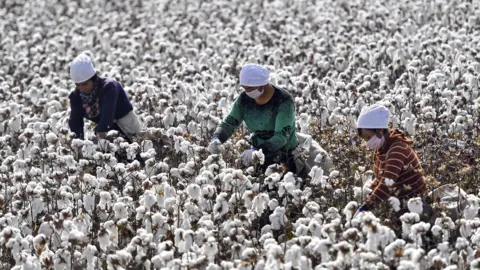
McCuaig-Johnston told the committee that Chinese electric vehicles and other goods can be linked to supply chains involving forced labour from the Uyghur Muslim minority in Xinjiang.
Ma’s questioning quickly triggered backlash from Conservative MPs on the committee, with one member apologizing to the witness for the line of questioning. Ma responded by demanding that the MP withdraw the apology.
Defending himself, Ma insisted he was simply asking legitimate questions and had not expressed a personal opinion.
“I made no assertion either to support or deny it. I just asked whether she had witnessed it,” he said.
Conservative MP Michael Guglielmin later introduced a motion condemning forced labour practices in China and suggested Ma’s remarks raised questions about whether they reflect a shift in the Liberal government’s stance toward Beijing.
“It’s unclear if MP Ma’s remarks are at odds with the Liberal party’s position or if he’s soft-launching the prime minister’s new position on the Communist Party of China,” Guglielmin said.
The heated debate dominated much of the committee meeting, forcing members to dismiss witnesses while MPs argued about the exchange and the conduct of the hearing.
Speaking afterward, McCuaig-Johnston said she was “kind of dumbfounded” by Ma’s questions and noted that it would be impossible for foreign observers to directly witness forced labour operations in China.
“No Westerner can go to China and see forced labour. They would never let you anywhere close to that,” she said.
She added that Ma appeared to be attempting to undermine her credibility during the hearing.
After the meeting concluded, McCuaig-Johnston said she offered Ma a copy of a Human Rights Watch report documenting forced labour allegations in Xinjiang. According to her, Ma replied that he did not believe reports and preferred to rely on things he could personally see.
She said he even suggested the two travel to China together to investigate the claims, an idea she dismissed because she has been sanctioned by the Chinese government.
Ma later avoided reporters on Parliament Hill and did not answer questions about his views. His office has said he plans to release a statement about the incident.
When asked about the issue during Question Period in the House of Commons, Liberal MP Yasir Naqvi did not address Xinjiang directly but reiterated that the Canadian government considers forced labour unacceptable.
International bodies have raised serious concerns about China’s treatment of Uyghur Muslims in Xinjiang. A 2022 report by the United Nations found that Beijing committed serious human rights violations in the region that “may constitute international crimes, in particular crimes against humanity.”
That same year, Global Affairs Canada released its own assessment concluding that Chinese authorities were using labour transfer and re-education programs as part of a broader campaign targeting Uyghur Muslims and pushing them to assimilate into the dominant Han Chinese culture.
China strongly rejects those allegations, saying its policies in Xinjiang are aimed at combating terrorism and promoting economic development for minority communities.
Canada has repeatedly rejected Beijing’s explanation and previously condemned the “mass, arbitrary detention” of Uyghurs and other Muslim minorities in the region.
The controversy comes at a sensitive time for Canada-China relations. Earlier this week, the Prime Minister’s Office said a government report submitted to Parliament had been filed “in error” after suggesting that human rights concerns were not raised by Carney during his January meeting with Chinese President Xi Jinping.
Officials later said a corrected version of the document had been submitted to Parliament.
