
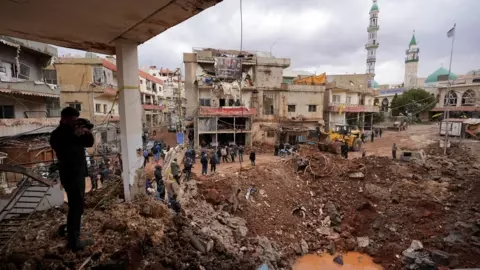
Residents in southern Lebanon are fleeing their homes as renewed fighting between Israel and the Iran-backed Hezbollah group intensifies, raising fears of a return to full-scale war.
A 38-year-old business owner who escaped with his family described waking to urgent calls from friends warning that rockets had been fired from Lebanon and Israeli strikes were imminent. He said bombardments could be heard nearby and that repeated overnight messages convinced him to leave at first light rather than risk driving in darkness and heavy traffic. He packed essential belongings and fled with his mother and sister.
Lebanon’s Health Ministry said Israeli attacks in Beirut and southern Lebanon have killed at least 31 people and wounded 149 others, underscoring the growing humanitarian toll of the renewed violence.
The latest escalation follows rocket and drone attacks launched by Hezbollah, prompting heavy Israeli airstrikes across southern Lebanon and the southern suburbs of Beirut. The clashes come amid the wider U.S.-Israel conflict with Iran and threaten to unravel a fragile ceasefire that ended a devastating year-long war between Israel and Hezbollah just 15 months ago.

Hezbollah, a Shia Islamist movement backed by Iran, is considered one of the most powerful armed groups in the region. Tehran has invested billions of dollars in training and equipping the organization over decades to confront Israel. The two sides have fought multiple wars, including a major conflict in 2006 and another in 2023–24 linked to the Gaza war.
During the last round of fighting, Lebanese officials said about 4,000 people were killed and more than 1.2 million displaced, while Israel reported the deaths of more than 80 soldiers and 47 civilians. Hezbollah’s military capabilities were significantly weakened, and under the November 2024 ceasefire agreement it agreed to pull back from much of southern Lebanon.
Monday’s exchange of fire now places that ceasefire in jeopardy. Civilians on both sides of the border are once again bracing for the possibility that limited strikes could spiral into a broader conflict, with displacement already rising and international concern mounting over a renewed humanitarian crisis in Lebanon and northern Israel.
