
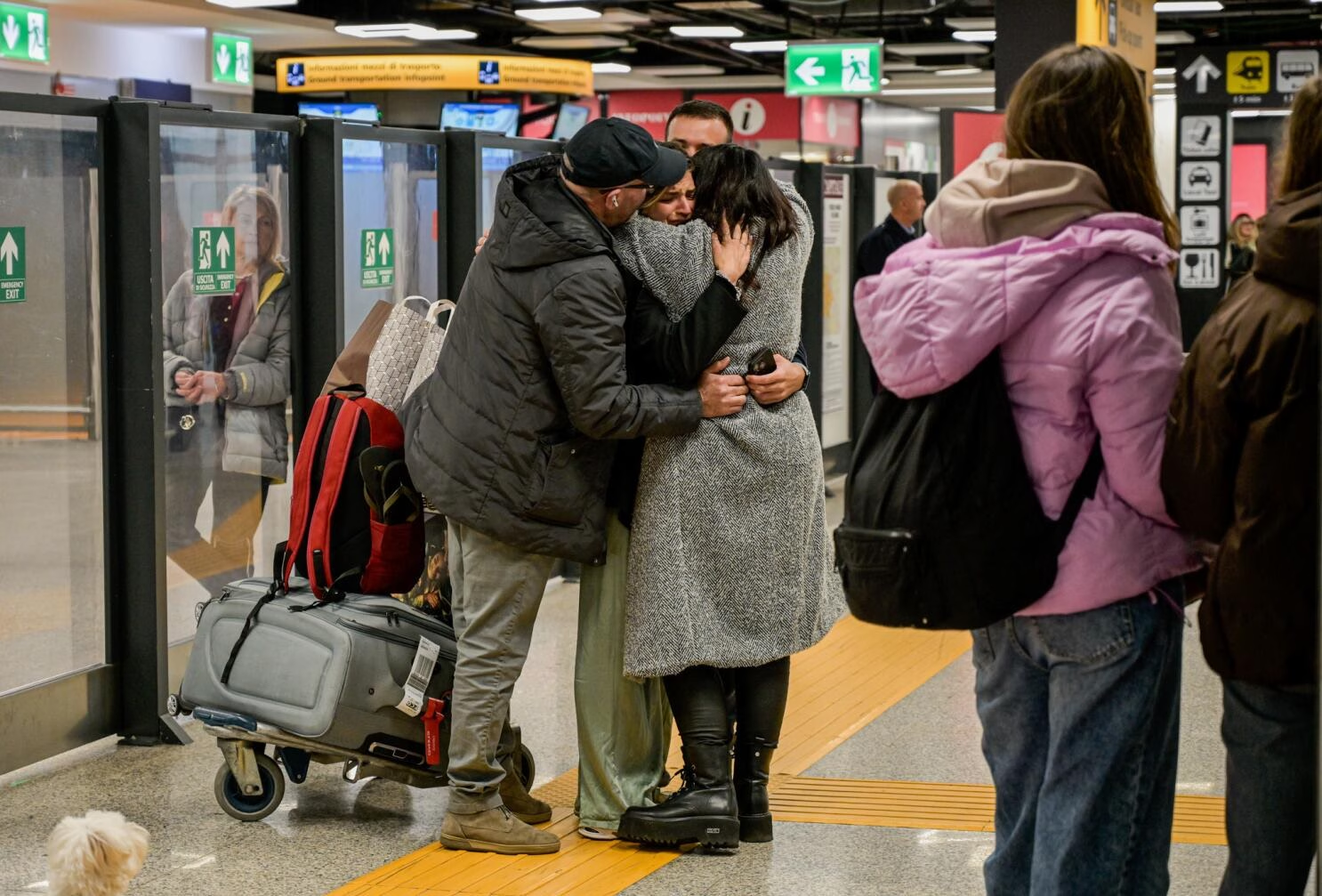
Governments around the world are rushing to bring their citizens home as travel disruptions and safety concerns escalate in the Middle East following an intensification of conflict in the region. The outbreak of hostilities — involving military strikes, missile exchanges, and heightened security alerts — has upended commercial travel and prompted widespread evacuation efforts.
Foreign ministries and consular services from countries including Canada, the United States, the United Kingdom, and several European and Asian nations have issued emergency advisories urging nationals to leave conflict zones immediately. Airlines have canceled numerous flights to and from Middle Eastern airports, while others have rerouted aircraft to avoid airspace affected by missile threats and regional instability.
Officials say the situation has created unprecedented logistical challenges, with thousands of citizens seeking consular assistance, updated travel information, and evacuation flights. Many governments are deploying charter flights, coordinating with allied partners, and providing helpline support to help nationals safely depart volatile areas.
Canada’s Global Affairs department issued a heightened travel advisory for the region, while similarly urging Canadians abroad to register with consular services so they can receive real-time alerts and evacuation support. The growing travel disruptions reflect the broader impact of the Middle East conflict on global mobility and tourism, as airports and border checkpoints grapple with security restrictions and rapidly changing conditions.

Travel industry analysts note that the uncertainty has driven up ticket prices for remaining commercial routes out of the region, as demand far outstrips available seats. Many travellers are expressing concern not only about safety but also about how quickly they can return home amid shifting flight schedules and airspace closures.
The United States Department of State has activated emergency response teams at multiple embassies in the region to assist American citizens, including issuing warnings about potential threats and outlining evacuation options. Other governments, such as Australia and Japan, have also coordinated evacuation flights for their nationals.
In addition to consular outreach, some countries have advised citizens to remain indoors, avoid non-essential travel, and stay in close contact with local authorities until evacuation arrangements are finalized. The chaos has raised broader questions about global preparedness for sudden conflicts and the role of diplomatic missions in crisis response.
Humanitarian organizations are monitoring the situation, offering support to vulnerable travellers and displaced persons caught amid the volatility. The disruptions have also triggered concerns about the continuity of international business travel, expatriate communities, and long-term tourism patterns.
As the conflict continues to influence regional safety and travel infrastructure, governments are warning that more cancellations and restrictions are likely before normal travel conditions can resume. Officials say they are prioritizing the urgent repatriation of citizens while working to maintain essential travel and diplomatic ties where possible.
Swifteradio.com
