
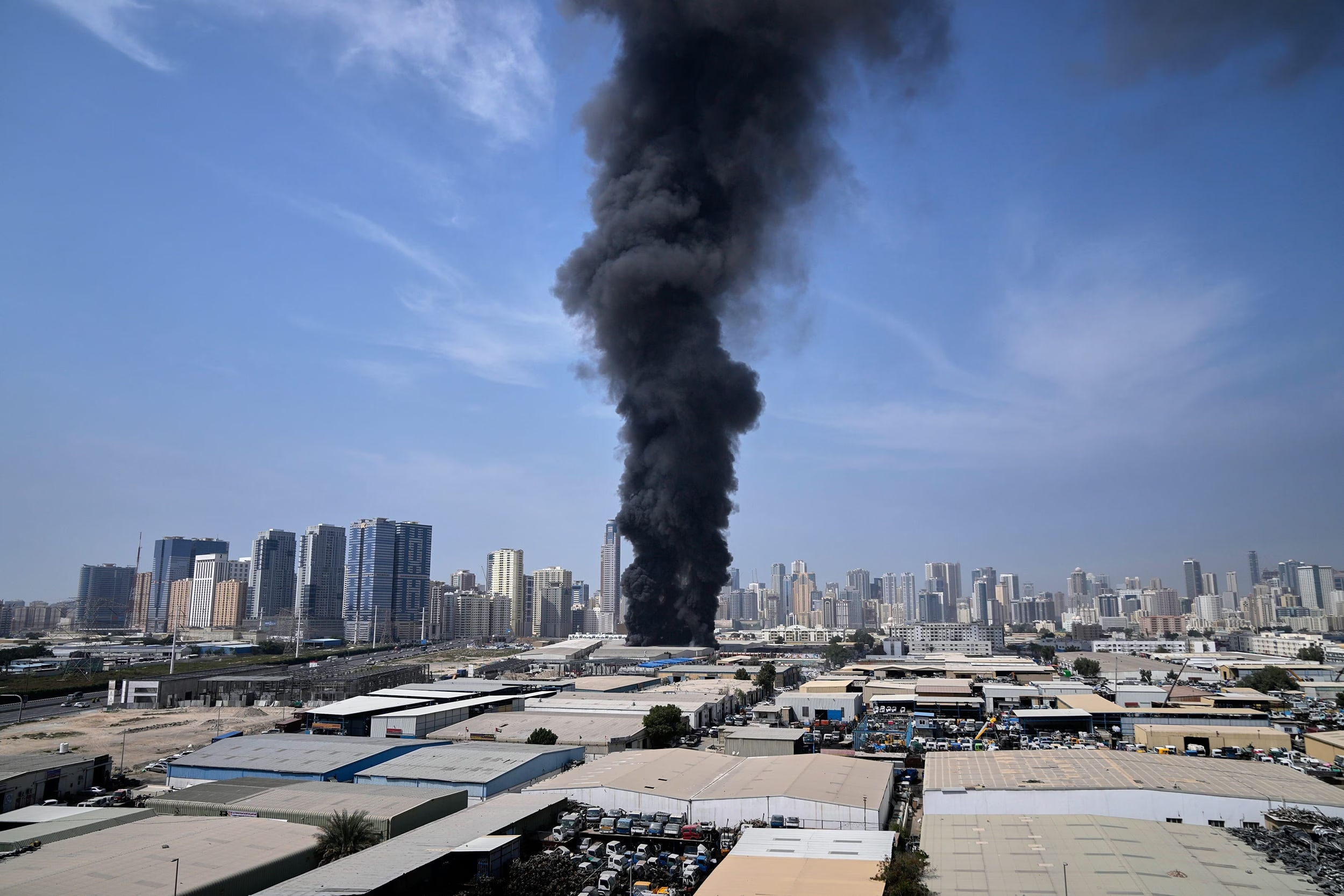
Israel stepped up airstrikes on Iranian missile launchers and weapons factories on Tuesday, while Iran retaliated across the Gulf region, disrupting energy supplies and international travel. Explosions were reported in Tehran and Lebanon, where Israel said it struck Hezbollah militants, and the U.S. Embassy in Saudi Arabia’s capital Riyadh came under a drone attack.
Four days into a conflict that U.S. President Donald Trump suggested could last several weeks or longer, hundreds of people have been killed, most of them in Iran. Information from inside the country has been limited by communications blackouts, continuous airstrikes and restrictions on journalists.
Trump left open the possibility of deeper U.S. military involvement, telling U.S. media he was not ruling out deploying ground troops. While early strikes killed Iran’s Supreme Leader Ayatollah Ali Khamenei and Trump initially urged Iranians to rise up against their government, senior officials later said regime change was not the formal objective. Trump outlined four goals for the campaign: destroying Iran’s missile capabilities, crippling its navy, preventing it from acquiring nuclear weapons and cutting off support for allied armed groups.
The Israeli military said it carried out waves of strikes on ballistic missile production and storage sites in Tehran and Isfahan. Iran’s state television reported two explosions at a broadcasting facility in Tehran but said there were no injuries. The International Atomic Energy Agency confirmed that Iran’s Natanz nuclear enrichment site had suffered recent damage, though no radiological consequences were expected.

Israeli Prime Minister Benjamin Netanyahu claimed Iran was rebuilding underground nuclear facilities, though he provided no evidence. Iran said it has not enriched uranium since June and insists its nuclear program is peaceful. Satellite imagery analyzed by international observers suggested limited activity at two nuclear sites as Iran assessed damage from earlier strikes.
Inside Tehran, residents described growing fear as bombardment intensified. Communications remained unstable and internet access was largely blocked. Shops in some districts were closed, while bakeries and supermarkets stayed open but cash shortages were reported at ATMs. Iran has declared a national mourning period following Khamenei’s death.
Iran also targeted U.S. diplomatic missions. Two drones struck the U.S. Embassy in Riyadh, causing a limited fire, according to Saudi Arabia’s Defence Ministry. The attack followed a strike on the U.S. Embassy in Kuwait. U.S. embassies in Saudi Arabia, Kuwait and Lebanon were closed to the public, and Washington ordered the evacuation of non-emergency staff and families from Kuwait, Bahrain, Iraq, Qatar, Jordan and the United Arab Emirates.
The Iranian Red Crescent Society said at least 787 people have been killed in Iran since the campaign began. In Israel, missile strikes killed 11 people. Hezbollah attacks and Israeli retaliation left at least 52 people dead in Lebanon. The U.S. military confirmed six American service members were killed, while additional fatalities were reported in the UAE, Kuwait and Bahrain.
The conflict has also shaken regional business and energy infrastructure. Iran struck energy facilities in Qatar and Saudi Arabia and targeted shipping in the Strait of Hormuz, through which about one-fifth of the world’s oil trade passes. Iranian Brigadier General Ebrahim Jabbari declared the strait closed and threatened to attack any vessels attempting to transit the waterway, sending global oil and gas prices sharply higher and pushing stock markets lower.
Israel expanded ground and air operations in Lebanon after Hezbollah fired missiles into its territory. Israeli forces moved additional troops into southern Lebanon and took up positions near the border, while the UN peacekeeping mission reported observing Israeli troop movements in and out of the country.
With fighting now stretching from Iran to the Gulf and Lebanon, diplomats and aid agencies warned of a deepening humanitarian crisis and rising displacement. The spiraling conflict has raised urgent questions about how and when the war might end as the region braces for further escalation.
