
Israel says it has killed a senior Iranian militia leader as the conflict with Iran intensifies, with missile and drone attacks spreading across the Middle East and threatening global energy supplies.
The Israeli military announced it had killed Gholam Reza Soleimani, head of Iran’s Basij militia, a volunteer force under the Islamic Revolutionary Guard Corps often deployed to suppress domestic protests. Iranian authorities have not yet confirmed the claim.
The killing follows a series of targeted strikes by Israel against Iran’s leadership, including the reported death of Supreme Leader Ali Khamenei earlier in the conflict. Israel says such operations are aimed at weakening Iran’s command structure and internal security forces.
Meanwhile, the conflict is increasingly spilling across the region. The United Arab Emirates briefly shut down its airspace after missile and drone threats near Dubai, a major global travel hub. In Abu Dhabi, a man was killed by debris from an intercepted missile.

Iran has also intensified strikes on Gulf infrastructure, including an oil facility in Fujairah. These attacks are raising alarms about global energy security, particularly around the Strait of Hormuz, a critical route for about one-fifth of the world’s oil supply.
Iranian officials, including parliamentary speaker Mohammad Bagher Qalibaf, defended the actions as retaliation for ongoing Israeli and U.S. strikes, arguing Tehran has little choice but to respond.
The widening conflict is also drawing in other nations. Donald Trump said the United States has urged allied countries to deploy warships to keep the Strait of Hormuz open, though no firm commitments have been made.
Across the region, air defense systems have been activated. Saudi Arabia reported intercepting drones over its oil-rich Eastern Province, while Qatar said it thwarted a missile attack on its capital. In Baghdad, intercepted drones targeting the U.S. Embassy caused damage from falling debris.
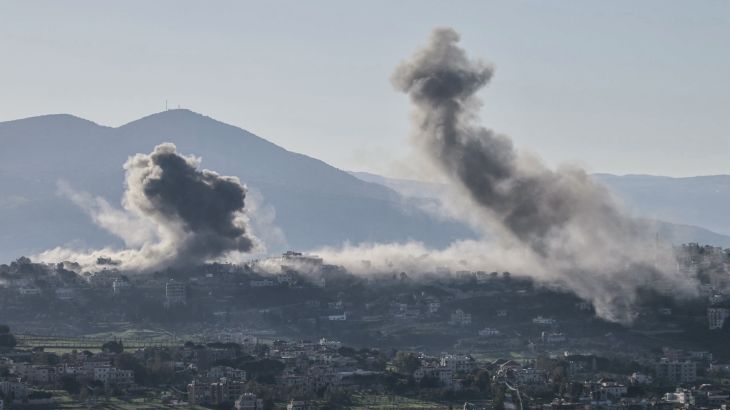
Israel has also expanded its military operations beyond Iran. It reported launching a “wide-scale wave of strikes” across Tehran, targeting missile sites and air defenses, while stepping up attacks on Hezbollah in Lebanon.
The humanitarian toll continues to rise. More than 1,300 people have reportedly been killed in Iran, while Israeli strikes in Lebanon have displaced over one million people. Casualties have also been reported in Israel and among U.S. forces stationed in the region.
With oil prices surging and shipping routes under threat, the conflict is increasingly being viewed as a major risk to the global economy, raising fears of prolonged instability if tensions continue to escalate.
