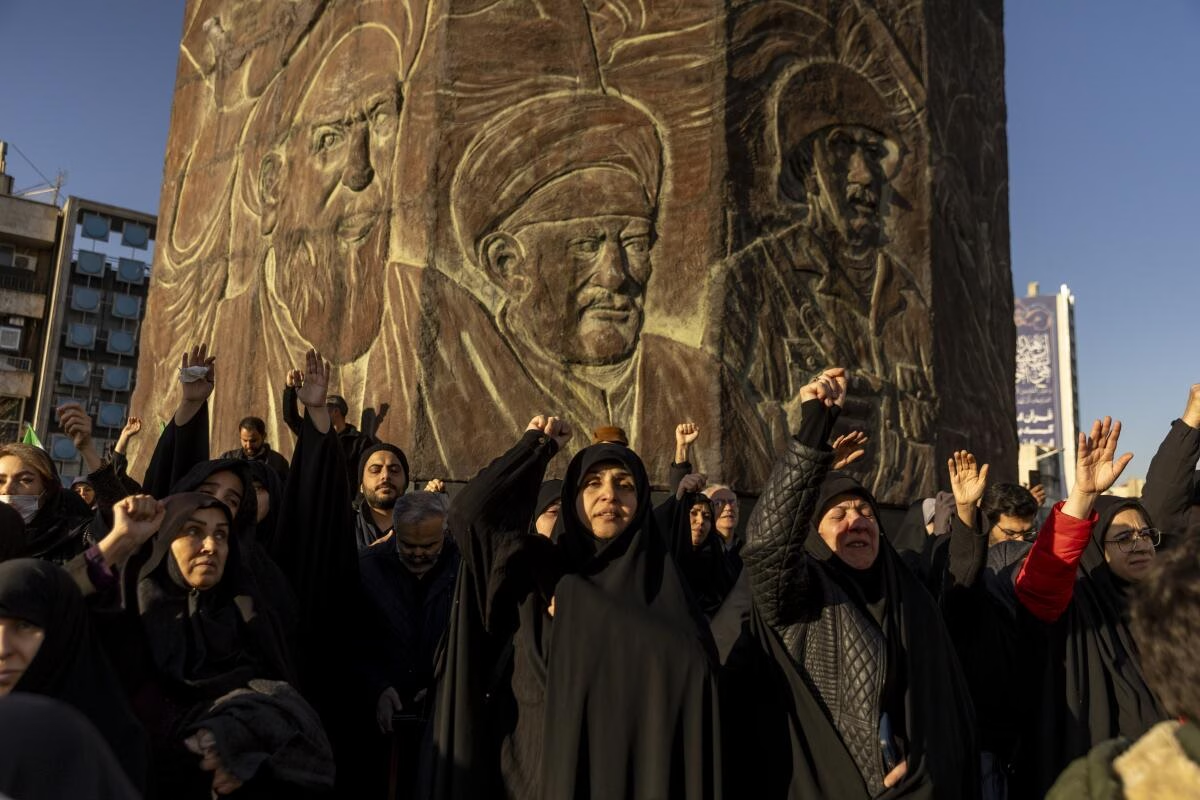
Iranians across North America took to the streets on Saturday following U.S. and Israeli strikes on Iran, with demonstrations reflecting sharply divided emotions after U.S. President Donald Trump claimed that Iran’s Supreme Leader Ayatollah Ali Khamenei had been killed.
In Los Angeles, protesters marched through the streets waving flags from Iran’s Shah era, chanting slogans, and carrying posters of Trump while wearing shirts reading “Free Iran,” according to an AFP reporter. Many of the demonstrators expressed support for the military action and hope that the Islamic Republic’s leadership would soon collapse.
The rallies began earlier in the day as news of the bombings spread, though Trump later declared that the strikes had killed Khamenei. Iran has not confirmed his death.
“It’s mixed feelings,” said Fartach Razmjoo at a demonstration in Toronto. “It seems this brutal regime is going to be gone, but at the same time I am very concerned about the people in Iran.” Razmjoo said he hoped Iranians inside the country would now gain the courage to take to the streets and overthrow the government.

Trump echoed those sentiments, urging Iranians to rise up and “take over your government.”
In contrast, anti-war protests emerged in other cities. In New York, demonstrators questioned the effectiveness and legality of the strikes. Layan Fuleihan, a 36-year-old activist, said, “Bombing people does not help them free themselves.” She argued that if Trump truly cared about democracy and the Iranian people, he would lift economic sanctions that have made daily life harder for ordinary Iranians.
In Washington, Brent Gray, a 27-year-old engineer, criticized the administration’s actions, saying Trump was “taking military action without any congressional approval.”
Elsewhere, emotions ran in the opposite direction. In Boston, protesters sang and stomped on an Iranian flag while waving American and Israeli flags. “Iranians can finally get to live the free life that they want,” said Navid Aghasadeghi.
In Atlanta, Sherry Yadegari called the military campaign an “Iran Rescue Operation,” while another demonstrator, Azi Adibi, said she feared for her family’s safety and had been unable to reach her brother since internet access in Iran was reportedly cut off.
In Los Angeles’s Westwood district, often known as “Tehrangeles” or Little Persia, restaurant owner Roozbeh Farahanipour described having “very complicated feelings.”
“I saw the footage of people dancing in the streets,” he said. “That reminded me of the first days of the war in Iraq. At the time, the people of Iraq were also dancing in the streets. I hope the scenario will be different this time.”
The protests underscored the deep divisions within the Iranian diaspora, with some viewing the strikes as a path to liberation and others warning of humanitarian consequences and the risk of prolonged conflict.
