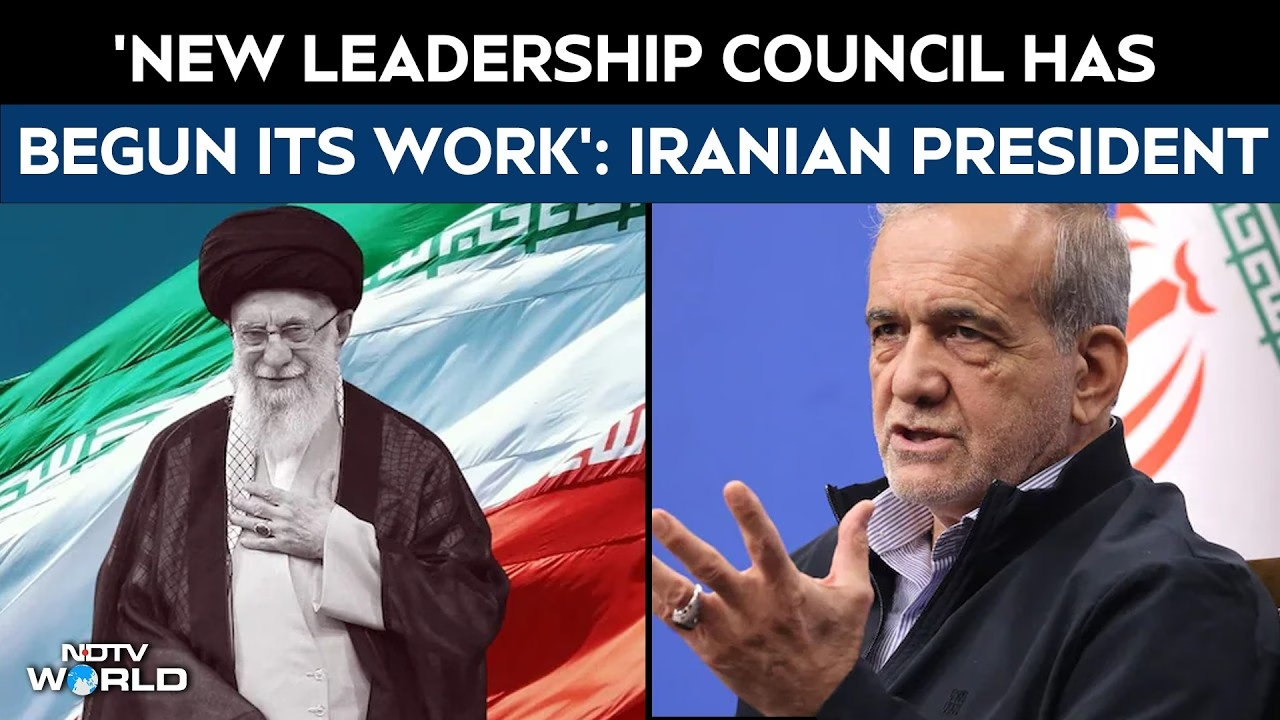
Iran’s president has confirmed that a newly established leadership council has officially begun governing responsibilities following the death of the country’s Supreme Leader, marking a historic and highly sensitive transition in the Islamic Republic’s political structure.
In a nationally broadcast address, the president stated that the council was formed in accordance with constitutional procedures to ensure continuity and stability during the leadership transition. He emphasized that the body has already started overseeing critical state functions, including national security, governance coordination, and religious leadership matters.
“The leadership council has begun its work and will carry out its duties with full commitment to protecting the nation, its values, and its sovereignty,” the president said. He reassured citizens that government institutions remain fully operational and that the country’s armed forces are prepared to defend Iran against external threats.
The death of the supreme leader has created one of the most consequential political moments in Iran since the 1979 Islamic Revolution. The supreme leader holds ultimate authority over Iran’s military, judiciary, and major political decisions, making the succession process both complex and closely watched domestically and internationally.

Iranian officials indicated that the leadership council will temporarily oversee state affairs while the Assembly of Experts — the clerical body responsible for selecting a new supreme leader — begins formal deliberations. The timeline for appointing a permanent successor remains unclear, but analysts expect intense consultations among senior clerics and political figures.
The announcement comes amid heightened regional tensions following recent military confrontations involving Iran, Israel, and the United States. Iranian authorities have vowed that the leadership transition will not weaken the country’s strategic posture or its regional alliances.
Global leaders and diplomatic observers are closely monitoring developments, as Iran’s leadership structure plays a critical role in Middle Eastern geopolitics, energy markets, and international security. Experts warn that while the leadership council is designed to ensure stability, internal political rivalries and external pressures could influence the succession process.
For now, Iranian officials are seeking to project unity and continuity, signaling that the state remains firmly in control during this unprecedented period.
Swifteradio.com
