
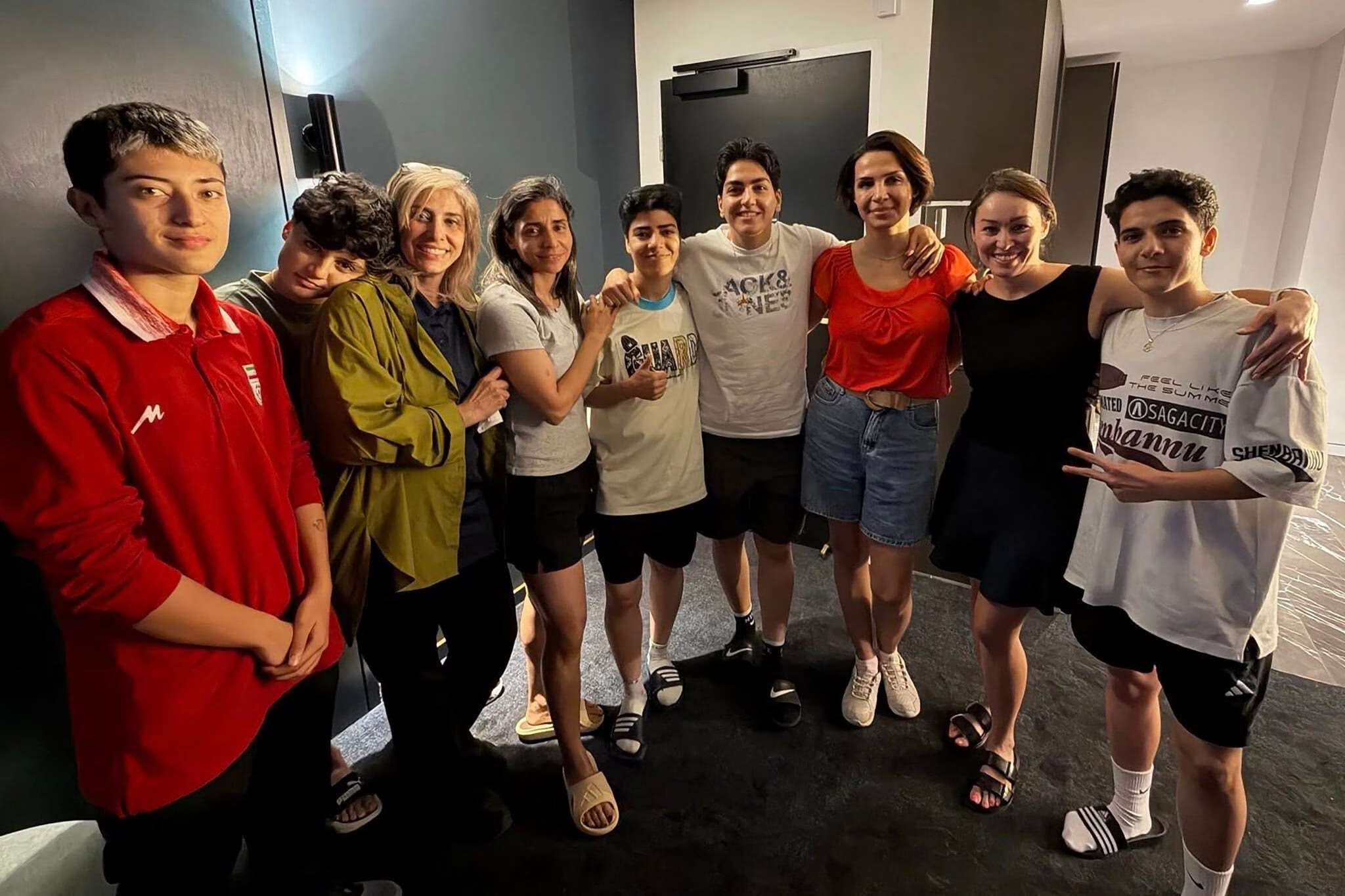
Several members of Iran Women’s National Football Team seeking asylum in Australia were evacuated from a safe house after a teammate revealed their location to Iranian officials, authorities confirmed Wednesday.
Seven members of Iran’s visiting women’s football delegation had sought protection after they were reportedly branded “traitors” in Iran for refusing to sing the national anthem during a tournament abroad.
According to Australian Home Affairs Minister Tony Burke, one member of the group later changed her mind after speaking with teammates who chose to return home instead of seeking asylum. The player then contacted the Embassy of Iran in Australia, revealing the location of the group’s safe house.
“As a result of that it meant the Iranian embassy now knew the location of where everybody was,” Burke said, adding that authorities immediately relocated the remaining asylum seekers to ensure their safety.

Iranian media outlets, including Shargh and Mehr News Agency, identified the player who withdrew her asylum request as Mohaddeseh Zolfi, though Australian officials have not confirmed her identity.
The situation unfolded after the team’s controversial protest during a tournament in Australia, where several players remained silent while Iran’s national anthem was played before a match. The gesture was widely interpreted as a sign of dissent against the government.
Following the incident, an Iranian state television presenter labelled the players “wartime traitors,” intensifying concerns among the athletes about possible persecution if they returned home.
Five players, including team captain Zahra Ghanbari, reportedly left the team hotel during the night to seek asylum, while two additional members of the delegation — a player and a staff member — were later granted protection before the team departed Sydney on Tuesday.
The remaining members of the squad are currently staying at a hotel in Kuala Lumpur while awaiting further travel arrangements, according to the Asian Football Confederation, which said it would provide support to the team during their stay.
Human rights groups say Iranian athletes abroad often face intense pressure from authorities, including threats directed at family members or warnings that property could be seized if they defect or criticize the government.
Iranian-Australian migration agent Naghmeh Danai said players she spoke with described being under strict supervision from Iranian officials travelling with the team.
“The members of the Iranian Women’s National Football Team are under significant pressure and ongoing threat from the Islamic Republic,” said exiled Iranian opposition figure Reza Pahlavi, who urged Australian authorities to ensure the athletes’ safety.
The incident risks further straining relations between Iran and Australia, after Prime Minister Anthony Albanese publicly praised the players’ courage and said they would be welcomed if they chose to remain in the country.
