
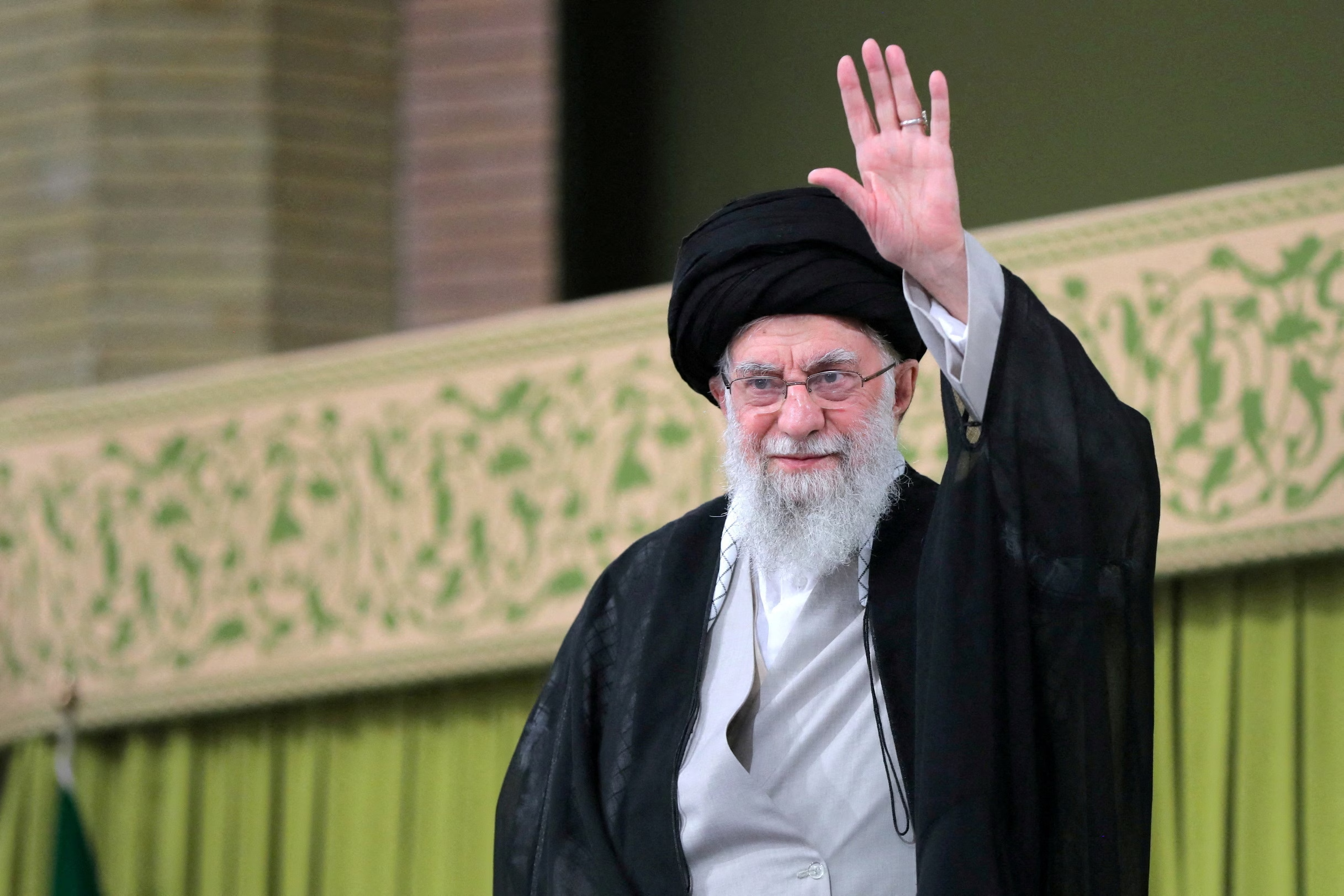
Iranian Supreme Leader Ayatollah Ali Khamenei has been killed in a major joint military strike carried out by the United States and Israel, Iranian state media confirmed early Sunday, plunging the future of the Islamic Republic into uncertainty and heightening the risk of regional instability.
U.S. President Donald Trump announced Khamenei’s death hours earlier, saying it offered Iranians their “greatest chance” to “take back” their country. Iranian state television reported that the 86-year-old leader was killed when an airstrike struck his compound in downtown Tehran. Satellite images from Airbus showed extensive destruction at the site.
“Khamenei stood at the forefront of his responsibilities confronting global arrogance,” Iranian state TV said. Trump described Khamenei as “one of the most evil people in history” and warned that heavy and precise bombing would continue for days as part of what he called an effort to eliminate Iran’s nuclear capabilities.
The killing marks a dramatic escalation in U.S. involvement in Iran and creates a leadership vacuum in a system where Khamenei held ultimate authority over government, the military and the powerful Revolutionary Guard. He had ruled for decades with no clear successor publicly identified.

Eyewitnesses in Tehran told the Associated Press that some residents celebrated by cheering from rooftops and blowing whistles. Iran’s semi-official Fars news agency reported that several of Khamenei’s relatives were also killed, including a daughter, son-in-law, daughter-in-law and a grandchild.
Iran vowed retaliation. The government said the “great crime will never go unanswered,” while the Revolutionary Guard warned of “severe and regret-inducing punishment.” Ali Larijani, secretary of Iran’s National Security Council, said Iran would deliver “an unforgettable lesson to international oppressors.”
The strikes followed months of rising tension and failed nuclear negotiations. They occurred during Ramadan and at the start of Iran’s workweek. U.S. officials said targets included Revolutionary Guard command centers, missile launch sites, air defense systems and military airfields.
Israel confirmed it killed the commander of the Revolutionary Guard Corps, Iran’s defense minister and the secretary of the Iranian Security Council. Trump said the operation showed that Iran’s leadership could not escape advanced intelligence tracking systems.
An Iranian diplomat told the United Nations Security Council that hundreds of civilians were killed or wounded. Iran responded by launching missiles and drones at Israel and U.S. military bases in Bahrain, Kuwait and Qatar. Israeli rescue services reported at least one death in the Tel Aviv area from missile strikes.
Explosions were reported in northern Tehran near the Intelligence Ministry building, while Israel said it continued strikes on missile launchers and air defense systems. In southern Iran, officials reported at least 115 people killed when a girls’ school was hit, though U.S. Central Command said it was investigating those claims.
Flights across the Middle East were disrupted, with air defenses activated over cities including Dubai. Shrapnel from a missile strike in the United Arab Emirates killed one person, according to state media.
Israel said the operation had been planned for months in coordination with the United States. Israeli military chief Lt. Gen. Eyal Zamir said air force pilots struck hundreds of targets across Iran.
Trump acknowledged the risk of U.S. casualties and said his goal was to dismantle Iran’s navy and regional proxy forces. He called on the Revolutionary Guard to surrender or face “certain death,” promising immunity to those who laid down arms.
The strikes threaten to destabilize global markets, especially if Iran disrupts shipping through the Strait of Hormuz, a key route for global oil exports. Saudi Arabia reported repelling Iranian attacks on its capital and eastern regions, while Bahrain said missiles targeted the U.S. Navy’s 5th Fleet headquarters. Kuwait and Qatar also reported drone and missile incidents.
With exchanges of fire continuing and diplomatic efforts stalled, fears are growing that the conflict could expand into a broader regional war with severe consequences for civilians and international security.
