
Iran has rejected a U.S.-backed proposal aimed at pausing the ongoing war in the Middle East, while launching fresh attacks on Israel and several Gulf Arab states, escalating tensions across the region.
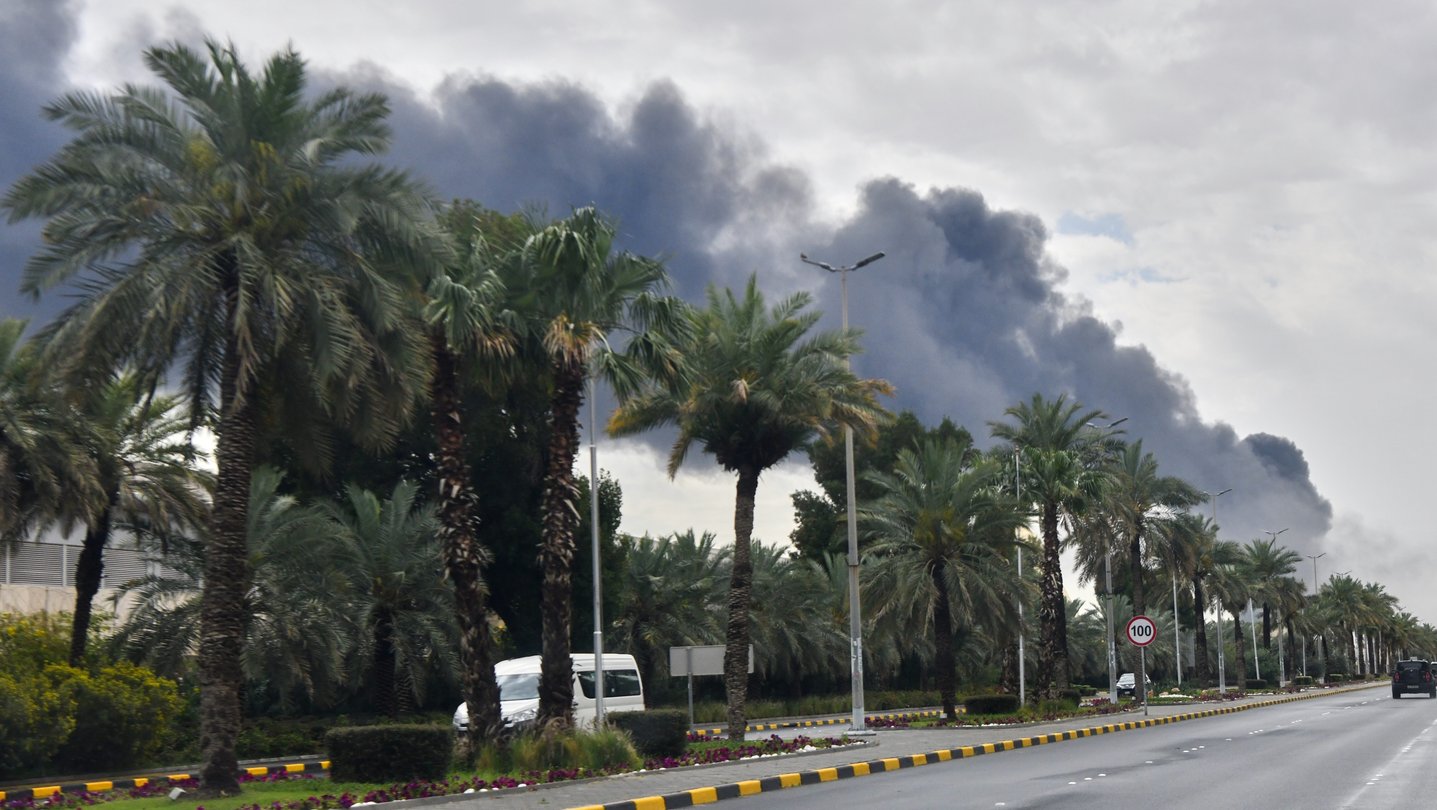
The renewed attacks included a drone strike that triggered a major fire at Kuwait International Airport, highlighting the widening scope of the conflict.
Iran’s defiant stance came as Israel carried out new airstrikes in Tehran and the United States began deploying additional troops to the region.
Iran’s Foreign Minister Abbas Araghchi said Tehran had not entered negotiations with Washington and had no intention of doing so.

“We have not engaged in talks to end the war, and we do not plan on any negotiations,” Araghchi said during an interview with Iranian state television.
According to officials familiar with diplomatic efforts, the U.S. proposal — reportedly transmitted to Iran through Pakistan — contained a 15-point framework aimed at de-escalating the conflict.
The plan included potential sanctions relief for Iran, limits on its missile program, a rollback of parts of its nuclear activities, and measures to reopen the Strait of Hormuz, a vital global shipping route through which roughly one-fifth of the world’s oil supply passes.
An Egyptian official involved in the mediation efforts said the proposal also called for Iran to curb support for regional armed groups.
However, several elements of the proposal are believed to be unacceptable to Tehran. Iran has long insisted it will not negotiate over its ballistic missile program or its backing of regional militias, both of which it views as critical to its national security strategy.
The White House maintains that diplomatic efforts are still underway despite Iran’s public rejection.
Press Secretary Karoline Leavitt told reporters that negotiations were ongoing and described them as productive.
“Talks continue. They are productive, as the president said on Monday, and they continue to be,” Leavitt said during a briefing.
She also warned that if diplomacy fails, President Donald Trump would escalate the military response.
“If talks don’t pan out, the president will ensure they are hit harder than they have ever been hit before,” she said.
Meanwhile, the U.S. military is significantly increasing its presence in the region. Around 1,000 troops from the 82nd Airborne Division are expected to deploy to the Middle East in the coming days. The Pentagon is also sending approximately 5,000 additional Marines along with thousands of sailors.
These forces are trained for rapid deployment operations, including securing airfields and critical infrastructure in hostile environments.
Despite the military buildup, public sentiment in the United States appears increasingly uneasy about the war. A new AP-NORC poll suggests that most Americans believe the U.S. military action against Iran has gone too far, while many are worried about rising gasoline prices.
Diplomatic mediators are still attempting to arrange potential face-to-face talks between U.S. and Iranian officials, possibly as early as Friday in Pakistan.
Former U.S. envoy Steve Witkoff, Secretary of State Marco Rubio, Vice President JD Vance and presidential adviser Jared Kushner are reportedly involved in the discussions on the American side, although it remains unclear who in Iran would represent the country.
Iran has also reportedly outlined its own ceasefire proposal. According to Iranian media, the plan includes an end to targeted killings of Iranian officials, guarantees that no further war would be launched against the country, reparations for damage caused during the conflict, a halt to hostilities, and recognition of Iran’s control over the Strait of Hormuz.
These conditions, particularly demands for reparations and continued restrictions on the strategic waterway, are likely to face strong opposition from Washington.
The Strait of Hormuz remains a critical flashpoint. Although both Iran and Oman control territory along the passage, the narrow shipping channels are widely considered international waters.
Since the war began, Iran has restricted shipping through the strait and blocked vessels linked to the United States, Israel or their allies.
Meanwhile, fighting across the region continues to intensify.
Israel reported carrying out multiple waves of airstrikes in Tehran on Wednesday and said it had targeted an Iranian submarine development facility in Isfahan during earlier attacks.
Missile sirens also sounded across Israel as Iran and the Lebanese militant group Hezbollah launched new strikes.
Hezbollah has been firing rockets into northern Israel continuously since the war began, disrupting daily life for hundreds of thousands of residents.
Iran has also expanded attacks on Gulf states. Saudi Arabia said it intercepted at least eight drones in its Eastern Province, while Bahrain reported missile alerts. Kuwait confirmed it shot down several drones, although one struck a fuel storage tank at Kuwait International Airport.
The conflict has taken a heavy toll across the region.
Iran’s health ministry says more than 1,500 people have been killed in the country. Israel reports at least 20 deaths, including two soldiers killed in Lebanon.
At least 13 U.S. military personnel have died in the fighting, along with more than a dozen civilians in the West Bank and several Gulf states.
Lebanon has recorded nearly 1,100 deaths following Israeli strikes targeting Hezbollah positions. In Iraq, where Iran-backed militias have also joined the conflict, around 80 members of the security forces have been killed, according to government officials.
Energy markets remain highly sensitive to the conflict.
Oil prices surged earlier in the war as disruptions around the Strait of Hormuz threatened global supply. Brent crude briefly approached 120 dollars per barrel before easing to around 100 dollars on Wednesday amid renewed hopes of diplomatic negotiations.
Even at those levels, oil prices remain roughly 35 percent higher than they were before the war began, raising concerns among economists about inflation and the broader global economic impact.
