
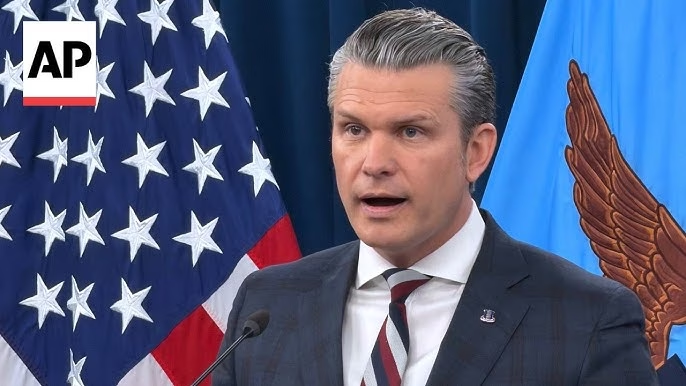
U.S. Defense Secretary Pete Hegseth has announced that the United States is preparing for what he described as the “most intense day of strikes” against Iran since the war began.
Speaking during a briefing at the Pentagon, Hegseth said American forces would deploy the largest number of aircraft and carry out the highest volume of coordinated strikes so far in the ongoing military campaign against Iran.
Escalation of Military Operations
According to Hegseth, the intensified operations will involve “the most fighters, the most bombers, and the most strikes,” supported by improved intelligence and targeting capabilities.

The strikes are part of the broader military campaign launched by the United States and Israel following escalating tensions with Iran. U.S. military officials say the objective is to weaken Iran’s military capabilities and prevent future threats to American forces and regional allies.
Officials from the Pentagon indicated that operations have already hit thousands of targets across Iran since the start of the conflict, including missile launch facilities, drone production sites, and naval assets.
Strategic Goals of the Campaign
During the briefing, the chairman of the Joint Chiefs of Staff, Dan Caine, outlined three main objectives of the ongoing campaign: destroying Iran’s missile and drone capabilities, targeting its naval forces, and striking deeper into the country’s military and industrial infrastructure.
Military officials say degrading these capabilities is critical to protecting international shipping routes, particularly through the Strait of Hormuz, a vital global oil transit corridor.
Signs of Reduced Iranian Response
U.S. officials also claimed that Iran’s ability to launch retaliatory attacks has significantly declined since the start of the campaign. According to Hegseth, Iranian missile launches over the previous 24 hours were at their lowest level since the war began.
The Pentagon says the decline reflects the impact of ongoing strikes against Iranian missile sites and command structures.
Global Tensions Continue to Rise
Despite U.S. claims of military progress, the conflict has triggered growing international concern. Several countries have called for restraint as the fighting threatens to expand across the Middle East and disrupt global energy supplies.
The administration of Donald Trump has insisted that the campaign is focused on achieving specific military objectives rather than launching a prolonged war. However, analysts warn that continued strikes could further escalate tensions across the region.
Swifteradio.com
