
Global financial markets fell and oil prices climbed after the United States and Iran exchanged threats of further escalation, raising fears of a wider economic shock as the US-Israel war with Iran enters its fourth week.
Japan’s Nikkei share index closed 3.5% lower on Monday, while South Korea’s Kospi dropped sharply by 6.5% as the conflict raised concerns over energy supply disruptions. European markets also declined, with London’s FTSE 100 falling 1.9%, and Germany’s DAX and France’s CAC 40 each down about 2%.
Oil prices moved higher as the crisis deepened. Brent crude rose more than 1% to above $113.40 a barrel, while US-traded oil gained more than 2% to around $100.50.
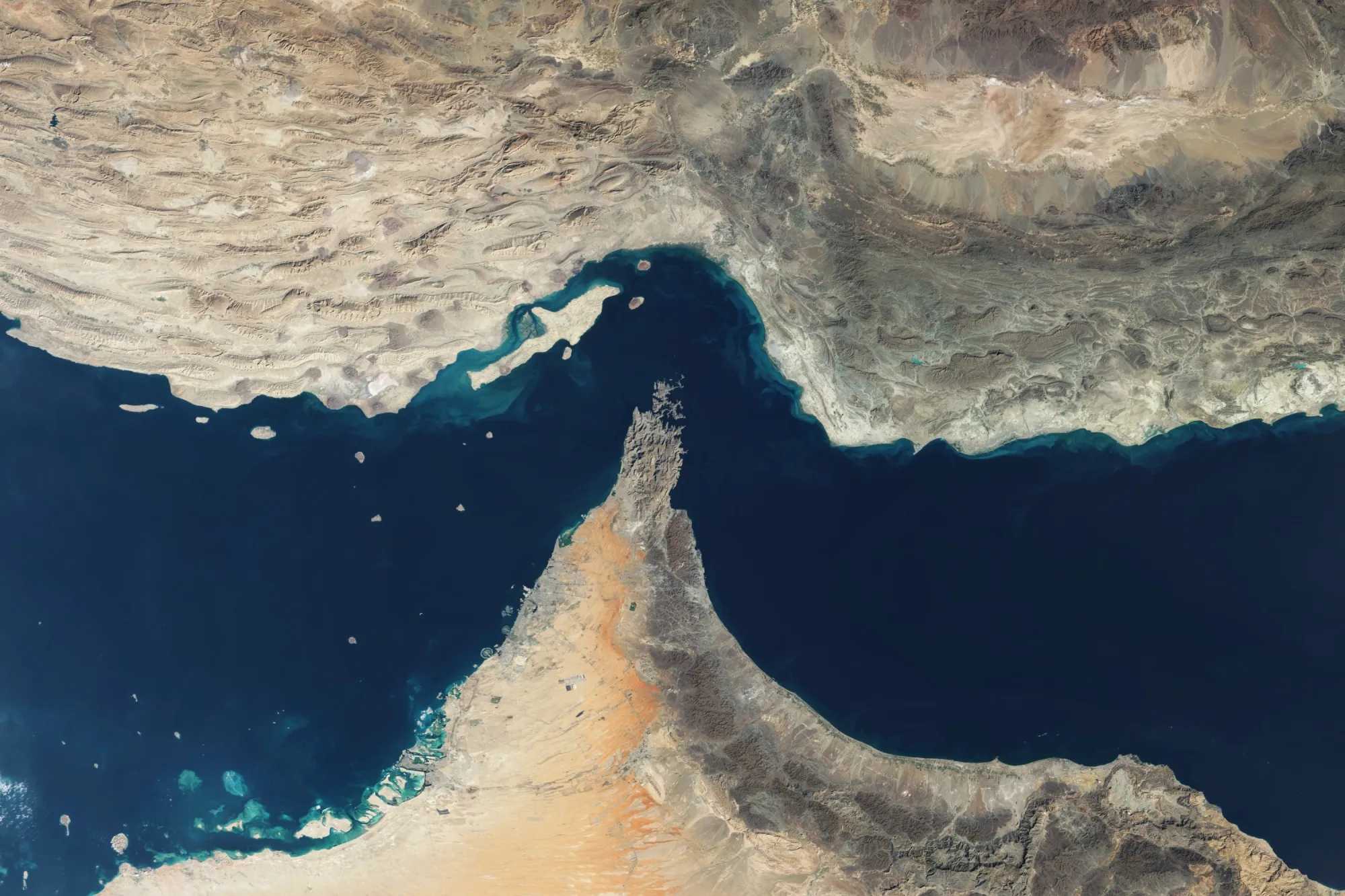
The market turmoil comes as Iran has effectively blocked the Strait of Hormuz since the United States and Israel launched strikes on the country on February 28. The waterway is one of the world’s most critical shipping lanes, carrying about 20% of global oil and liquefied natural gas supplies.

US President Donald Trump warned Saturday that Washington would respond forcefully if Iran failed to reopen the strategic route.
“If Iran doesn’t FULLY OPEN, WITHOUT THREAT, the Strait of Hormuz, within 48 HOURS… the United States of America will hit and obliterate their various POWER PLANTS,” Trump said in a social media post.
Iran responded with its own warning. Mohammad Bagher Ghalibaf, speaker of the Iranian parliament, said that energy and desalination infrastructure across the region would be “irreversibly destroyed” if Iranian power plants were targeted.
The escalating rhetoric has heightened concerns about a broader conflict that could severely disrupt global energy supplies and push fuel prices even higher.
International Energy Agency chief Fatih Birol warned the world could be heading toward its most serious energy crisis in decades. Speaking at an event in Australia, he compared the current situation to the oil shocks of the 1970s and the energy turmoil following Russia’s 2022 invasion of Ukraine.
“This crisis as things stand is now two oil crises and one gas crash put all together,” Birol said.
Countries heavily dependent on energy imports through the Strait of Hormuz, including Japan and South Korea, have been particularly vulnerable to the disruption.
Energy analysts say the next moves by Washington and Tehran could determine whether markets face deeper turmoil.
Simon Flowers, chairman and chief analyst at energy consultancy Wood Mackenzie, said investors were watching closely to see whether threats would turn into direct strikes on infrastructure.
“If the US does strike Iranian infrastructure, it escalates the whole intensity of the war a step further,” he said, adding that Iran could retaliate with tit-for-tat attacks on regional infrastructure.
Rising energy prices have also raised fears that households could face higher fuel and electricity bills later this year. In the United Kingdom, Prime Minister Keir Starmer spoke with Trump on Sunday about the need to reopen the Strait of Hormuz.
Starmer is expected to chair a meeting of the government’s emergency Cobra committee, with Bank of England Governor Andrew Bailey in attendance, to discuss energy security, supply chain resilience and the potential impact of the conflict on the cost of living.
Meanwhile, gold prices moved in the opposite direction, falling to their lowest level in four months. The spot price dropped 4.4% to about $4,295 an ounce, after earlier falling more than 8% during trading.
Susannah Streeter, chief investment strategist at Wealth Club, said several factors were pushing down demand for the precious metal. Rising energy prices are expected to fuel inflation, which in turn is driving up interest rates on government bonds, making non-yielding assets like gold less attractive.
She also noted that investors facing losses in volatile stock markets are selling gold to raise cash, while the strengthening US dollar has made the metal more expensive for buyers using other currencies.
