
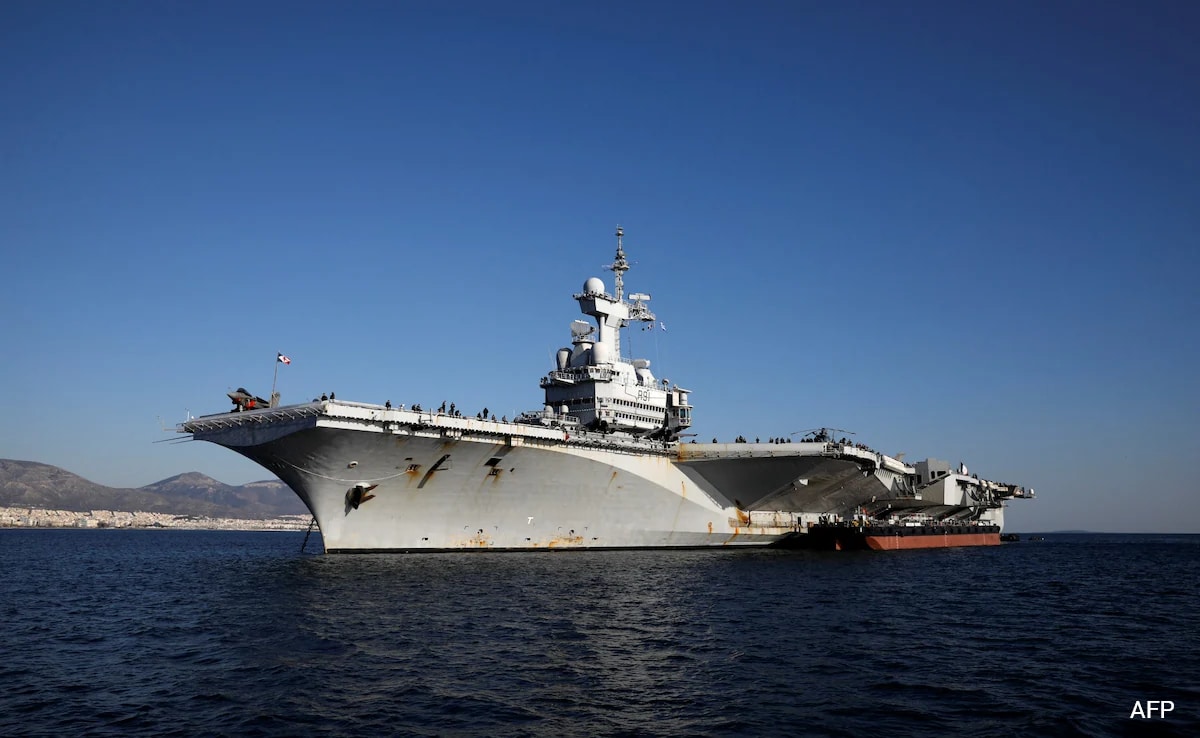
A French naval officer has reportedly revealed the sensitive location of an aircraft carrier after logging a fitness activity on Strava, raising fresh concerns over digital security within military operations.
According to reports, the officer recorded a 35-minute run aboard the French aircraft carrier Charles de Gaulle and uploaded the data publicly, inadvertently generating a map that pinpointed the vessel’s position in the eastern Mediterranean.
The carrier, which leads a French strike group deployed amid rising tensions linked to the Iran conflict, was reportedly located northwest of Cyprus, close to the Turkish coast. Satellite imagery is said to have confirmed the ship’s presence in the area, although the activity map was later removed or made private.
France’s Ministry of Armed Forces acknowledged the incident, stating that such actions do not comply with operational security protocols and that appropriate measures would be taken if the breach is confirmed. The deployment itself, officials said, is intended to protect French nationals and support allied operations in the region.

The strike group centered around the Charles de Gaulle includes fighter jets, surveillance aircraft, and helicopters, forming a key part of France’s increased military presence in the Middle East. Emmanuel Macron has described the deployment as strictly defensive.
This incident highlights ongoing risks tied to publicly shared fitness data. Strava, which uses GPS tracking to log user activity, has previously been linked to multiple security concerns. Past reports have shown how activity logs and global “heatmaps” can unintentionally reveal sensitive locations, including military bases and movements of high-profile security personnel.
Similar cases have involved security teams linked to world leaders, including U.S. and Russian officials, where publicly shared exercise data exposed patterns and locations that could be exploited.
With more than 195 million users worldwide, Strava remains popular among both civilians and military personnel—underscoring the growing challenge of balancing personal technology use with operational security in sensitive environments.
